


When people first get into crypto, one of the earliest decisions they face is choosing a wallet. At the beginning, most users simply buy coins and leave them on an exchange—it’s quick, easy, and doesn’t require much setup. But as your understanding grows, so does a more important question: Do you actually need your own wallet—and what is the best crypto wallet to use?
This is where things become more serious.
Choosing the best wallet for crypto isn’t just about convenience or interface design. It directly affects how much control you have over your assets—and more importantly, how secure they are.
In this guide, we’ll walk through everything step by step. You’ll learn how cryptocurrency wallets work, the differences between each type, and how to choose the best crypto wallet for beginners or more advanced users depending on your goals. Whether you’re holding Bitcoin long-term or actively exploring DeFi and NFTs, this will give you a clear direction.
What Is a Crypto Wallet?

Before asking “what is the best crypto wallet?”, it’s important to understand what a wallet actually does—because it’s often misunderstood.
Even the best crypto wallet wouldn’t store your coins in the way a physical wallet holds cash.
Instead, it acts as a tool that allows you to access and manage your assets on the blockchain. What it actually holds are:
- Private Key — the key that proves ownership and gives you control
- Public Address — similar to a bank account number that others can send funds to
In simple terms, your crypto always exists on the blockchain itself.
Your wallet is what allows you to interact with it, send it, and control it.
Once you understand this, it becomes clear why choosing the right wallet matters so much.
Why Cryptocurrency Wallets Are More Important Than You Think

At the start, many users rely on exchanges because they simplify everything—from buying to storing assets. And to be fair, they do a good job of lowering the barrier to entry.
However, there’s a trade-off that often goes unnoticed.
When your assets are stored on an exchange, you don’t actually control the private keys. That means:
- You don’t have full ownership of your funds
- You’re relying on a third party to manage and secure them
While major exchanges are generally reliable, risks still exist. History has shown cases of hacks, temporary shutdowns, or withdrawal issues during high market volatility.
This is why many experienced users eventually move toward using top crypto wallets—not necessarily to replace exchanges entirely, but to regain control over their assets.
Types of Cryptocurrency Wallets (Choose Based on Your Needs)

Before deciding on the best wallet crypto, it helps to understand the two main categories. Each serves a different purpose, and neither is universally “better”—it depends on how you use crypto.
Hot Wallet (Best Crypto Wallet App for Daily Use)
Hot wallets connect to the internet and typically come as mobile apps or browser extensions. For most users, this is where their crypto journey begins.
Many users consider them the best crypto wallet app for everyday use because of how accessible they are.
Best for:
- Frequent transactions
- DeFi and NFT interactions
- Users who value convenience
Pros:
- Quick and easy to set up
- Instant access to funds
- Seamless connection to Web3 platforms
Cons:
- More exposed to online risks
- Requires careful handling of links and permissions
Because of their convenience, many users choose hot wallets by default—but you should use them with awareness.
Cold Wallet (Best Crypto Wallet for Security)
Cold wallets take the opposite approach. They are designed to keep your assets offline, away from internet-based threats.
If security is your top priority, this is often considered the best wallet for crypto.
Best for:
- Long-term investors
- Storing large amounts of crypto
Pros:
- Extremely high security
- Minimal exposure to hacking attempts
Cons:
- Less convenient for daily use
- Requires purchasing a device
Think of it this way: If a hot wallet is like your everyday spending wallet, a cold wallet is more like a secure vault.
Hot vs Cold Wallet Comparison
| Type | Convenience | Security | Best For |
|---|---|---|---|
| Hot Wallet | High | Medium | Best crypto wallet for daily use / active trading |
| Cold Wallet | Low | Very High | Best crypto wallet for long-term storage |
Which Is Best Crypto Wallet? Choose Based on Real Usage
After understanding the different types of crypto wallets, the next question many people have is: which crypto wallet is best for actual use?
In reality, there is no single answer that applies to everyone. Each wallet is designed with different use cases in mind—some prioritize simplicity, others focus on features, while some are built primarily for security.
Therefore, choosing the right wallet ultimately depends on how you plan to use crypto.
Hot Wallet — Popular Crypto Wallets That Are Easy to Use

Popular Hot Wallets
Let’s start with one of the most commonly used types of crypto wallets: Hot Wallets. These are easy to use, suitable for beginners, and generally free to access through a website or mobile application.
IZAKA-YA — A Simple Starting Point with Built-In Utility
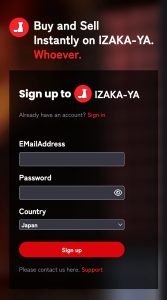
IZAKA-YA is well suited for beginners who want to get started with crypto without having to learn complex systems. One of its key strengths is that it does more than just store assets—it is designed to allow users to immediately make use of their holdings within a single platform.
For example, users can lend their assets to earn returns or swap tokens directly, without needing to transfer funds to another exchange. This significantly reduces the number of steps required, especially for new users.
In terms of user experience, IZAКА-YA is designed to be intuitive and ready to use with minimal setup. It is particularly suitable for those who are not yet familiar with DeFi terminology or systems and prefer to start with something more accessible.
However, this type of wallet is custodial, meaning the platform manages the private keys on behalf of the user. While this offers convenience, it also means users do not have full control over their assets and it may not be suitable for more advanced Web3 use cases such as NFTs or complex DeFi activities.
MetaMask — A Gateway to the Web3 Ecosystem

MetaMask wallet is one of the most widely used crypto wallets, particularly among DeFi and NFT users. It can connect to a wide range of Web3 platforms, whether for trading on decentralized exchanges, minting NFTs, or interacting with blockchain-based applications.
A key feature of MetaMask is that it is a self-custody wallet, meaning users hold their own private keys and therefore have full control over their assets. It also allows users to add and switch between different networks, enabling one wallet to operate across multiple ecosystems.
However, this flexibility comes with a certain level of complexity, especially for beginners who may not yet be familiar with networks, gas fees, or connecting wallets to external websites. Additionally, MetaMask is a common target for phishing attacks, so users need to exercise caution when using it.
Trust Wallet — Simplicity Combined with Functionality

Trust Wallet is another well-known crypto wallet, suitable for general users, particularly those who primarily use mobile devices—and is often considered one of the best crypto wallet options for its ease of use.
The application is designed to be user-friendly and consolidates essential features into a single platform, including asset storage, token swaps, staking, and access to decentralized applications (DApps).
One of Trust Wallet’s main advantages is its support for a wide range of coins and networks, making it suitable for users with diversified portfolios who prefer managing everything within one app.
However, as a self-custody wallet, users are fully responsible for their private keys. This means that if the information is lost or compromised, it cannot be recovered.
Phantom — A Strong Choice within the Solana Ecosystem

Phantom wallet is a crypto wallet that has gained significant popularity among Solana users, particularly those involved in NFTs and meme coins.
Its main strength lies in its UI/UX design, which is smooth and easy to use. Even beginners can navigate the wallet without feeling overwhelmed.
Another advantage is its NFT management capability. It displays NFTs in a gallery format and can automatically filter out spam NFTs.
However, while Phantom has begun to expand into multi-chain support, its ecosystem is still not as extensive as MetaMask. Therefore, it is best suited for users who primarily operate within the Solana ecosystem.
Cold Wallet — A Choice for Long-Term Security

Cold Wallets
After exploring Hot Wallets, another equally important category is “Cold Wallets“, also known as “Hardware Wallets“.
A cold wallet is a crypto wallet that is not continuously connected to the internet—or in some cases, not connected at all. This helps reduce the risk of hacking, as it stores private keys in a device isolated from the online environment, which is why many consider it the best crypto wallet option for security.
In simple terms, if a hot wallet is like a wallet you carry every day, a cold wallet is more like a secure safe used to store important assets.
Cold Wallets come in various forms, but the most common type is the Hardware Wallet. This is a dedicated physical device, often resembling a USB drive or card, used to store private keys offline and confirm transactions.
Ledger — A Popular Choice for Long-Term Holders

Ledger wallet is one of the most widely used hardware wallets, particularly among investors who hold crypto as a long-term asset, and many consider it one of the best crypto wallet options for security-focused users.
Its key strength lies in balancing security and usability. The device stores private keys offline and acts as a verification layer for every transaction, significantly reducing the risk of online attacks.
You can connect Ledger to applications such as Ledger Live or even MetaMask, allowing you to manage your portfolio and perform transactions as usual. However, you must confirm every transaction on the physical device, which adds an extra layer of security.
Ledger also supports a wide range of coins and networks, making it suitable for users with diversified holdings. That said, you will need to purchase the device, and the setup process can be slightly more complex than hot wallets, especially for beginners.
Ledger Models and Approximate Pricing
Ledger offers several models with different features and levels of convenience:
- Ledger Nano S Plus — approximately $70–$100
Entry-level model, suitable for basic security needs, connects via USB without Bluetooth - Ledger Nano X — approximately $150–$200
Popular model with Bluetooth support, convenient for mobile use and greater flexibility - Ledger Stax — $300+
Premium model with a touchscreen design, improved usability, and NFT display support
Trezor — Focused on Transparency and Trust

Another notable crypto wallet is Trezor wallet, which is also a widely used hardware wallet.
Its defining feature is that it is an open-source system, allowing users to review its code. This makes it a strong choice for those who value transparency and system reliability.
In terms of usability, Trezor is designed to be relatively easy to use, with a clear interface and support for a wide range of cryptocurrencies, similar to Ledger.
It also includes additional security features, such as Shamir Backup, which splits the seed phrase into multiple parts to enhance risk management flexibility.
However, like other hardware wallets, it requires a separate device purchase and may be less convenient for everyday use compared to hot wallets.
Trezor Models and Approximate Pricing
Trezor offers several main models suited to different types of users:
- Trezor Model One — approximately $70–$100
Basic model, easy to use, suitable for beginners - Trezor Model T — approximately $200–$300
Advanced model with touchscreen, broader asset support, and additional security features - Trezor Safe 3 / Safe 5 — approximately $80–$250
Newer models with enhanced security and improved design
Crypto Wallet Comparison Table
| Wallet | Type | Suitable For | Ease of Use | Security | Price |
|---|---|---|---|---|---|
| IZAКА-YA | Hot (Custodial) | Beginners / yield-focused users | Very Easy | Medium | Free |
| MetaMask | Hot (Self-custody) | DeFi / NFT / Web3 | Medium | Medium–High | Free |
| Trust Wallet | Hot (Mobile) | Mobile users / multi-asset holders | High | Medium | Free |
| Phantom | Hot (Solana) | NFT / Solana users | High | Medium | Free |
| Ledger | Cold (Hardware) | Long-term holders / large portfolios | Low | Very High | ~$70–300+ |
| Trezor | Cold (Hardware) | Security / privacy-focused users | Low | Very High | ~$70–250 |
Crypto Wallet Security: A Small Detail You Shouldn’t Overlook
Conclusion: Which Crypto Wallet Should You Choose?
Ultimately, the question of which crypto wallet is best does not have a fixed answer.
Each wallet serves a different purpose—some prioritize simplicity, others focus on flexibility, while others emphasize security.
Based on practical usage:
- Beginners looking for simplicity → IZAKА-YA
- Users entering DeFi or NFTs → MetaMask
- Those who prefer mobile convenience → Trust Wallet
- Long-term holders focused on security → Ledger or Trezor
The key is not to find the “best” wallet, but to choose the one that best fits how you use crypto.
In practice, many users do not rely on just one wallet. Instead, they use multiple wallets together—for example, a hot wallet for daily use and a cold wallet for long-term storage.
Frequently Asked Questions
A crypto wallet stores private keys, allowing you to access and manage digital assets on the blockchain. It does not store the coins themselves directly.
It is not necessary immediately, but if you plan to hold crypto long-term, having a crypto wallet allows you to control your assets yourself and reduces reliance on exchanges.
If you are just starting out, choose an easy-to-use crypto wallet such as IZAКА-YA or Trust Wallet, as they require minimal setup and you can start using them immediately.
Cold wallets such as Ledger or Trezor offer the highest level of security because they store private keys offline, which reduces the risk of online hacking.
Yes, and it is a common approach. For example, many users use MetaMask for DeFi and NFTs while using a hardware wallet to store their main assets.
If you use a self-custody crypto wallet and lose your seed phrase, you won’t be able to recover your wallet. Therefore, store it securely and never keep it online.