

Finding the right place to store your cryptocurrency can feel overwhelming. Many beginners start by leaving their coins on an exchange, which puts their assets at risk if the platform collapses. This is where non-custodial software wallets step in. Today, we are taking a close look at one of the most recognizable names in the industry to help you decide if it is the right fit for your digital assets.
If you have been searching for a detailed atomic wallet review, you are in the right place. We will explore its features, unpack its security history, and compare it to other popular options on the market.
What Is an Atomic Wallet?
Before diving into the complex features, it helps to answer a basic question. Exactly what is an atomic wallet?
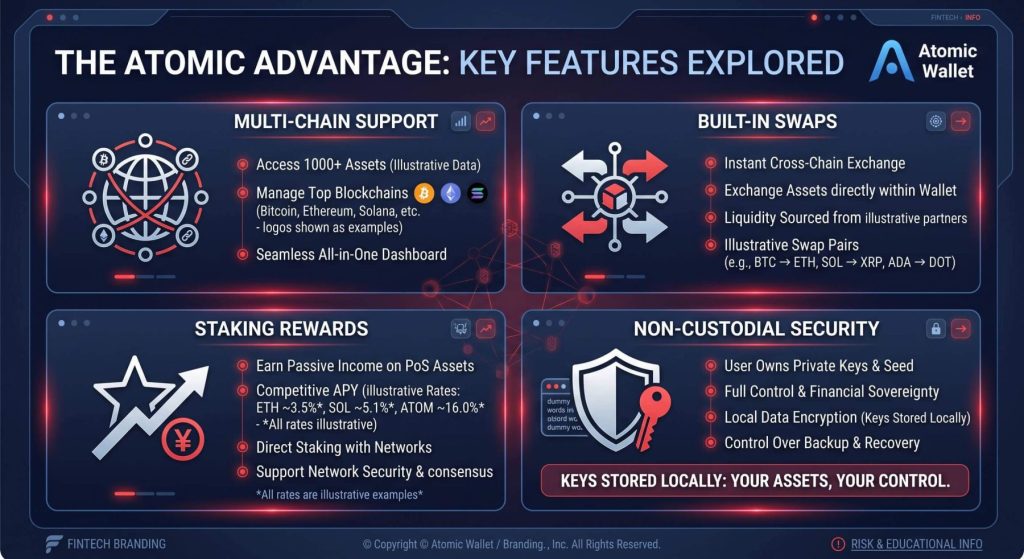
Atomic wallet is a cryptocurrency wallet designed for storing and managing digital assets. The wallet supports hundreds of cryptocurrencies, including Bitcoin, Ethereum, Solana, XRP, and many ERC-20 tokens. This non-custodial wallet is designed for desktop and mobile devices. “Non-custodial” means that you are the only person who holds the private keys to your cryptocurrency. The company behind the software cannot access your funds, freeze your account, or reverse your transactions. It serves as a personal, decentralized dashboard where you can store, swap, and manage over 300 different digital assets without needing to register an account or provide personal identification.
Key Features of the Atomic Wallet App
The Atomic Wallet app combines storage, staking, and crypto swapping in one interface. For casual users, this all-in-one approach is often easier than managing several DeFi tools separately.
Extensive Multi-Chain Support
Storing different coins usually requires downloading separate wallets for each blockchain. Atomic solves this by supporting major networks like Bitcoin, Ethereum, Solana, and Cardano in a single dashboard. You can view your entire portfolio balance at a glance.
Similar to Exodus wallet, which is another popular non-custodial wallet known for its visually appealing cross-platform sync between desktop and mobile, Atomic allows you to view your entire multi-chain portfolio balance at a single glance.
Built-In Swap Features
You do not need to send your funds to an external exchange just to trade one coin for another. The app includes a built-in swap feature that lets you exchange hundreds of tokens instantly. Much like MetaMask wallet‘s widely used in-app swapping tool for EVM networks, Atomic app includes a built-in swap feature that lets you exchange hundreds of tokens instantly without ever leaving your dashboard.
Users can:
- Swap supported assets directly inside the wallet
- Avoid transferring funds to centralized exchanges
- Access quick conversions between popular cryptocurrencies
However, exchange rates and fees may not always be the cheapest compared to dedicated trading platforms.
Atomic Wallet Staking Explained
One of the most attractive features for long-term investors is atomic wallet staking. Just as Phantom wallet gained massive popularity by offering streamlined, in-app Solana staking, Atomic makes things incredibly simple for beginners by showing the estimated yearly yield upfront.
Staking allows you to earn rewards simply by holding certain cryptocurrencies in your wallet and delegating them to the network. The app supports staking for several popular assets. The interface shows you the estimated yearly yield upfront, making it incredibly simple for beginners to start generating passive income from their holdings. Common staking assets include:
- ATOM
- SOL
- ADA
- BNB
- TRX
For passive holders, staking offers a way to generate yield without actively trading. However, staking comes with risks:
- Token prices can fall during lock-up periods
- Validator issues may impact rewards
- Some assets require unbonding periods before withdrawal
Many crypto users leave assets idle for years. Staking can make holdings more productive if the risks are understood properly.
If you are exploring other ways to maximize your yields safely, you might also want to check out the IZAKA-YA Crypto lending wallet for flexible passive income options.
How Atomic Wallet Works
The wallet operates as a software application available on desktop and mobile devices. After installation, users receive a recovery phrase that acts as the master backup for the wallet.
Here’s the basic flow:
- Download the Atomic Wallet app
- Create a new wallet
- Save the recovery phrase securely
- Deposit crypto assets
- Use wallet features like staking or swaps
Because it is non-custodial, Atomic Wallet does not hold your funds on company servers. Your device and recovery phrase are what protect access to the wallet.
The 2023 Atomic Wallet Hack: What Actually Happened?
When discussing security, we have to address the elephant in the room. In June 2023, the platform suffered a severe security breach known as the atomic wallet hack.
During this incident, some users reported unauthorized withdrawals affecting millions of dollars worth of crypto assets. The exact root cause was never fully clarified publicly, although reports and community investigations estimated that cybercriminals drained between $35 million and $100 million in digital assets from affected wallets.
The attackers targeted multiple blockchains, stealing Bitcoin, Ethereum, Tether, and various altcoins. While the company stated that fewer than 1% of its monthly active users were impacted, the scale of the losses still sent shockwaves across the crypto community.
Blockchain security firms later traced portions of the stolen funds to mixing services commonly associated with sophisticated cybercrime and state-linked hacking groups.The exact technical vulnerability that caused the breach was never fully detailed to the public, which left many users frustrated. This incident serves as a harsh reminder that even popular software wallets carry inherent risks.
Is Atomic Wallet Safe to Use Today?
Because of the 2023 incident, the question “is atomic wallet safe” is heavily debated in crypto circles today.
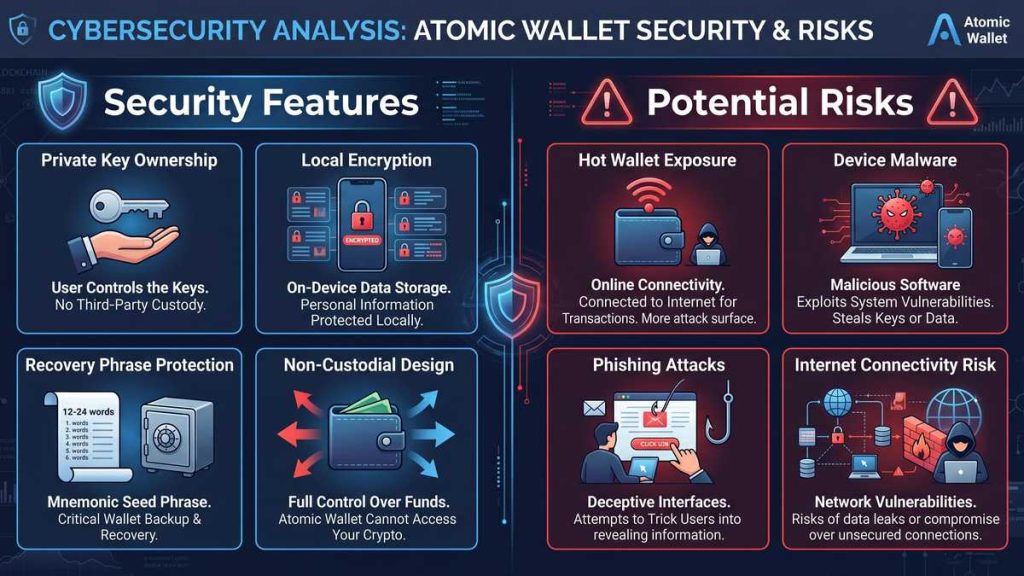
Following the breach, the development team worked alongside security firms to patch vulnerabilities and improve their underlying infrastructure. Currently, the wallet functions normally and processes thousands of successful transactions daily. Your private keys are generated locally and remain encrypted on your device.
However, safety in crypto is relative. While the app is functional and features robust local encryption, it remains a “hot wallet” connected to the internet. If your phone or computer is compromised by malware, your funds could still be at risk. It is generally considered safe for holding small amounts of crypto for daily trading or staking. For storing large life savings, hardware wallets remain the superior choice.
Trust Wallet vs Atomic Wallet: A Quick Comparison
Many users find themselves stuck choosing between different non-custodial apps. When looking at trust wallet vs atomic wallet, there are a few key differences you should know.
| Feature | Atomic Wallet | Trust Wallet |
| Primary Platform | Excellent desktop app & mobile app | Mobile-first design |
| Asset Support | 300+ cryptocurrencies | Millions of tokens across 70+ blockchains |
| Web3 & DApp Support | Basic connection features | Deep integration with DApps and Web3 |
| Open Source | Partially closed source | Fully open source |
Trust Wallet is generally preferred by users who want to dive deep into decentralized finance and connect to Web3 applications on their phones. Atomic is usually favored by users who prefer managing their portfolio on a desktop computer and want a simple, all-in-one interface for basic swaps and staking.
Final Verdict: Should You Use It?
The atomic wallet app remains a highly convenient tool for users who want to hold various altcoins, swap tokens without KYC, and stake assets from a single screen. Its desktop application is particularly well-designed and user-friendly.
However, the 2023 hack is a vital piece of context. If you prioritize convenience and only plan to hold moderate amounts of cryptocurrency, it is a solid option. If you hold a massive portfolio, you should invest in a hardware wallet instead of relying entirely on any software application.
A growing number of holders are also exploring alternative ways to put idle assets to work. Platforms like IZAKA-YA aim to give crypto users more flexibility beyond simply holding coins passively.
Easy Steps to Start IZAKA-YA Lending
- Step 1: Register for IZAKA-YA
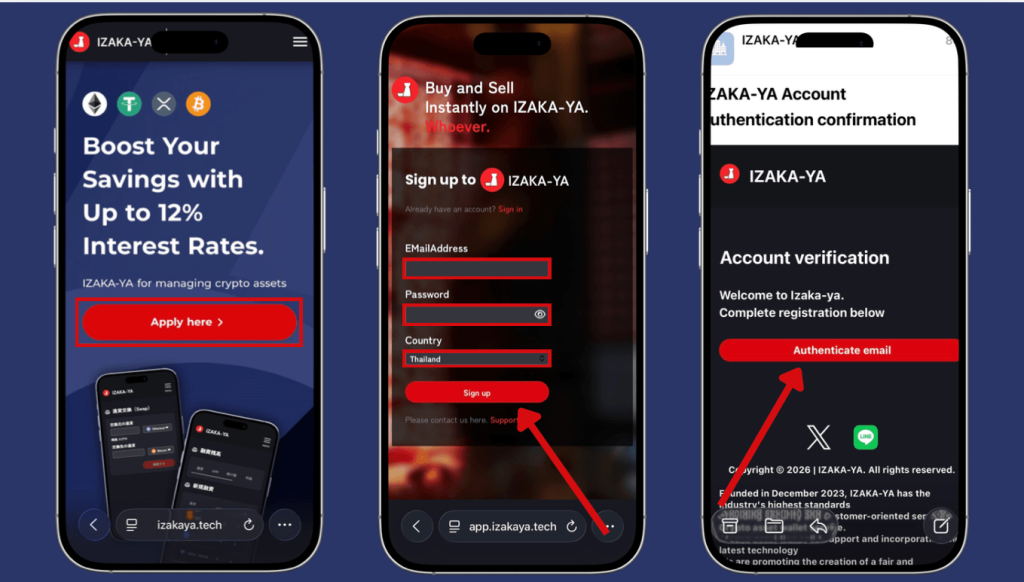
- Step 2: Deposit funds into IZAKA-YA.
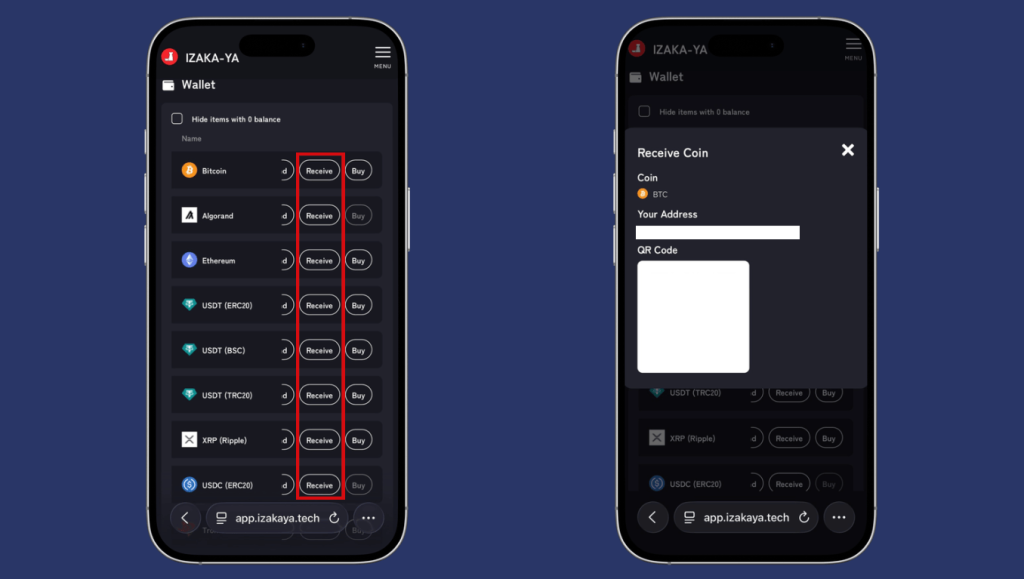
- Step 3: IZAKA-YA Lending Guide (Part 1).
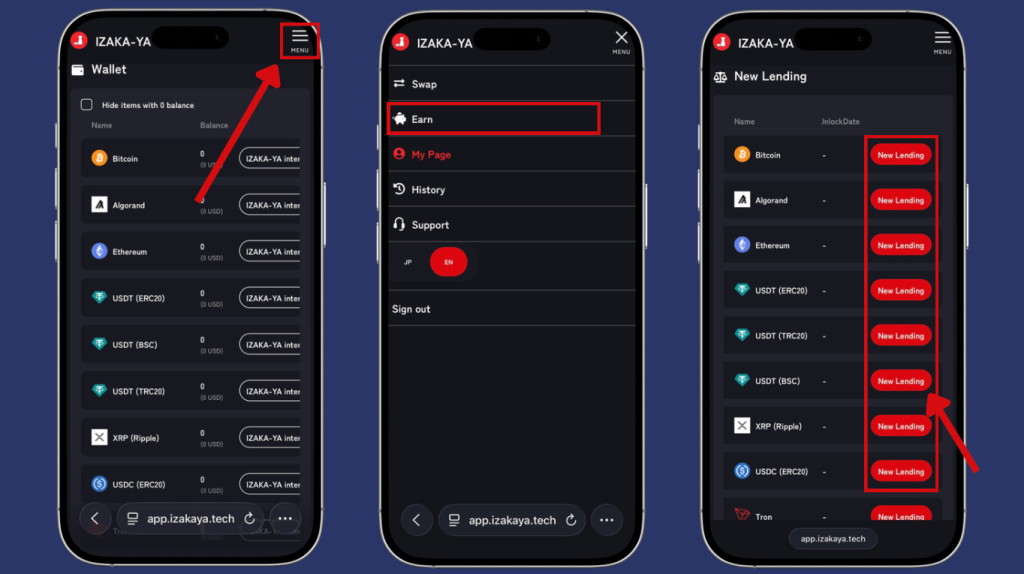
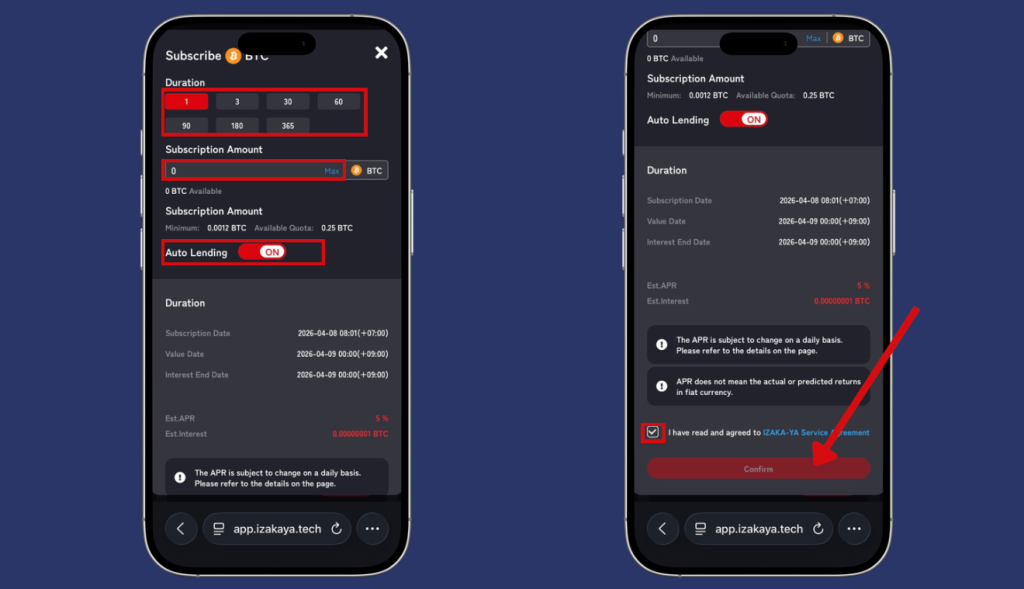
- Step 4: IZAKA-YA Lending Guide (Part 2).
Register IZAKA-YAkeyboard_arrow_right
Frequently Asked Questions (FAQ)
Atomic Wallet is a non-custodial cryptocurrency wallet that supports storage, staking, and crypto swaps for multiple digital assets. Atomic Wallet includes encryption and private key control, but it has faced security concerns after the 2023 Atomic Wallet hack. Users should practice strong wallet security habits. The wallet itself does not charge fees to send or receive crypto. You only pay the standard network fees required by the blockchain. However, using the built-in exchange or buying crypto with a credit card will incur third-party service fees. No. You do not need to provide an ID, email address, or phone number to set up a wallet, receive funds, or use the staking features. Identity verification is only required if you purchase cryptocurrency directly using a credit card through their third-party fiat gateways. Yes. The wallet supports Bitcoin along with many other cryptocurrencies and blockchain networks. No. Atomic Wallet is a hot wallet because it stays connected to the internet. A Cold Storage Wallet keeps private keys offline, which provides a different level of protection for users who want to store crypto for the long term. No. Atomic Wallet does not currently support Monero (XMR). If you want to store, send, and manage XMR, you will need a dedicated Monero wallet that supports the Monero network.