


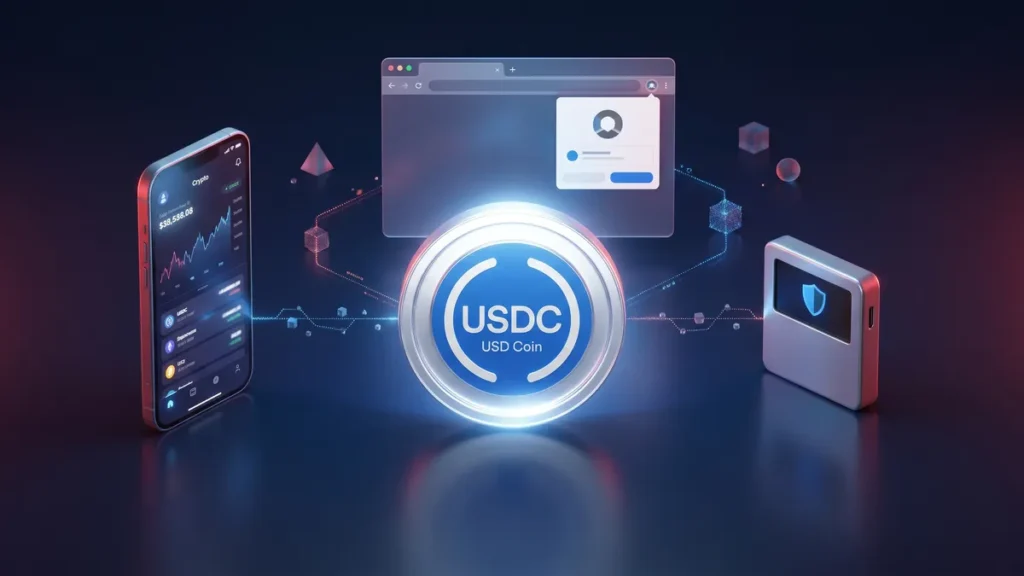
Choosing the right place to store your stablecoins is one of the most important decisions you can make as a cryptocurrency user. While USDC is designed to maintain a stable value, the wallet you choose determines how securely you hold your assets, how easily you can access them, and whether you can put them to work through lending or other decentralized finance opportunities.
With dozens of options available, finding the best USDC wallet in 2026 is no longer just about storage. Many modern wallets have evolved into complete financial ecosystems, offering everything from token swaps and yield generation to cross-chain support and Web3 connectivity. Understanding the strengths and trade-offs of each type of wallet can help you select the solution that best aligns with your goals.
What is USDC?
USDC, or USD Coin, is a type of cryptocurrency known as a stablecoin designed to hold a steady value. It is pegged exactly 1:1 to the United States dollar. For every single USDC in circulation, there is one real US dollar or cash equivalent held in a secure, audited bank account.
USDC was launched in September 2018 by the Centre Consortium. This organization was a joint venture between two massive players in the crypto industry: Circle (a global financial technology firm) and Coinbase (one of the largest cryptocurrency exchanges). In August 2023, the Centre Consortium was dissolved, and Circle took over full governance and management of the stablecoins.
Key Features
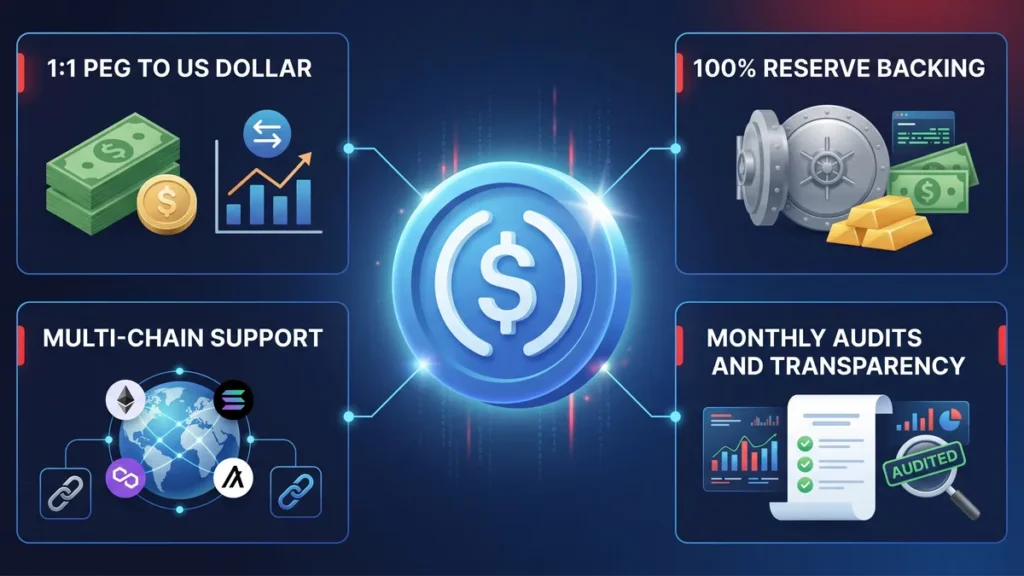
The primary appeal of USDC lies in its reliability and transparency. Here is what makes it stand out:
- Full Reserve Backing: Every token is 100% backed by highly liquid cash and short-term US Treasury bonds.
- Monthly Audits: To prove the reserves actually exist, Circle publishes monthly attestation reports conducted by major accounting firms like Deloitte.
- Programmable Money: Because it exists on the blockchain, developers can code USDC into smart contracts for automated payments, escrow, or decentralized finance (DeFi) lending.
- Cross-Chain Transfers: Through Circle’s Cross-Chain Transfer Protocol (CCTP), users can move USDC seamlessly and securely across different networks in under a minute without relying on third-party bridges.
What Makes the Best Wallet for USDC?
The ideal wallet should balance security, convenience, and functionality. Security remains the highest priority, especially when storing larger amounts of stablecoins. Features such as biometric authentication, two-factor authentication, encryption, and backup mechanisms can provide additional peace of mind.
Compatibility is equally important. USDC exists on multiple blockchains, including Ethereum, Solana, Polygon, Base, Avalanche, and Arbitrum. A wallet that supports several networks allows users to move assets efficiently and take advantage of lower transaction fees or different DeFi ecosystems.
Modern users also expect more than basic storage. Built-in swaps, lending services, staking opportunities, and portfolio tracking can transform a wallet into a complete financial hub. At the same time, ease of use should not be overlooked. A clear and intuitive interface can significantly reduce the learning curve for newcomers entering the crypto space.
Top Picks: The Best USDC Wallets in 2026
IZAKA-YA: Best USDC Wallet App for Beginners and Passive Income
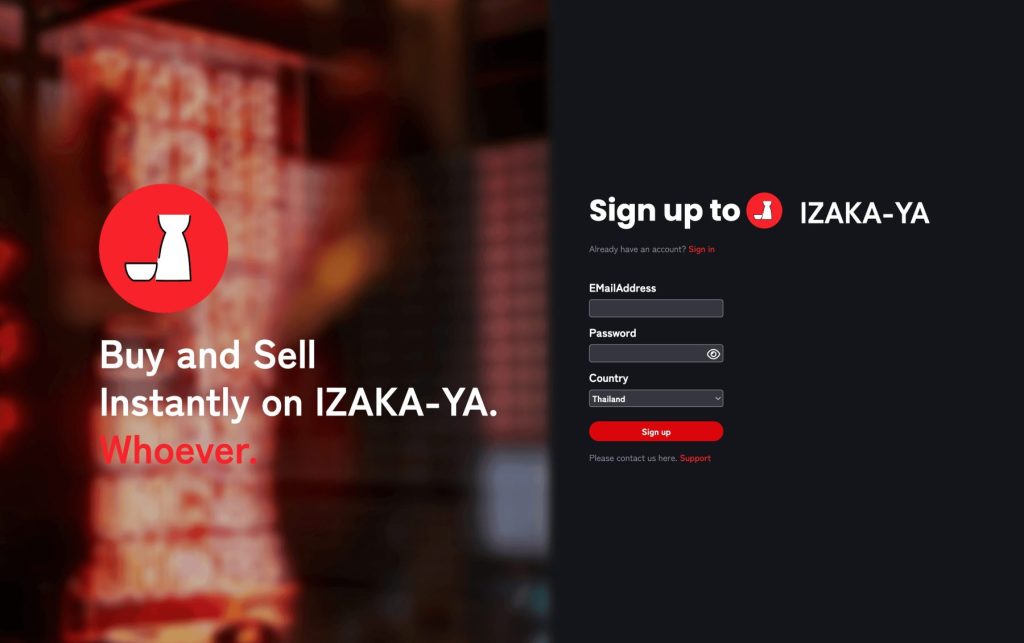
For users who prioritize simplicity and earning opportunities, IZAKA-YA stands out as one of the most beginner-friendly platforms available. Rather than serving only as a storage solution, it functions as an all-in-one ecosystem where users can manage and grow their assets without constantly transferring funds between different platforms.
Its strongest advantage lies in its integrated financial features. Users can lend their USDC directly within the platform and generate passive returns without navigating complicated decentralized finance protocols. Token swaps are also available, allowing assets to be exchanged conveniently from a single interface.
The user experience is intentionally designed for accessibility. Even individuals with little knowledge of blockchain technology can start using the platform quickly without understanding concepts such as gas fees, seed phrases, or smart contracts.
As a custodial wallet, IZAKA-YA manages private keys on behalf of users. This arrangement offers convenience and easier account recovery but requires trusting the platform with custody of funds. While this approach may not appeal to experienced Web3 users seeking complete decentralization, it makes the process considerably simpler for those focused on earning stable yields with minimal complexity.
For passive investors and newcomers to cryptocurrency, the IZAKA-YA crypto lending wallet provides a straightforward path to putting idle stablecoins to work.
Register IZAKA-YAkeyboard_arrow_right
MetaMask: The Gateway to Ethereum and DeFi
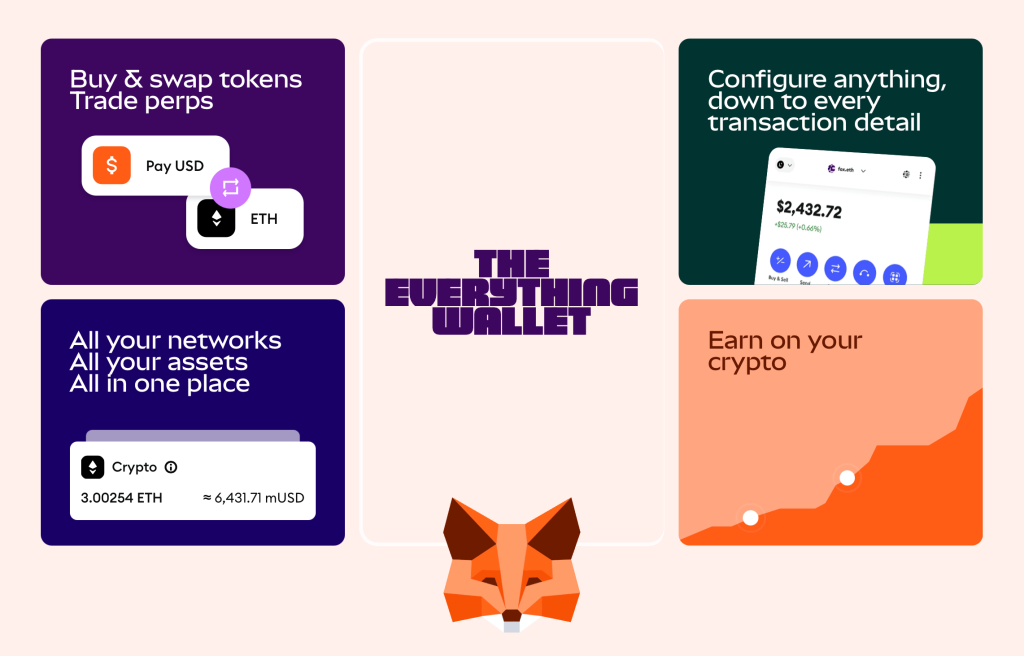
MetaMask remains one of the most widely used non-custodial wallets in the world. Originally launched as a browser extension, it has become the primary gateway for millions of users accessing decentralized applications on Ethereum and compatible networks.
One of MetaMask’s greatest strengths is flexibility. Users maintain full control over their private keys and can connect directly to thousands of decentralized exchanges, lending protocols, NFT marketplaces, and Web3 applications. Support for networks such as Ethereum, Base, Arbitrum, Polygon, and BNB Chain makes it particularly attractive for active DeFi participants.
However, this freedom comes with greater responsibility. Users must securely store their recovery phrase, as losing it means losing access to their assets permanently. Beginners may also find concepts such as gas fees, token approvals, and network switching somewhat intimidating initially.
MetaMask is best suited for users who actively interact with decentralized finance and want complete ownership of their assets without relying on centralized intermediaries.
Phantom: A User-Friendly Choice Beyond Solana
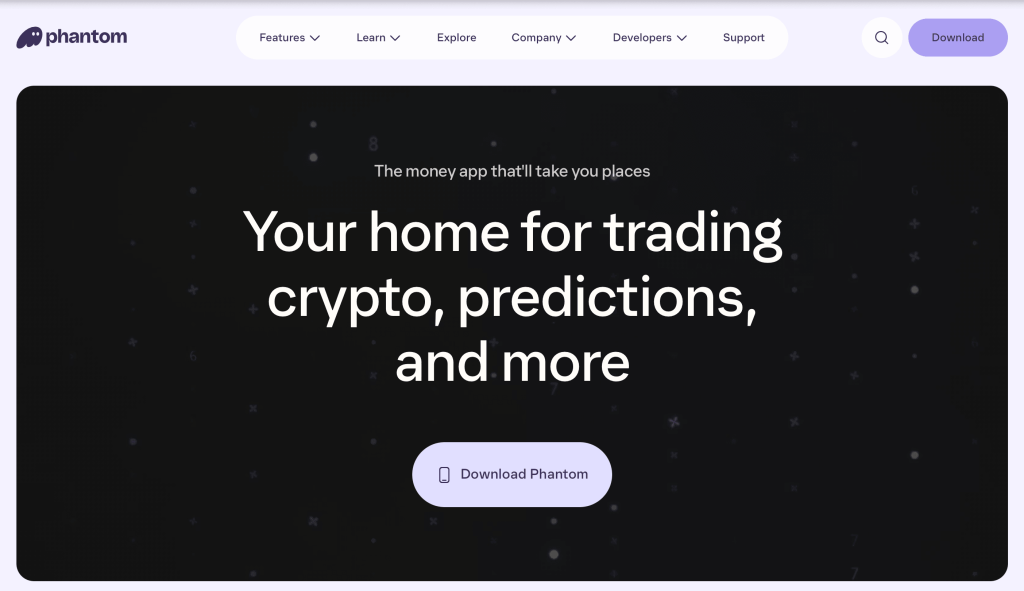
Although Phantom initially gained popularity as the leading wallet for the Solana ecosystem, it has evolved into a multi-chain wallet supporting Ethereum, Polygon, and Bitcoin. Its polished design and smooth user experience have made it a favorite among both beginners and experienced users.
Phantom’s interface is widely regarded as one of the cleanest in the industry. Sending assets, swapping tokens, and managing NFTs are remarkably straightforward, even for first-time users. Thanks to Solana’s high throughput and low fees, USDC transactions through Phantom are often significantly cheaper and faster compared to Ethereum.
The wallet also integrates seamlessly with numerous decentralized applications and NFT marketplaces, making it attractive for users who value speed and convenience.
While Phantom’s ecosystem is growing rapidly, users heavily involved in Ethereum-based DeFi may still find MetaMask’s broader compatibility more advantageous.
Coinbase Wallet: Self-Custody with Mainstream Simplicity
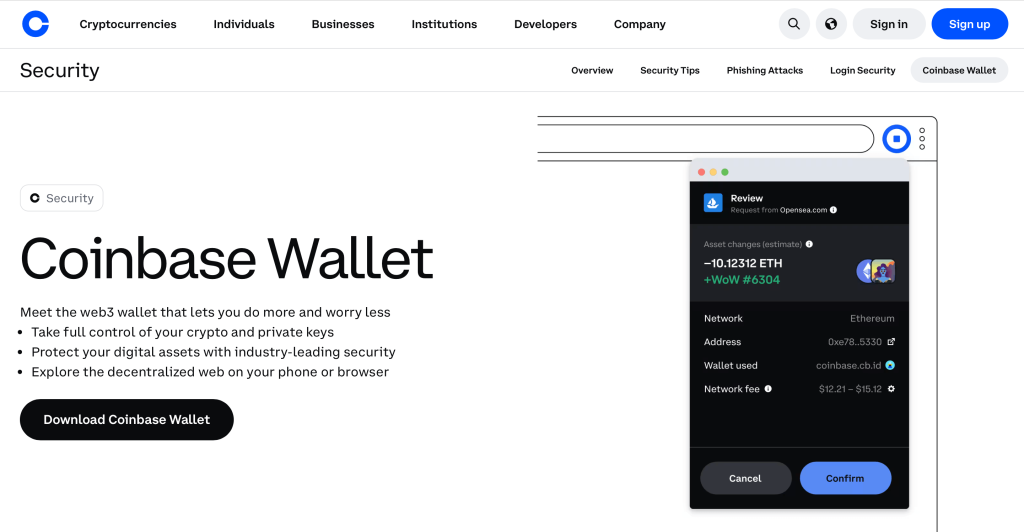
Coinbase Wallet bridges the gap between centralized exchanges and self-custody. Unlike keeping assets directly on the Coinbase exchange, Coinbase Wallet gives users full ownership of their private keys while preserving a user-friendly experience.
Its interface is designed with accessibility in mind, making it an excellent option for individuals transitioning from traditional investing into cryptocurrency. Users can connect to decentralized applications, hold NFTs, and store USDC across multiple blockchains without sacrificing simplicity.
Another advantage is the integration with the broader Coinbase ecosystem, which makes transferring assets between the exchange and the wallet relatively seamless. This combination of convenience and self-custody has helped Coinbase Wallet become one of the most trusted options for retail investors.
The wallet may not offer as much customization or advanced functionality as MetaMask, but its ease of use makes it particularly appealing to mainstream users.
Hardware Wallets: The Gold Standard for Security
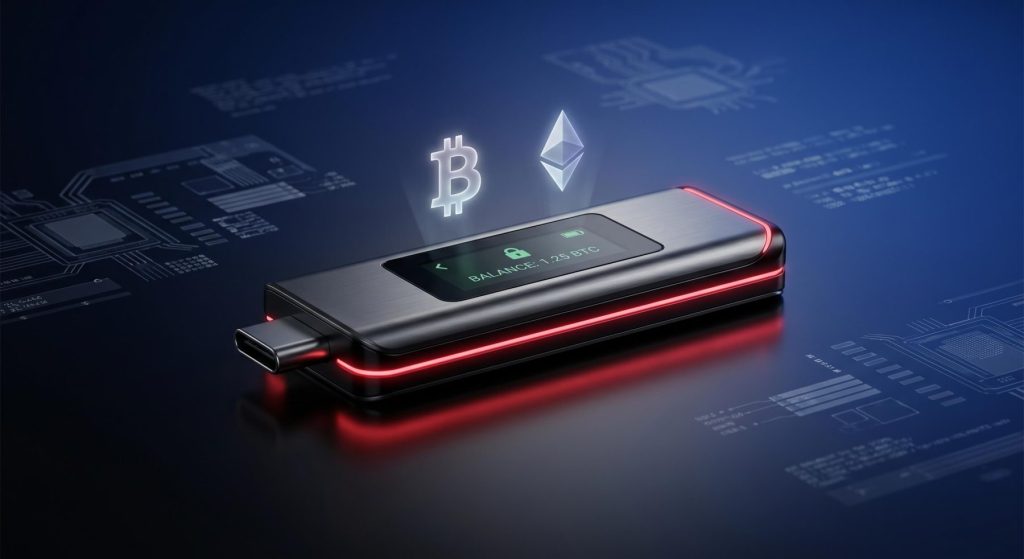
For long-term holders with substantial balances, hardware wallets remain the safest option available. Devices such as Ledger and Tangem store private keys offline, protecting funds from malware, phishing attacks, and online threats.
Because transactions require physical approval, unauthorized access becomes considerably more difficult. This level of security makes hardware wallets especially attractive to investors who view USDC as a long-term store of value rather than an actively traded asset.
The trade-off is convenience. Accessing funds requires the physical device, and the initial setup process can be intimidating for inexperienced users. Nevertheless, many investors consider these minor inconveniences worthwhile in exchange for superior protection.
Understanding Different Storage Models
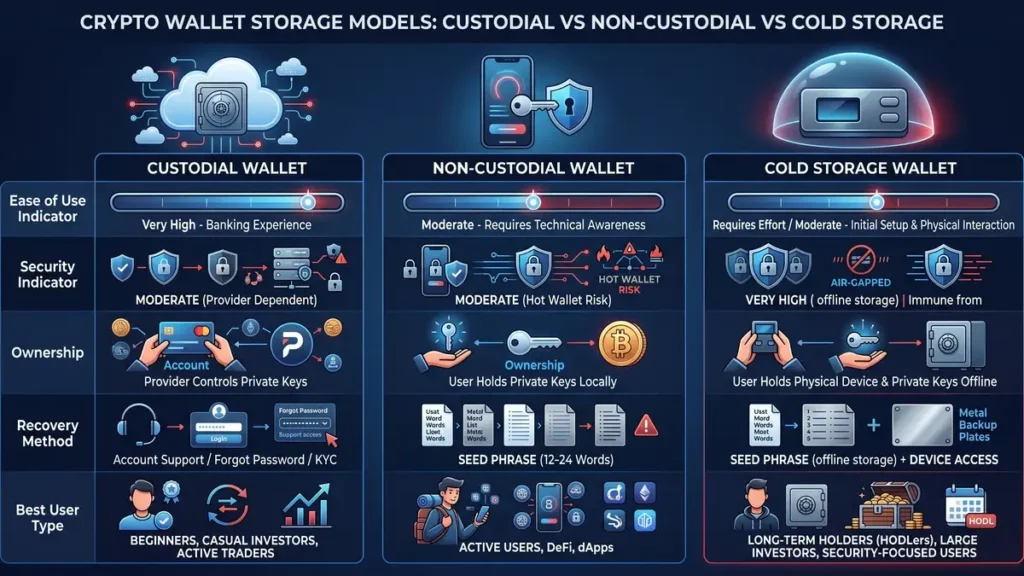
The type of wallet you choose ultimately depends on how you plan to use your stablecoins.
Custodial wallets prioritize convenience. Password recovery is simple, and technical complexity is reduced because the provider manages security on your behalf. This model appeals to beginners and users interested in passive income opportunities.
Non-custodial wallets offer complete ownership and greater access to decentralized applications. They provide significantly more freedom but also place full responsibility for security on the user.
Cold storage solutions maximize security by keeping private keys offline. While they are less convenient for daily transactions, they are widely regarded as the safest choice for preserving wealth over extended periods.
Rather than one approach being universally superior, each serves a different type of investor.
Which USDC Wallet Is Best for You?
There is no single answer to the question of which is the best USDC wallet in 2026. The right choice depends largely on your priorities.
If you value simplicity and passive income opportunities, IZAKA-YA offers an accessible all-in-one experience. Users seeking complete ownership and extensive DeFi access will likely appreciate MetaMask. Those attracted to Solana’s speed and low fees may find Phantom particularly compelling, while Coinbase Wallet provides an excellent balance between self-custody and ease of use. For investors focused primarily on security and long-term preservation, hardware wallets continue to represent the highest standard of protection.
Ultimately, the best wallet is the one that matches how you intend to use your USDC. Whether your goal is earning yield, interacting with decentralized applications, or simply safeguarding your assets, choosing the right wallet can make your stablecoin experience both safer and more rewarding.
Easy Steps to Start IZAKA-YA Lending
In this guide, we’ll walk you through how to create a crypto wallet with IZAKA-YA, one of our recommended platforms.
Step 1: Sign Up for an IZAKA-YA Account
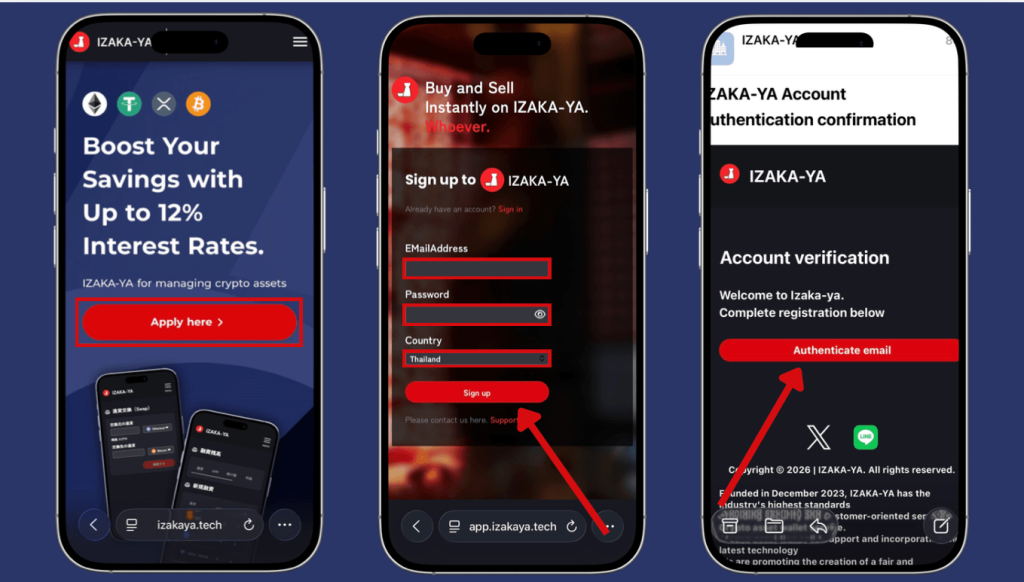
The first step is to create a wallet where you can securely store and manage your USDC on IZAKA-YA.
How to Sign Up
- Visit the IZAKA-YA registration page and click “Start” on the “Confirm you are human” security verification screen. Follow the on-screen instructions to complete the verification.
- Enter your email address, create a password, select your country of residence, and click “Sign Up.”
- Check your inbox for the verification email from IZAKA-YA, then click “Verify” to activate your account.
The entire registration process usually takes around 3 minutes.
Step 2: Get Your Bitcoin Deposit Address and Fund Your Wallet
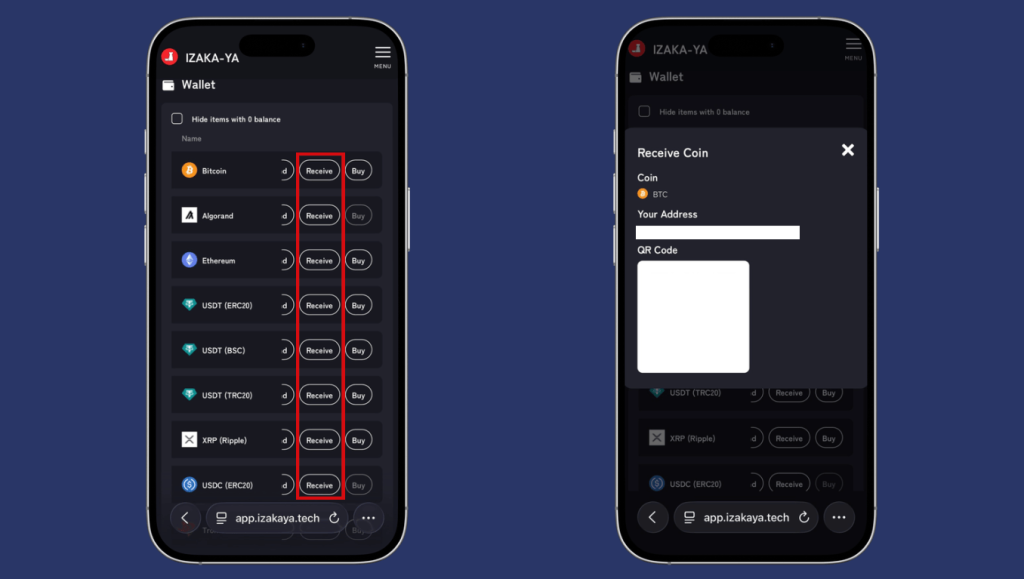
Once your wallet is ready, you can transfer Bitcoin (BTC) into it.
How to Deposit Bitcoin
- Go to your Wallet dashboard, where you’ll see the list of supported cryptocurrencies.
- Find USDC (ERC20) and click “Deposit.”
- A QR code and your wallet address will appear. Copy the wallet address.
- Open the exchange or crypto wallet where you currently store your coin.
- Paste the copied address into the Withdrawal Address field and send your coin.
Step 3: Lend Your Bitcoin to Earn Passive Income
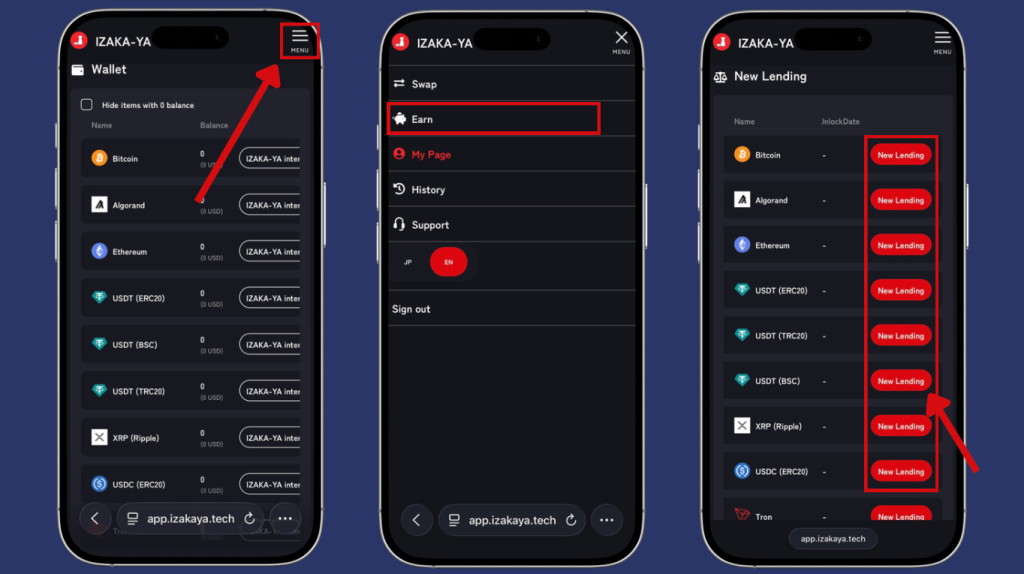
After your USDC has been deposited into your wallet, you can join IZAKA-YA’s Crypto Lending program to earn passive income from your holdings.
How to Start Lending
- Click the menu icon (three horizontal lines) in the top-right corner and select “Lending.”
- From the list of supported assets, find USDC (ERC20) and click the red “New Lending” button.
Step 4: Start Lending on IZAKA-YA
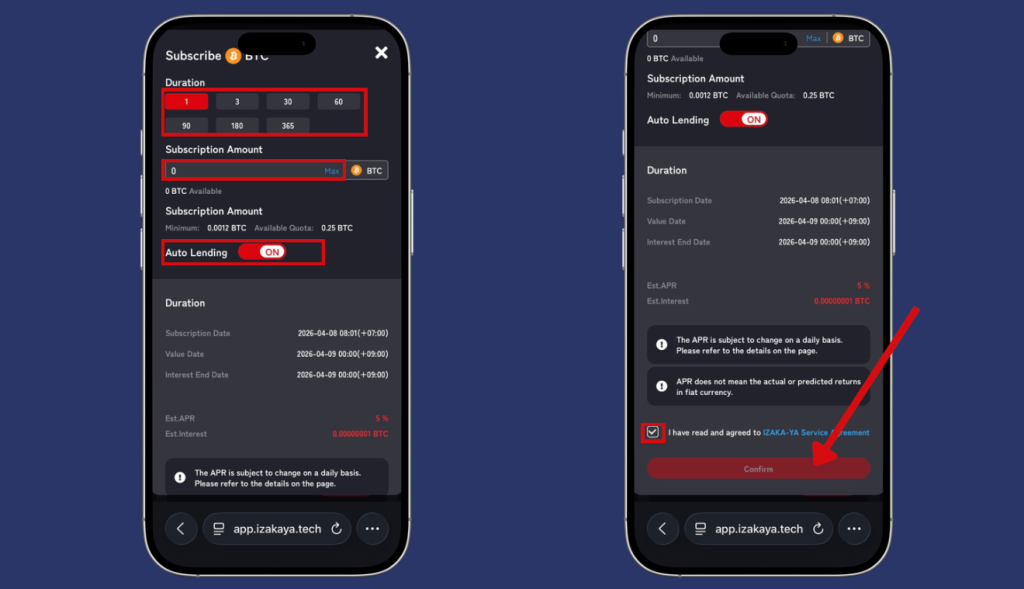
- Choose your preferred lending period (number of days).
- Enter the amount of USDC you want to lend.
- If you’d like your funds to be automatically re-lent when the term ends, enable “Auto-Renew Lending.”
- Check the confirmation box and click the red “Apply” button to start lending your coin.
Start lending on IZAKA-YAkeyboard_arrow_right
Frequently Asked Questions
Most software wallets are free to download and set up. However, blockchain network fees still apply whenever you transfer or swap assets.
Platforms with integrated lending capabilities provide the easiest route to generating passive income. Solutions like IZAKA-YA simplify the process by allowing users to earn returns directly within the platform.
While centralized exchanges offer convenience, dedicated wallets generally provide greater flexibility and access to additional services. Depending on the type of wallet chosen, users may also gain more control over their assets and improved portfolio management.
Hardware wallets provide the highest level of protection because private keys remain offline. They are widely considered the best choice for users storing significant amounts of USDC for the long term.


