


If you’re just getting started with cryptocurrency, you’ve probably heard the term crypto wallet more than once. Whether you’re buying Bitcoin for the first time, exploring Ethereum, or looking into digital assets in general, a wallet is one of the first tools you’ll need to understand.
The word “wallet” can be a little misleading. Unlike the wallet in your pocket, a crypto wallet doesn’t actually store your coins. Instead, it gives you access to them on the blockchain and allows you to send, receive, and manage your digital assets securely.
Once you understand how crypto wallets work, the rest of the cryptocurrency ecosystem becomes much easier to navigate.
What Is a Crypto Wallet
A crypto wallet is a software application or physical device that allows you to access and manage cryptocurrency.
Rather than holding coins directly, a wallet stores the cryptographic keys that prove ownership of your assets on a blockchain network. These keys allow you to view your balance, receive payments, send cryptocurrency, and interact with blockchain-based applications.
A simple way to think about it is:
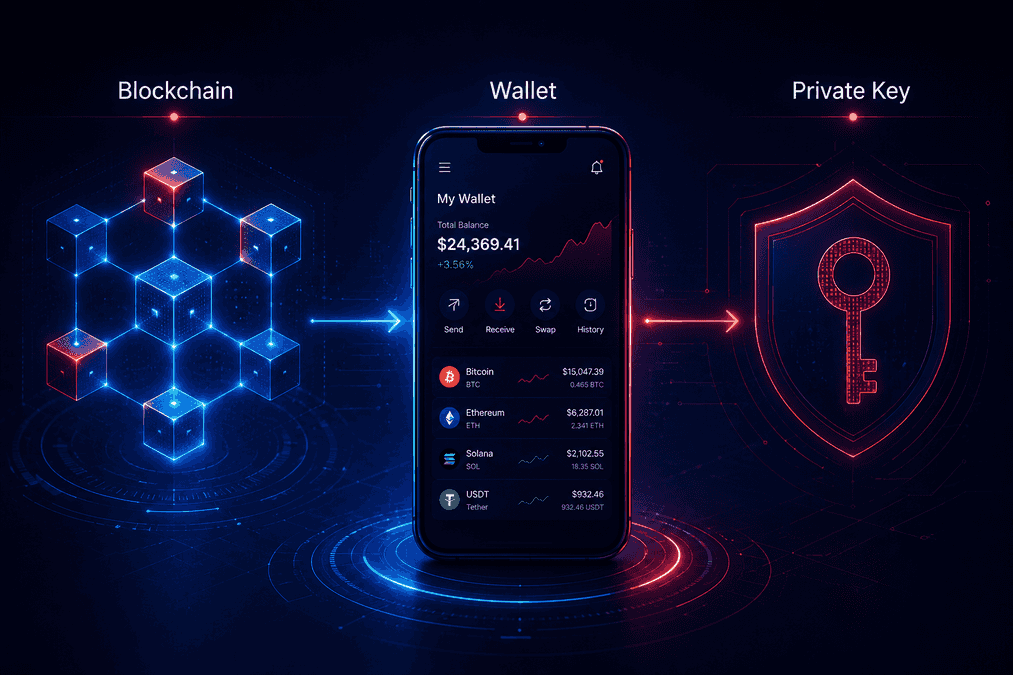
- The blockchain stores the record of who owns what.
- Your wallet gives you access to that record.
- Your private key proves that the assets belong to you.
Without a wallet, you wouldn’t be able to interact with most cryptocurrency networks.
Why Do You Need a Crypto Wallet?
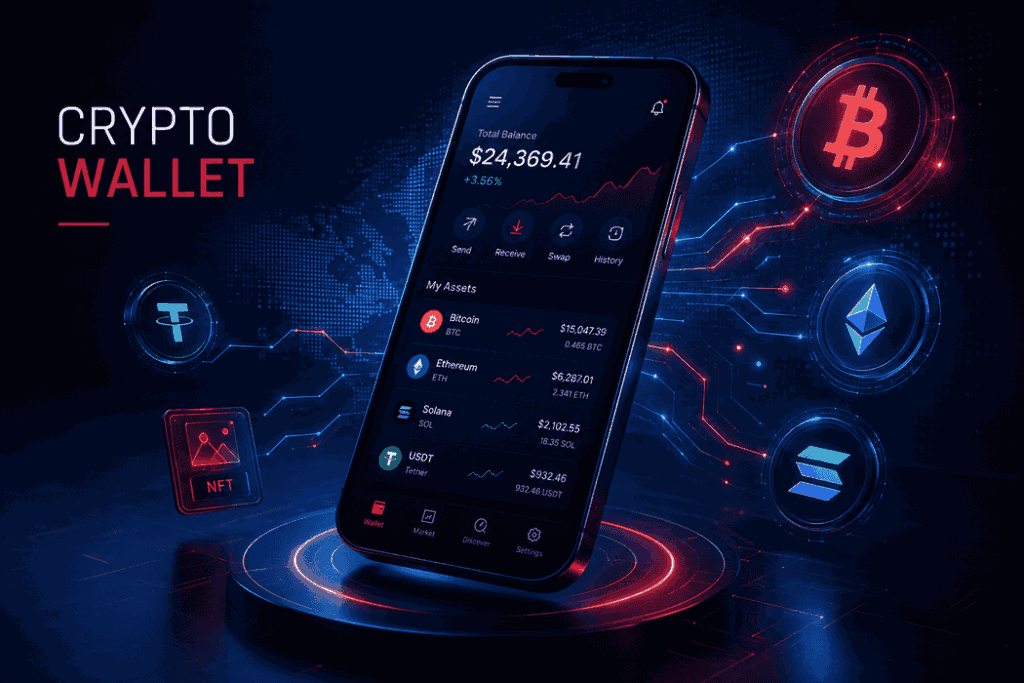
A crypto wallet does much more than store access credentials.
It allows you to:
- Send cryptocurrency to other users
- Receive payments from anyone around the world
- Store and manage digital assets
- Connect to decentralized applications (dApps)
- Participate in decentralized finance (DeFi)
- Manage NFTs and other blockchain-based assets
If you plan to do anything beyond simply holding crypto on an exchange, having your own wallet gives you greater control over your assets.
Many users prefer self-custody because it allows them to manage their funds independently rather than relying entirely on a third party.
What Is a Crypto Wallet and How Does It Work?
At first glance, crypto wallets can seem complicated. In reality, most modern wallets handle the technical details behind the scenes.
The main thing to understand is that every wallet uses a pair of cryptographic keys: a public key and a private key.
Public and Private Keys
Think of your public key like an email address.
It’s safe to share and allows people to send cryptocurrency to you.
Your private key, on the other hand, is more like the password that gives you access to the account. It should never be shared with anyone.
If someone gains access to your private key or recovery phrase, they can control the assets associated with your wallet.
Fortunately, most modern wallets simplify this process and manage these keys automatically so users don’t need to deal with the technical details directly.
How Transactions Work
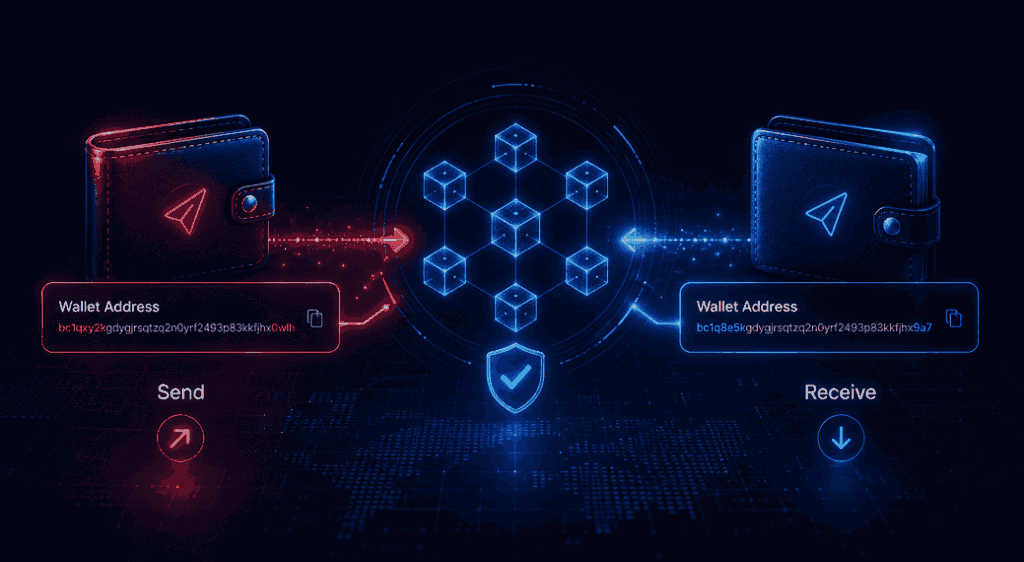
When you send cryptocurrency, your wallet creates a transaction and uses your private key to authorize it.
The transaction is then broadcast to the blockchain network, where validators verify that it is legitimate.
Once confirmed, the transaction is added to the blockchain and becomes part of the permanent record.
The process happens behind the scenes, but your wallet makes it as simple as entering an address and clicking “Send.”
What Is a Crypto Wallet Address?
One of the most common questions beginners ask is: what is a crypto wallet address?
A crypto wallet address is a unique string of letters and numbers that identifies your wallet on a blockchain network.
It works similarly to a bank account number. If someone wants to send cryptocurrency to you, they need your wallet address.
Different blockchains use different address formats.
For example:
- Bitcoin addresses often start with “bc1”
- Ethereum addresses begin with “0x”
- Other blockchain networks use their own unique formats
Most wallets generate these addresses automatically, making it easy to copy, share, or display them as QR codes.
Is It Safe to Share Your Wallet Address?
Yes.
Wallet addresses are designed to be public. You can safely share your address with someone who wants to send you cryptocurrency.
However, you should never share:
- Your private key
- Your recovery phrase
- Your wallet password
Those credentials provide access to your assets and should always remain private.
How to Set Up a Crypto Wallet
Getting started with a crypto wallet is usually much easier than people expect.
Most wallets can be set up in just a few minutes.
Step 1: Choose a Wallet
Start by selecting a wallet that fits your needs.
If you’re looking for a beginner-friendly option, IZAKA-YA Wallet is one example of a modern wallet designed to make managing cryptocurrency straightforward and accessible. Its user-friendly interface helps simplify tasks such as creating a wallet, viewing balances, and sending or receiving digital assets.
Step 2: Create Your Wallet
After downloading the wallet application, choose the option to create a new wallet.
The wallet will automatically generate your private keys and recovery phrase.
Step 3: Back Up Your Recovery Phrase
This is the most important step.
Your recovery phrase is a series of words that can restore access to your wallet if you lose your device.
Write it down and store it somewhere secure. Avoid saving it in cloud storage, emails, or screenshots.
Step 4: Secure Your Wallet
Create a strong password and enable additional security features if available.
Some wallets also support biometric authentication, such as fingerprint or facial recognition.
Step 5: Test Your Wallet
Before transferring a large amount of cryptocurrency, send a small test transaction.
This helps confirm that your wallet is set up correctly and that you’re comfortable using it.
Example: How to Set Up an IZAKA-YA Wallet
If you’ve decided to use a beginner-friendly wallet like IZAKA-YA, the setup process is straightforward.
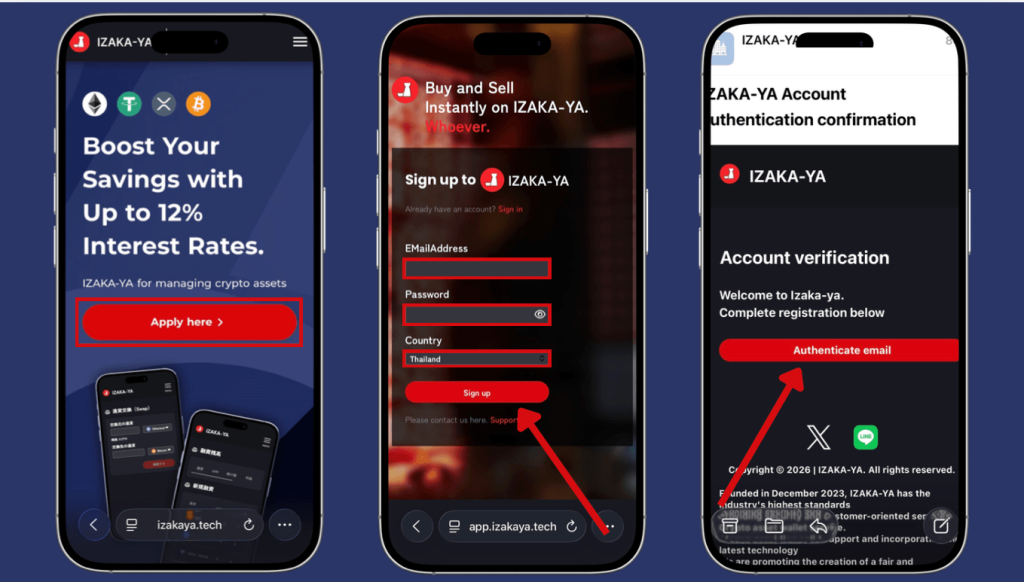
1. Download IZAKA-YA Wallet from the official source.
2. Set up your account using an email, password, and email authentication.
3. Access your wallet dashboard by clicking “My Page”.
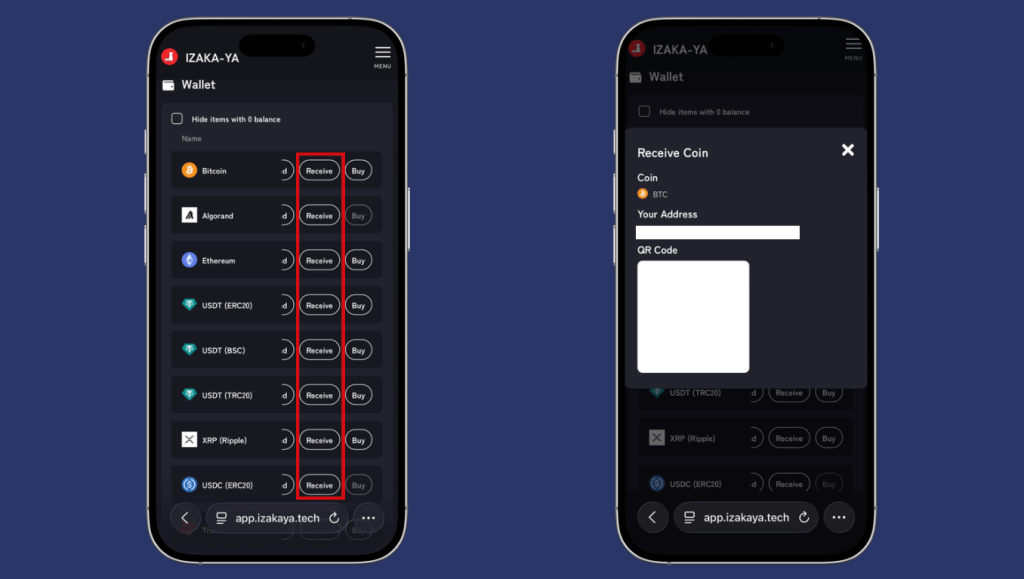
4. Receive or send cryptocurrency by clicking a specific coin and sharing your wallet address or QR code.
5. Send a small test transaction to familiarize yourself with the wallet’s features.
For beginners, this process can typically be completed in just a few minutes.
Register IZAKA-YAkeyboard_arrow_right
Tips to Keep Your Crypto Safe
Crypto gives you more control over your money, but that control comes with responsibility.
A few simple habits can significantly improve your security:
- Never share your private key
- Store your recovery phrase offline
- Use strong passwords
- Enable two-factor authentication where available
- Download wallets only from official sources
- Double-check wallet addresses before sending funds
- Be cautious of phishing websites and scams
Many crypto losses happen because of human error rather than technical failures.
Conclusion
Understanding what is a crypto wallet is one of the first and most important steps in learning about cryptocurrency.
A crypto wallet doesn’t actually hold your coins. Instead, it gives you secure access to the assets recorded on the blockchain. It allows you to send, receive, and manage cryptocurrency while keeping control of your digital ownership.
Once you understand what is a crypto wallet and how does it work, and learn what is a crypto wallet address, the broader crypto ecosystem becomes much easier to understand.
For most beginners, starting with a trusted wallet and learning basic security practices is the best way to build confidence and safely explore the world of cryptocurrency.
Curious about how to generate passive income with your crypto? Click here to read our full guide on choosing the best lending platforms for your portfolio: Best Crypto Lending Platforms: Rates and Guide
Frequently Asked Questions
A crypto wallet works by generating and managing public and private keys. When you send or receive cryptocurrency, the wallet uses these keys to interact with the blockchain and verify transactions securely.
A crypto wallet address is a unique string of letters and numbers that people use to send cryptocurrency to your wallet. It works similarly to a bank account number but is used on a blockchain network.
Yes. Your wallet address is public information and can be shared with others so they can send you cryptocurrency. However, you should never share your private key or recovery phrase.
The best crypto wallet depends on your needs, experience level, and the assets you want to manage. For beginners looking for a simple setup and easy-to-use experience, IZAKA-YA is one option that allows users to get started with no KYC requirements. Other popular wallets include Trust Wallet, MetaMask, Coinbase Wallet, and Zengo Wallet, each offering different features and supported networks.
A hot wallet is connected to the internet and offers convenience for everyday transactions, while a cold storage wallet stores your private keys offline for stronger security and long-term storage.
Yes. Many crypto users have multiple wallets for different purposes, such as trading, daily spending, decentralized applications, or long-term storage.
If you have your recovery phrase, you can usually restore access to your wallet on another device. Without it, recovering your cryptocurrency may not be possible.