

As cryptocurrency adoption continues to grow, securing digital assets has become more important than ever. Many investors focus heavily on choosing coins but overlook how they store them. In reality, protecting your crypto is just as important as the investment itself, especially for long-term holders.
This is where a hardware wallet becomes essential.
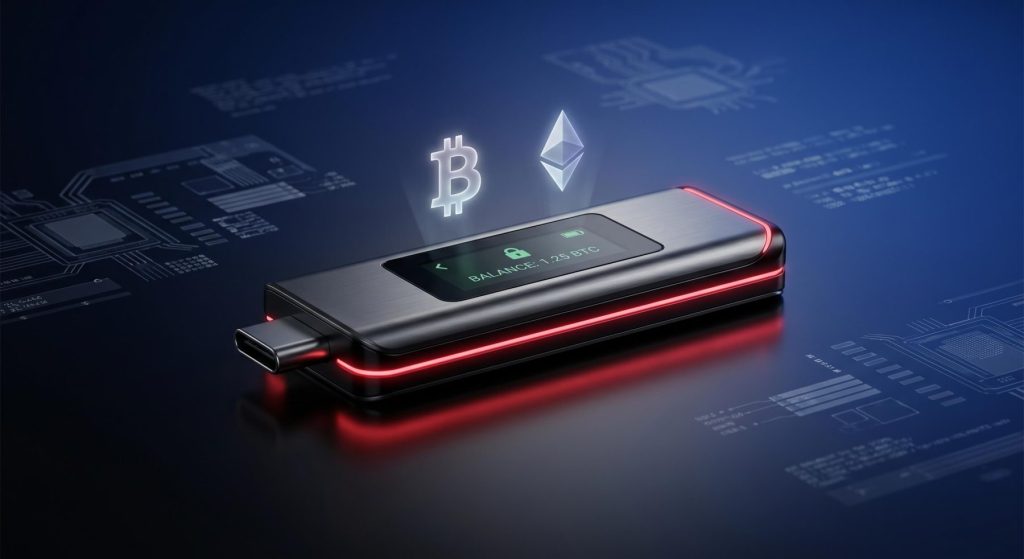
A hardware wallet is a physical device designed to store crypto private keys offline, helping protect assets from hacks, phishing attacks, malware, and exchange failures. Unlike software wallets or exchange accounts, hardware wallets give users direct control over their cryptocurrency while significantly reducing online exposure.
In this guide, you’ll learn what a hardware wallet is, how it works, why people use one, and the best hardware wallet options available today.
What Is a Hardware Wallet?
A hardware wallet is a physical device that stores the private keys linked to cryptocurrency ownership.
Many beginners assume crypto is stored inside the wallet itself. In reality, cryptocurrencies such as Bitcoin and Ethereum remain on the blockchain. The wallet stores the private key that gives access to those assets and allows transactions to be approved.
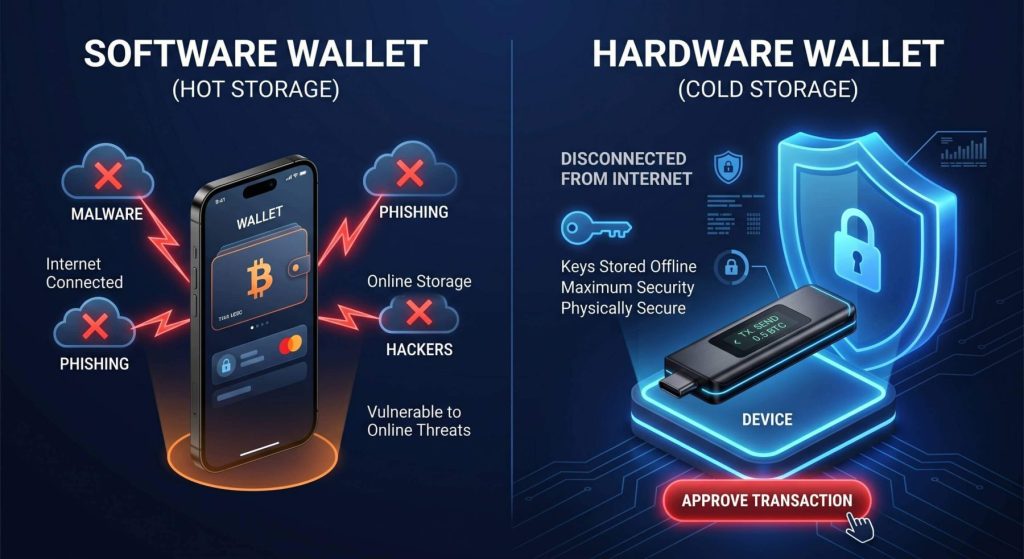
Unlike software wallets connected to the internet, a hardware wallet keeps private keys offline. This significantly lowers the risk of hacking attempts, phishing attacks, and malware exposure.
A crypto hardware wallet is mainly designed to:
- Keep private keys offline
- Securely approve transactions
- Give users full control over their assets
This method is commonly known as cold storage.
Modern hardware wallets support thousands of cryptocurrencies, including Bitcoin, Ethereum, Solana, stablecoins, and many other blockchain assets.
Hardware Wallet vs. Cold Storage Wallet: Are They The Same?
Both hardware wallets and cold storage wallets keep private keys offline, but they are not exactly the same thing.
A cold wallet is any type of crypto wallet that stays disconnected from external networks. Its main purpose is to securely store your assets and handle transfers to and from other wallets when needed.
A hardware wallet, meanwhile, is a physical device designed to store private keys and approve transactions offline. While this may sound very similar to a cold wallet, and hardware wallets are often used as cold wallets, the two terms are not interchangeable.
How a Hardware Wallet Works
A hardware wallet works by signing transactions inside the device itself.
When crypto is sent from a wallet, the transaction must be approved using a private key. With software wallets, this process happens on an internet-connected phone or computer. That setup is convenient, but it also increases exposure to online threats.
A hardware wallet handles the signing process differently. The transaction may begin on a connected device, but the actual approval happens inside the wallet. The private key stays isolated and never leaves the hardware wallet.
This matters because most crypto thefts happen through methods such as:
- Phishing websites
- Fake wallet apps
- Malware infections
- Browser extension exploits
- Compromised exchange accounts
Keeping private keys offline removes many of these attack paths.
Most hardware wallets also include additional security features like PIN protection, passphrase support, encrypted storage, and recovery seed systems.
Why Hardware Wallets Matter in Crypto
The importance of self-custody has become clearer after multiple exchange failures and security breaches over the years.
When crypto is stored on an exchange, the platform controls the private keys on behalf of users. While this is convenient, it also means users depend on the exchange’s security, operational stability, and withdrawal policies.
This is why the crypto community often repeats the phrase: “Not your keys, not your coins.” A cryptocurrency hardware wallet gives ownership and custody back to the user.
For long-term investors, this provides several advantages:
- Better protection against exchange-related risks
- Lower exposure to phishing and online attacks
- Safer long-term storage for Bitcoin and other assets
- Greater control over personal funds
Hardware wallets also add another layer of protection against scams. Even if a malicious website tricks a user into connecting a wallet, transactions usually still require physical confirmation on the device itself.
That extra verification step prevents many common attacks from succeeding.
Hardware Wallet vs Software Wallet
Hardware wallets and software wallets serve different purposes.
Software wallets are built for convenience. They are useful for trading, frequent transfers, and interacting with decentralized applications. Since they remain connected to the internet, they carry more exposure to malware and phishing risks.
Hardware wallets focus more heavily on security. They are slower to access but provide stronger protection for long-term storage.
| Feature | Software Wallet | Hardware Wallet |
| Internet Exposure | Constant | Minimal |
| Security Level | Moderate | Higher |
| Convenience | High | Moderate |
| Best For | Daily usage | Long-term storage |
| Risk of Remote Attacks | Higher | Very low |
In practice, many crypto users combine both setups rather than choosing only one.
For example, long-term holdings may stay in a hardware wallet for stronger security, while smaller balances remain in a software wallet for easier day-to-day use.
Platforms such as IZAKA-YA are designed around this convenience-focused approach. Instead of functioning purely as a storage wallet, IZAKA-YA allows users to swap tokens, manage assets, and explore basic earning features within a single platform. For beginners entering crypto for the first time, this can feel significantly more approachable than navigating multiple DeFi applications separately.
This type of setup is particularly useful for:
- New users learning how crypto wallets work
- People making smaller or more frequent transactions
- Users who prioritize simplicity and accessibility
- Investors exploring crypto before moving into full self-custody
However, as portfolio sizes grow, many users eventually move part of their holdings into a crypto hardware wallet for stronger long-term protection. Rather than competing directly, software wallets and hardware wallets often complement each other within a broader crypto security strategy.
For users ready to take the next step into self-custody, several hardware wallet brands continue to dominate the market due to their security track records, asset support, and ease of use.
Best Crypto Hardware Wallet Options in 2026
Several brands dominate the hardware wallet market, but Ledger and Trezor remain the most widely recognized names.
Ledger Hardware Wallet
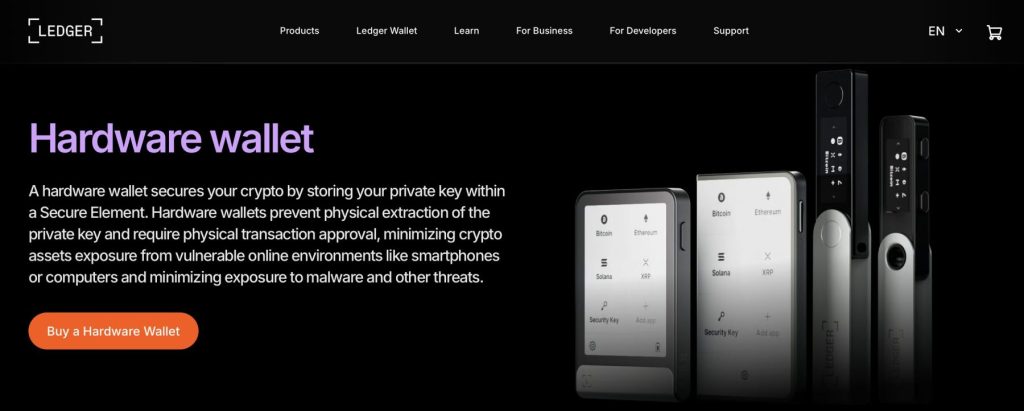
The Ledger hardware wallet lineup supports a wide range of cryptocurrencies and integrates well with third-party applications. Users involved in multi-chain ecosystems and DeFi platforms widely use Ledger devices.
Ledger offers strong asset support, mobile connectivity, and a polished user experience. However, some privacy-focused users have criticized certain recovery-related features introduced by the company in recent years. Even so, Ledger remains one of the largest and most widely used hardware wallet brands globally.
Trezor Hardware Wallet

Trezor wallet was one of the first companies to popularize hardware wallets for mainstream crypto users. The brand emphasizes transparency and open-source development. Many Bitcoin-focused investors prefer Trezor because of its reputation within the security community.
Many users consider the Trezor hardware wallet ecosystem beginner-friendly because of its simple setup process and straightforward interface.
Tangem Hardware Wallet

Tangem represents a significant departure from traditional hardware wallet designs by utilizing a smart-card form factor. It’s an expert in eliminating the need for screens, batteries, and cables, focusing entirely on NFC (Near Field Communication) technology. Many mobile-first crypto users prefer Tangem because interacting with it feels as familiar as tapping a standard credit card.
Many mobile-first crypto users prefer Tangem because interacting with it feels as familiar as tapping a standard credit card. The Tangem wallet ecosystem stands out for its convenient mobile usability and unique seedless setup option, which generates the private key directly within the card’s secure chip and reduces the risk of human error during the backup process.
Coldcard Hardware Wallet
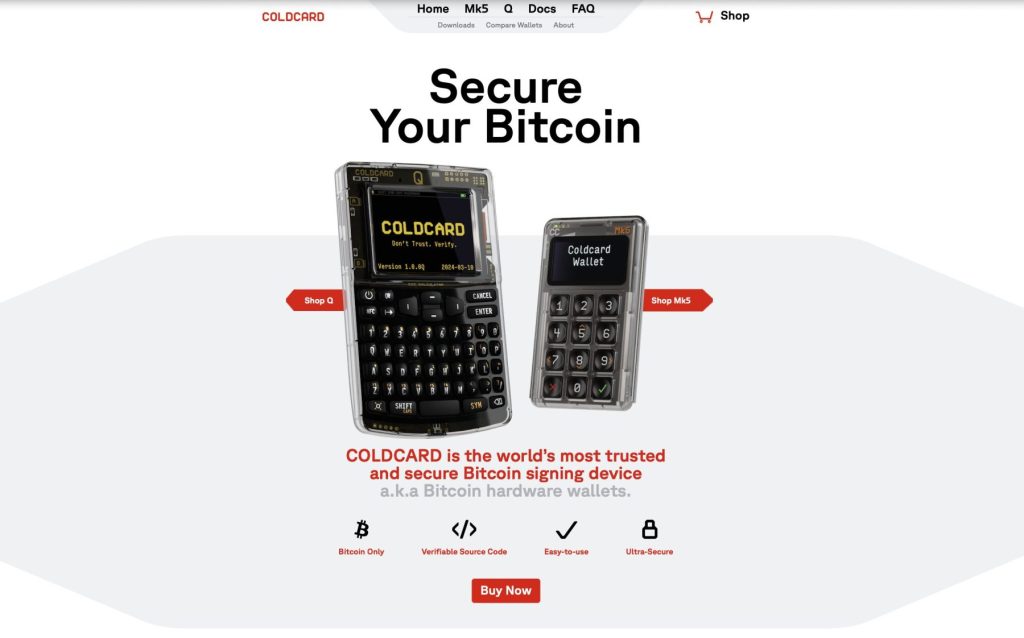
Developed by Coinkite, Coldcard has established itself as the premier hardware wallet tailored specifically for Bitcoin maximalists. Coldcard’s primary focus is an uncompromising security model, paired with a deliberate decision to exclude support for all altcoins.
Many advanced investors and security purists prefer Coldcard because of its transparent plastic casing, which allows users to physically inspect the internal components for tampering. Technical users who prioritize absolute isolation are the brand’s main target market. It operates entirely offline, utilizing a physical numeric keypad for PIN entry and passing transaction data back and forth via a MicroSD card rather than ever connecting directly to an internet-enabled device.
Setting Up a Hardware Wallet Properly
Buying a hardware wallet is only part of the process. Proper setup and backup practices matter just as much.
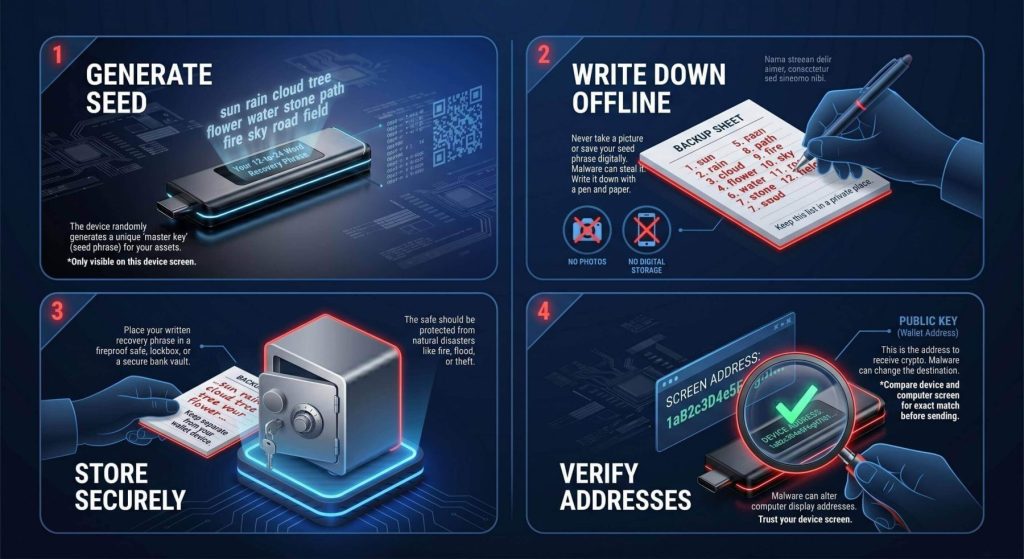
One of the most important rules is to buy directly from official manufacturers or authorized sellers. This reduces the risk of receiving tampered devices. During setup, users receive a recovery seed phrase. This phrase acts as the backup to the wallet and can restore access if the device is lost or damaged.
Because of this, several basic security habits are essential:
- Never share the recovery phrase
- Never store it in cloud storage
- Avoid saving screenshots of it
- Double-check wallet addresses before transfers
- Store backups in secure offline locations
Losing access to both the device and the recovery phrase usually means the crypto cannot be recovered.
Who Should Use a Hardware Wallet?
Not everyone needs a hardware wallet immediately. Beginners often find it easier to start with an accessible platform like IZAKA-YA for basic asset management and daily transactions. Over time, as their portfolios expand, many investors transition their long-term holdings into a secure hardware wallet.
A hardware wallet is especially useful for:
- Long-term Bitcoin holders
- Investors with larger crypto portfolios
- DeFi users managing assets across multiple chains
- People uncomfortable leaving funds on exchanges
- Users who want full custody of their assets
Many people only start caring about wallet security after a bad experience, such as a phishing attack or exchange issue. By then, the losses are often far greater than the cost of the hardware wallet itself.
FAQ
A hardware wallet is a physical device that stores cryptocurrency private keys offline for improved security.
In most cases, yes. Hardware wallets give users direct control over private keys instead of relying on centralized platforms.
Ledger and Trezor are currently among the most trusted options, though the best choice depends on personal preferences and usage.
Yes. Most modern hardware wallets support Bitcoin along with many other cryptocurrencies.
The wallet can usually be recovered using the backup seed phrase created during setup.