

You bought your first cryptocurrency. Now you need to decide where it lives. Leaving your assets on a centralized exchange exposes you to third-party risks. Taking true ownership requires a DeFi wallet.
So, exactly what is a DeFi wallet? It is a non-custodial software application that gives you complete control over your digital assets and private keys. Unlike traditional finance where a bank holds your money, a decentralized finance (DeFi) wallet turns you into your own bank. You interact directly with blockchain networks to send, receive, trade, and lend tokens without any middlemen.
Exchange Storage vs. A True Crypto DeFi Wallet
When you keep funds on a centralized exchange, the platform holds the private keys. If the exchange halts withdrawals or faces bankruptcy, your assets are trapped. A crypto DeFi wallet eliminates this risk. You hold the recovery seed phrase. You authorize every transaction. The trade-off is absolute responsibility; if you lose your seed phrase, no customer support team can recover your funds.
Why Crypto Users Are Moving to DeFi Wallets
More crypto users are starting to move away from leaving their funds on centralized exchanges. Part of that comes from security concerns, while another reason is that DeFi has become much easier to use than before.
Full Control Over Your Assets
One of the biggest reasons people use a DeFi wallet is simple: ownership.
When your crypto sits on an exchange, the platform ultimately controls access to those funds. With a DeFi wallet, you hold the keys yourself. That means you can send, store, or use your assets whenever you want without relying on a third party.
For long-term holders, this level of control is a major advantage.
Access to DeFi Apps and Staking
A DeFi wallet also unlocks access to the broader DeFi ecosystem. Instead of just holding crypto, users can stake assets, swap tokens, use decentralized exchanges, explore NFTs, and move funds across different blockchains directly from their wallet.
For example, many users connect through DeFi wallet metamask.io integrations because MetaMask is widely supported across Ethereum-based applications.
As more people become comfortable with self-custody, there’s also growing interest in simpler ways to earn yield without constantly managing complicated DeFi strategies. Platforms like IZAKA-YA are becoming increasingly popular among users looking to put idle crypto to work more efficiently.
Privacy and Flexibility
Another reason DeFi wallets continue to grow in popularity is flexibility. Most wallets can be created in minutes without identity verification or complicated setup steps. You simply download the app, secure your recovery phrase, and start using crypto.
For many users, it feels closer to the original idea of crypto: direct ownership, fewer restrictions, and more control over how assets are managed.
Finding the Best DeFi Wallet for Your Needs
There’s no single wallet that works perfectly for everyone. Some crypto wallets are built for active DeFi traders constantly moving between protocols, while others focus more on security, simplicity, or managing a wide range of assets across different blockchains.
To make things easier, our team looked beyond marketing claims and focused on how these wallets perform in real-world usage: from network support and security features to user experience and DeFi compatibility. Here are the wallets that consistently stand out depending on the type of crypto user you are.
MetaMask – The Web3 Workhorse
MetaMask wallet is still the go-to Web 3 wallet for people actively using DeFi apps, minting NFTs, trading on decentralized exchanges, or farming airdrops. If you spend time on platforms like Uniswap, Arbitrum, or Base, chances are you’ll end up using MetaMask at some point.
A few important things to know:
- MetaMask only supports EVM-compatible networks like Ethereum, Arbitrum, Optimism, Polygon, and Base. It does not natively support Bitcoin or Solana.
- By default, MetaMask starts on Ethereum mainnet, so users often need to manually add networks like Arbitrum or Base. Tools like Chainlist can help you do this safely.
- Sometimes newly swapped tokens do not appear automatically in your wallet. In many cases, you simply need to manually import the token contract address to display the balance.
For users exploring Ethereum-based DeFi, MetaMask remains one of the most widely supported options.
Crypto.com DeFi Wallet – A Beginner-Friendly Bridge
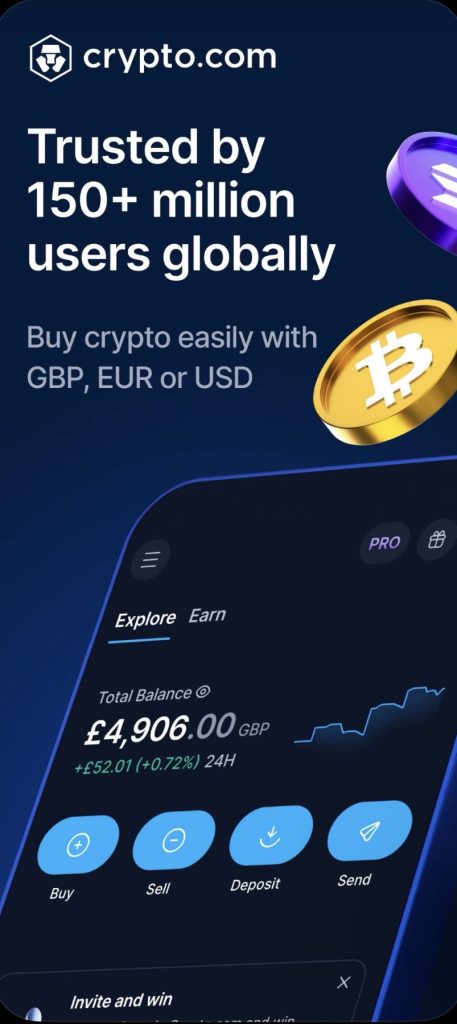
The Crypto.com DeFi Wallet is designed for users who want an easier transition from centralized exchanges into self-custody. While it connects smoothly with the Crypto.com ecosystem, it remains a non-custodial wallet where you control the private keys.
Here’s why many beginners like it:
- You can easily transfer funds from the Crypto.com Exchange app into the wallet without manually copying long wallet addresses
- The wallet works especially well with the Cronos ecosystem and CRO staking
- Built-in swap features make token exchanges simple inside the app
The interface is generally cleaner and less intimidating compared to more advanced DeFi wallets, making it a good starting point for newer users.
Trust Wallet – The Altcoin Vault
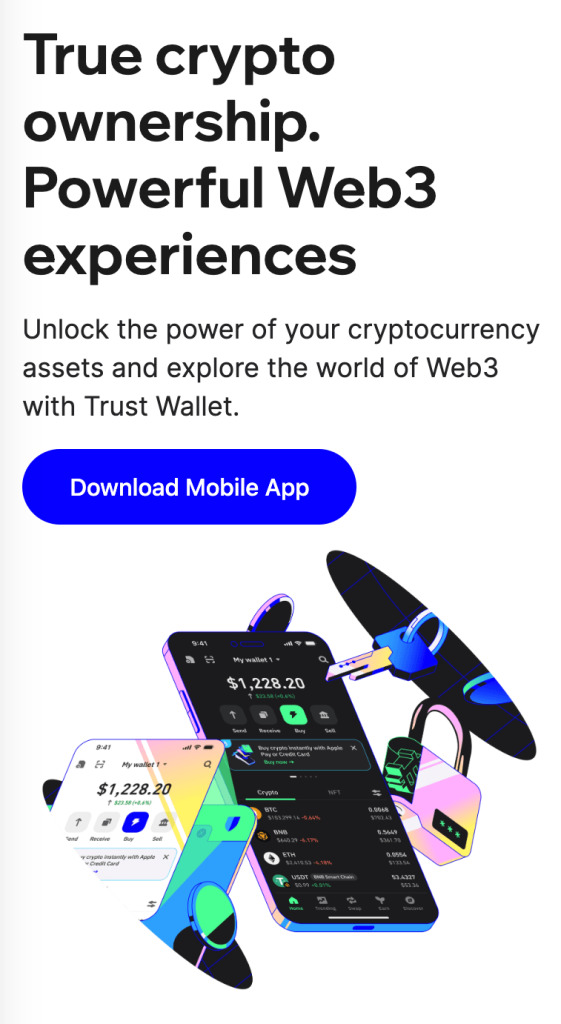
Trust Wallet is popular among users who hold many different cryptocurrencies across multiple blockchains. Unlike MetaMask, it supports a much wider range of native assets including Bitcoin, Solana, Ethereum, and many smaller altcoins within a single app.
Some standout features include:
- Strong multi-chain support for a wide variety of assets
- Automatic token detection, which helps balances appear without manual imports
- Beginner-friendly mobile experience for storing and managing crypto
While Trust Wallet works well for storage and casual DeFi usage, some advanced decentralized applications still work more smoothly with desktop wallets like MetaMask.
Navigating the Bitcoin DeFi Wallet Space
Bitcoin was originally designed as a simple peer-to-peer payment network, lacking the complex smart contract capabilities of Ethereum. However, the ecosystem is evolving rapidly.
Today, a Bitcoin DeFi wallet allows you to do more than just hold BTC. Developers are building Layer-2 solutions and protocols directly on top of the Bitcoin network. Wallets like Xverse or Unisat are specifically tailored to handle Bitcoin-native DeFi applications, Ordinals, and BRC-20 tokens. You can also wrap your Bitcoin (wBTC) to use it across other decentralized finance networks, unlocking borrowing and lending opportunities.
How to Avoid Common DeFi Wallet Scams
Crypto security is still one of the biggest challenges for new users, and unfortunately, DeFi wallet scams are everywhere. As more people move into self-custody and decentralized finance, scammers are getting smarter with fake apps, phishing links, and social engineering tricks designed to steal wallet access.
One of the most common scams involves fake wallet apps or browser extensions that look almost identical to legitimate wallets like MetaMask. Many users accidentally download the wrong version through ads, fake websites, or random social media links.
Before downloading any wallet, make sure to:
- Verify the official website carefully
- Check reviews and community feedback
- Avoid random download links from Twitter, Telegram, or Discord
Phishing scams are another major issue in the DeFi space. A fake website may look completely real and ask you to connect your wallet or enter your recovery phrase. Some scammers even pretend to be support staff to gain your trust.
Be careful if a website or person asks you to:
- Enter your seed phrase
- Approve suspicious wallet transactions
- Connect your wallet to unknown applications
A legitimate wallet provider will never ask for your recovery phrase.
Your seed phrase is the single most important part of your wallet security. Anyone with access to it can fully control your funds. This is why many experienced users connect their DeFi wallet to a hardware wallet for stronger long-term protection.
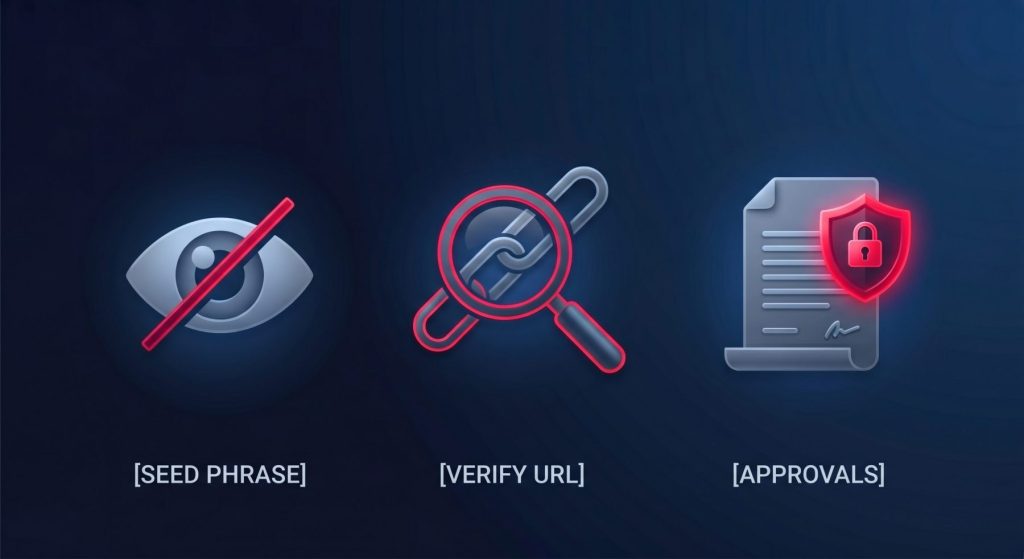
Protect your assets by adhering to these strict rules:
- Never share your seed phrase: No legitimate support team will ever ask for your 12 or 24-word recovery phrase.
- Beware of phishing links: Always verify URLs before connecting your wallet. Scammers create identical copies of popular DeFi platforms to drain your funds.
- Check smart contract approvals: When you interact with a new decentralized application, read the permissions. Malicious contracts will ask for “unlimited approval” to access and drain your tokens.
Even experienced crypto users fall for scams, especially during bull markets when fake apps and phishing campaigns become more aggressive. Taking a few extra seconds to verify links and wallet permissions can save you from losing your assets entirely.
Stop Silent Loss with IZAKA-YA

Securing your crypto in a self-custody wallet is a critical first step, but static assets generate zero yield. Letting your portfolio sit dormant means you suffer from silent loss. You miss out on compounding growth while waiting for the market to move.
Instead of leaving your crypto completely idle, you can move your funds to IZAKA-YA to earn daily compounding interest. We secure your deposits using Fireblocks, an institutional-grade infrastructure. You skip the complexity and extreme risks of traditional DeFi protocols. You simply deposit your assets, activate auto-renewal, and earn up to 33% APY. Furthermore, we support over 40 different cryptocurrencies, allowing you to grow a diverse portfolio effortlessly.
Frequently Asked Questions
A DeFi wallet is a non-custodial digital wallet that allows you to store your private keys and interact directly with decentralized finance applications without a central intermediary.
Beginners often start with Trust Wallet or MetaMask because of their intuitive interfaces and widespread integration across the Web3 ecosystem.
Yes. It is a non-custodial wallet, meaning you control your private keys. However, its safety ultimately depends on how securely you store your physical recovery seed phrase offline.
You protect yourself by never sharing your seed phrase, only connecting your wallet to verified official websites, and carefully reading transaction approval requests before signing them.
Yes. Platforms like IZAKA-YA allow you to earn daily compounding interest up to 33% APY with institutional-grade Fireblocks security, removing the technical risks of interacting directly with vulnerable smart contracts.