

If you own Ethereum or are planning to buy some, sooner or later you’ll need an Ethereum wallet. Not the physical kind, obviously — a digital one. At first, that sounds simple enough. However, the moment you start researching wallets, you’re suddenly faced with endless options, technical jargon, and conflicting advice that somehow makes everything feel far more complicated than it actually is.
That’s exactly where this guide comes in. Whether you’re completely new to crypto or you’ve been keeping your ETH on an exchange for a while and wondering what to do next, this article will walk you through the essentials step by step. Along the way, you’ll learn what an Ethereum wallet actually is, how it works, which wallets are genuinely worth considering, and how to set one up without feeling overwhelmed by the process.
What Is an Ethereum Wallet?
First thing to remember: the term “Ethereum wallet” can be slightly misleading. An Ethereum wallet does not literally store your ETH inside the app or device itself. Your assets remain on the Ethereum blockchain at all times.
What the wallet actually stores is your private key. This key acts as proof of ownership and allows you to access, manage, and transfer your funds whenever needed. Without it, you wouldn’t be able to interact with your Ethereum at all.
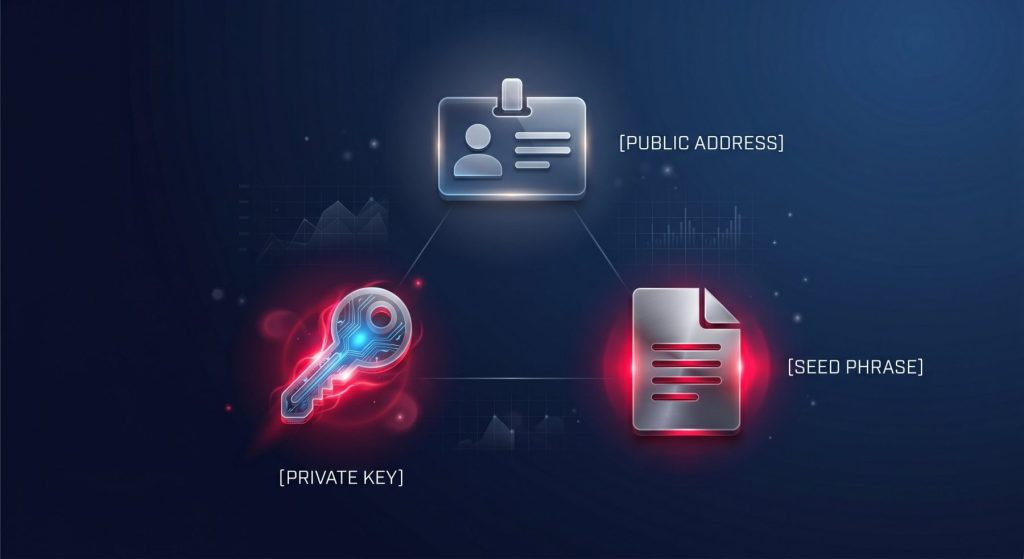
Every wallet comes with two key pieces:
- Your public key / wallet address: this is what you share with others so they can send you ETH or tokens. Think of it like a bank account number.
- Your private key: this must never be shared. It’s the proof of ownership that lets you authorize transactions.
- A seed phrase (12–24 words): a human-readable backup of your private key. Guard this with your life.
Hot Wallets VS. Cold Wallets: What’s The Difference?
Before choosing a wallet, you need to understand the basic split between hot and cold storage because this affects security more than anything else.
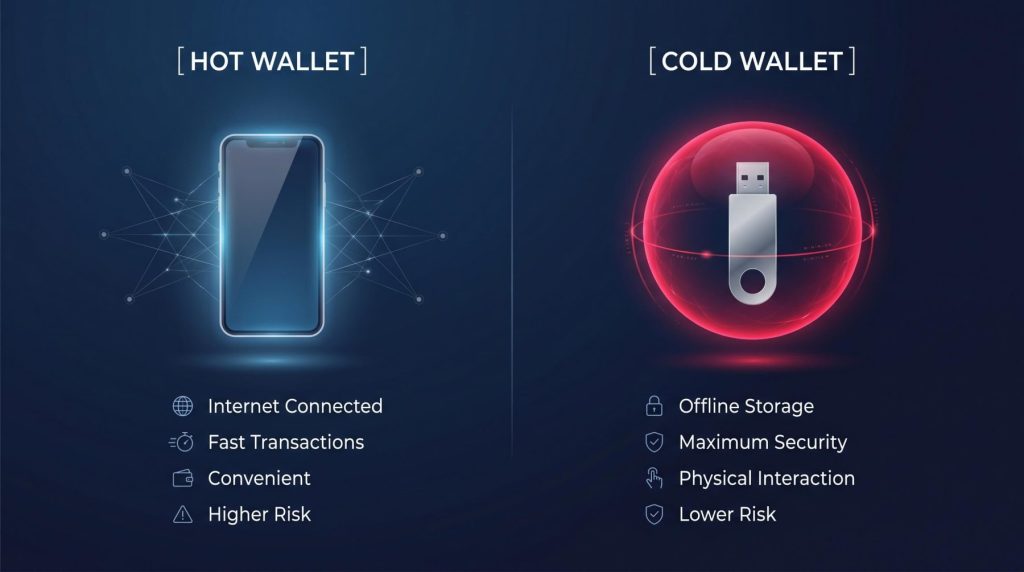
Hot Wallets
A hot wallet is connected to the internet. You can send and receive ETH instantly, use DeFi apps, swap tokens, and interact with NFT marketplaces. The tradeoff is exposure: being online means there’s always some attack surface.
Hot wallets are great for everyday use, small amounts, and anyone actively participating in the Ethereum ecosystem.
Cold Wallets
A cold wallet (usually a hardware device) keeps your private key offline. It never connects to the internet, which makes it dramatically harder to hack. The compromise is that you will need the physical device to sign every transaction.
Cold storage is the go-to choice for long-term holders and anyone with a significant amount of ETH they don’t plan to move often. A good ethereum wallet strategy often involves both: a hot wallet for day-to-day activity and a cold wallet as your main vault.
Ethereum Wallet Options: A Comparison
We’ve gathered some of the most trusted crypto wallets available today. Each option is widely used and has built a strong reputation within the crypto community over time.
The best choice ultimately depends on how you use crypto and what features matter most to you. Here’s a breakdown of some of the most popular and reliable wallets right now:
| Wallet | Type | Security | Best For |
| MetaMask | Hot / Browser + Mobile | Medium | DeFi, Web3 Apps |
| Trust Wallet | Hot / Mobile | Medium | Multi-chain, NFTs |
| Coinbase Wallet | Hot / Browser + Mobile | Medium | Beginners, DeFi |
| Ledger Nano X | Cold / Hardware | Very High | Long-term HODLers |
| Rainbow | Hot / Mobile | Medium | NFT collectors |
| Argent | Hot / Mobile | High | DeFi power users |
How To Create An Ethereum Wallet (Step By Step)
Setting up a wallet takes less than five minutes. Here’s how to create an ethereum wallet using MetaMask, one of the most widely used options, as the example:
Option A: Browser Extension (Desktop)
- Go to metamask.io and download the extension for Chrome, Firefox, or Brave.
- Click “Create a new wallet” and set a strong password.
- You’ll be shown a 12-word seed phrase. Write it down on paper. Never take a screenshot.
- Confirm the seed phrase in the correct order to complete setup.
- Your wallet is ready. You’ll see your ethereum wallet address at the top.
Option B: Ethereum Wallet App (Mobile)
- Download the MetaMask wallet or Trust Wallet app from the App Store or Google Play.
- Follow the same setup flow: create password, save seed phrase.
- The app gives you a QR code version of your address for easy receiving.
- Enable biometric lock (Face ID / fingerprint) for extra day-to-day security.
That’s it. From zero to a functioning ETH wallet in under five minutes. The most important step, by far, is backing up that seed phrase properly.
Understanding Your Ethereum Wallet Address
Your ethereum wallet address is a string of 42 characters that starts with “0x”, something like 0x4B3C…d9f2. This is the identifier you share when someone wants to send you ETH or ERC-20 tokens (like USDC, LINK, or UNI).
A few important things to know about wallet addresses:
- One wallet can generate multiple addresses, but they all trace back to your private key.
- ETH addresses are case-insensitive, but you’ll often see mixed-case versions (EIP-55 checksum format) to reduce typo errors.
- Always double-check the first and last few characters when sending as crypto transactions are irreversible.
- Your address is public and can be looked up by anyone on a block explorer. That’s normal.
Ethereum Wallet Lookup: How to Check Any Address
Want to verify a transaction or check how much ETH an address holds? You can use a block explorer, the most popular one is Etherscan (etherscan.io). Just paste any ethereum wallet address into the search bar and you’ll see the full transaction history, token holdings, and current balance.
This is useful when someone sends you ETH and you want to confirm it arrived, or when you’re checking whether a contract or project wallet is behaving as expected.
How To Keep Your Ethereum Wallet Secure
Owning crypto means you’re your own bank, and that comes with responsibility. A secure ethereum wallet isn’t just about choosing the right software; it’s about the habits around it.
The Non-Negotiables
- Write your seed phrase on paper. Never store it digitally; no cloud, no screenshots, no email drafts.
- Use a hardware wallet for any serious amount. Ledger and Trezor are the most trusted names.
- Never share your private key or seed phrase with anyone, for any reason. No real support team will ever ask for it.
- Use a dedicated email address for crypto accounts and enable two-factor authentication everywhere.
- Be suspicious of any website, app, or browser extension asking for wallet permissions.
Watch Out For
As crypto adoption grows, scams and wallet-related attacks have become increasingly sophisticated. Even experienced users occasionally fall for them, especially when moving too quickly.
Because of that, building a few simple verification habits can dramatically reduce your risk over time.
Here are some of the most common threats to watch out for:
- Phishing websites that imitate real wallet interfaces — before entering any password or recovery phrase, always double-check the URL carefully.
- Fake wallet apps on app stores — instead of searching randomly, download wallets directly from the project’s official website whenever possible.
- Clipboard hijackers that silently replace wallet addresses after you paste them — for this reason, always verify the first and last few characters before sending funds.
- Approval scams where signing a transaction unknowingly grants unlimited token access — this is especially common in DeFi and NFT platforms.
In addition, many users underestimate how valuable a hardware wallet can be. If you are holding a meaningful amount of Bitcoin or Ethereum, investing in one is usually worth it. Compared to the potential losses from a compromised hot wallet, the upfront cost is relatively small.
What Makes a Good Ethereum Wallet?
With so many wallet options available today, choosing one can feel overwhelming at first. However, once you know what actually matters, filtering out weak options becomes much easier.
In general, a good Ethereum wallet should offer a balance between security, usability, and long-term reliability.
Here are some of the key things worth looking for:
- Non-custodial access — ideally, you should control the private keys yourself rather than relying entirely on a company.
- Open-source code — transparency allows developers and security researchers to audit the wallet for vulnerabilities.
- Active development — regular updates and an engaged development team are strong signs that the wallet is being maintained properly.
- Multi-chain or EVM compatibility — this becomes increasingly important as more apps and assets expand across different blockchain networks.
- Clear user experience — especially for newer users, a confusing interface can easily lead to costly mistakes.
- A strong reputation — wallets with years of reliable usage and no major security incidents generally inspire more confidence.
That said, the “best” wallet still depends on how you use crypto.
For example, custodial wallets offered by exchanges like Coinbase or Binance can be perfectly fine for buying, selling, or casual trading. They simplify onboarding and reduce some technical responsibilities for beginners.
However, if you plan to hold crypto long-term, interact with DeFi platforms, or prioritize ownership and security, transitioning to a non-custodial wallet is usually the better move. It gives you direct control over your assets instead of depending entirely on a third-party platform.
Final Thought
An ethereum wallet is the foundation of everything you do on-chain. Getting this right, choosing a trustworthy wallet, understanding your address, securing your seed phrase isn’t just setup busywork. It’s what separates people who actually own their crypto from people who just have a balance on an exchange.
For most people starting out, MetaMask or Trust Wallet covers the basics. If you’re holding a larger amount or planning to leave it untouched for a while, pair it with a hardware wallet. And no matter which option you choose: back up that seed phrase, keep it offline, and never hand it to anyone.
The rest is straightforward from there.
FAQ
Not immediately. You can buy ETH on an exchange like Coinbase or Binance and it’ll sit in their custodial wallet. However, if you want full control or plan to use DeFi, NFTs, or any on-chain app, you’ll need your own non-custodial wallet.
Absolutely. In fact, many crypto users maintain multiple wallets for different purposes — one for daily DeFi activity, another connected to a hardware wallet for long-term storage, and sometimes separate wallets for specific projects or experiments.
Software wallets (MetaMask, Trust Wallet, Coinbase Wallet) are free to download and use. Hardware wallets cost money upfront, typically $50 to $220 depending on the device, but that’s a one-time cost.
If you lose your seed phrase and can no longer access your device or account, your funds are effectively gone. There is no password reset, no customer service call, no recovery option. This is why backing it up properly from day one is so critical.
Yes. Ethereum wallets support ETH and all ERC-20 tokens (USDC, DAI, LINK, UNI, and thousands more) as well as NFTs. Many also support other EVM-compatible networks like Polygon, Arbitrum, and Base, which run in parallel to Ethereum’s mainnet.
Yes. Your wallet address is public by design. Sharing it so someone can send you ETH is perfectly safe. What you must never share is your private key or seed phrase. Those are the keys to the kingdom.
Always download from the official project website, not from a search ad or third-party link. Check the developer name in the app store, look at the download count and reviews, and confirm the URL matches the official site. When in doubt, look for the wallet on crypto communities like Reddit’s r/ethereum.