

Cold storage wallet solutions have become one of the biggest topics in crypto security over the past few years.
A few years ago, most crypto users didn’t think much about storage security. People bought Bitcoin on exchanges, left it there, and moved on.
That started changing as the industry grew.
Between exchange hacks, phishing scams, and wallet exploits, more users began realizing that owning crypto also means protecting it yourself. As a result, the idea of using a cold storage wallet has become much more mainstream — even among beginners.
At its core, a cold storage wallet keeps your crypto offline rather than constantly connected to the internet. That single difference makes it far harder for hackers or malicious software to access your assets remotely.
For long-term investors especially, cold storage is now considered one of the safest ways to protect digital assets.
What Is a Cold Storage Wallet?
So, what is a cold storage wallet exactly?
In simple terms, it’s a crypto wallet that stores your private keys offline.
Unlike hot wallets, which stay connected to the internet through apps or browser extensions, cold wallets keep sensitive information isolated from online threats. Because of that, remote attacks become much more difficult.
You can think of a crypto cold storage wallet more like a digital vault than an everyday spending wallet.
Most people use cold wallets for:
- Long-term crypto storage
- Protecting larger portfolios
- Reducing exposure to online attacks
- Safer self-custody
For anyone holding meaningful amounts of crypto, the extra security is often worth the slightly slower experience.
How Cold Wallets Work
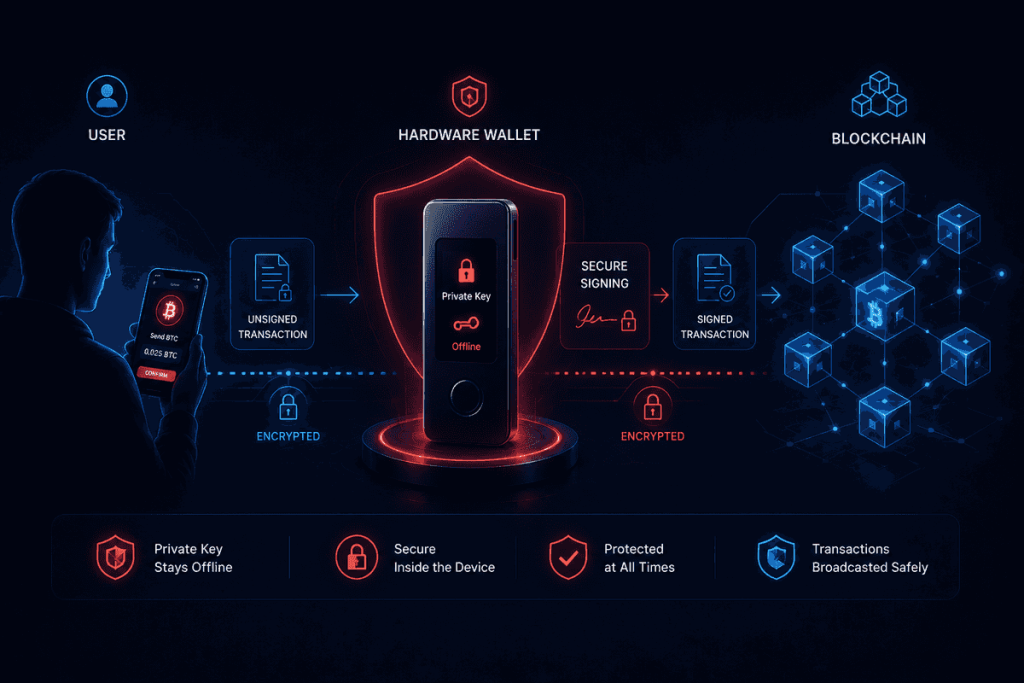
Every crypto wallet relies on private keys. These keys prove ownership of your assets and allow transactions to happen on the blockchain.
A cold storage wallet stores those keys offline.
Even when you connect the wallet temporarily to approve a transaction, the signing process usually happens within the device itself. In other words, your private keys never fully expose themselves to the internet.
That’s a major reason hardware wallets became so trusted within the crypto industry.
Why Offline Storage Matters in Crypto
Crypto transactions are irreversible. If someone gains access to your wallet and transfers your funds, there’s usually no bank or support team that can reverse it.
That changes how people think about security.
Hot wallets are still incredibly useful for trading, staking, NFTs, and DeFi activity. However, constantly keeping large amounts of crypto online naturally creates more risk.
Cold storage lowers that risk by removing the biggest vulnerability: internet exposure.
Cold Storage Wallet vs Hot Wallet
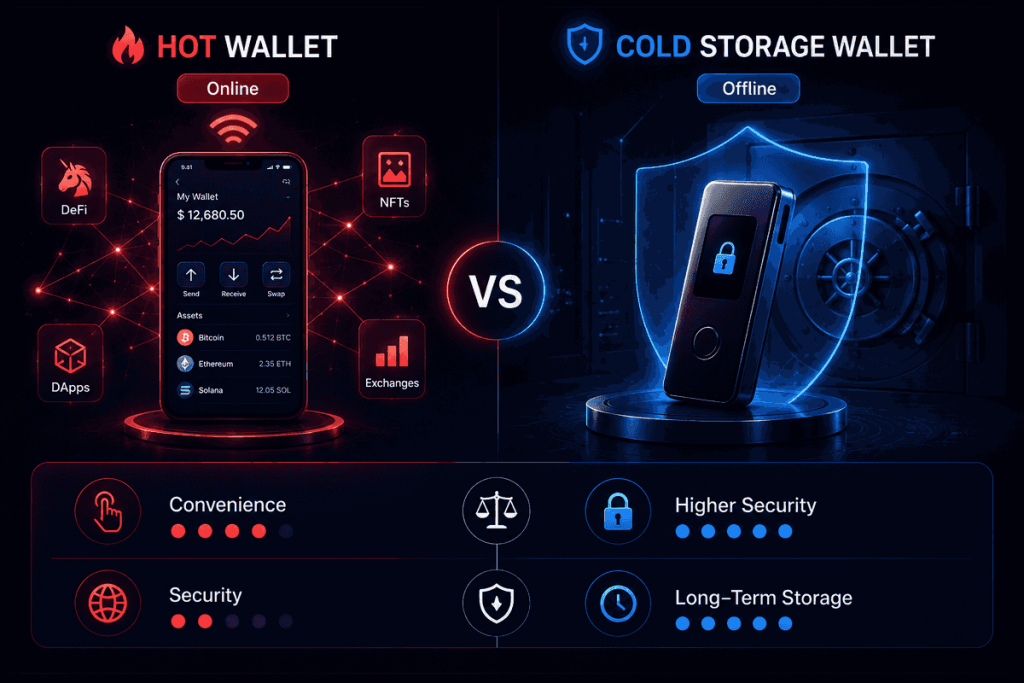
At first glance, hot wallets and cold wallets may sound similar. In practice, though, they’re built for different purposes.
| Feature | Cold Storage Wallet | Hot Wallet |
| Internet Connection | Usually offline | Always online |
| Security Level | Higher | Moderate |
| Convenience | Lower | Higher |
| Best Use Case | Long-term storage | Daily transactions |
| Hack Risk | Much lower | Higher |
Most experienced crypto users actually use both.
For example, they may keep smaller amounts in a hot wallet for daily activity while storing long-term holdings inside a bitcoin cold storage wallet.
Key Differences Between Online and Offline Wallets
Hot wallets focus heavily on convenience.
They let users quickly connect to DeFi platforms, NFT marketplaces, decentralized exchanges, and blockchain apps. That speed and flexibility make them ideal for active crypto users.
Cold wallets take the opposite approach.
They prioritize security first, even if the process feels slightly slower. For many long-term investors, that trade-off makes complete sense.
Which One Is Safer for Beginners?
From a pure cybersecurity perspective, cold wallets are generally safer.
That said, beginners sometimes underestimate the responsibility that comes with self-custody.
If you lose your recovery phrase, damage your wallet without backups, or accidentally expose sensitive information, there’s usually no reset button waiting for you.
That’s why many newer users start small before moving larger holdings into cold storage.
A Simpler Option for Users Who Prefer Hot Wallets
While cold wallets are often considered the safest option for long-term storage, they’re not always the most practical choice for everyday crypto activity.
Some users simply prefer the speed and convenience of hot wallets for trading, staking, DeFi, and blockchain apps.
For beginners especially, ease of use matters more than people sometimes admit.
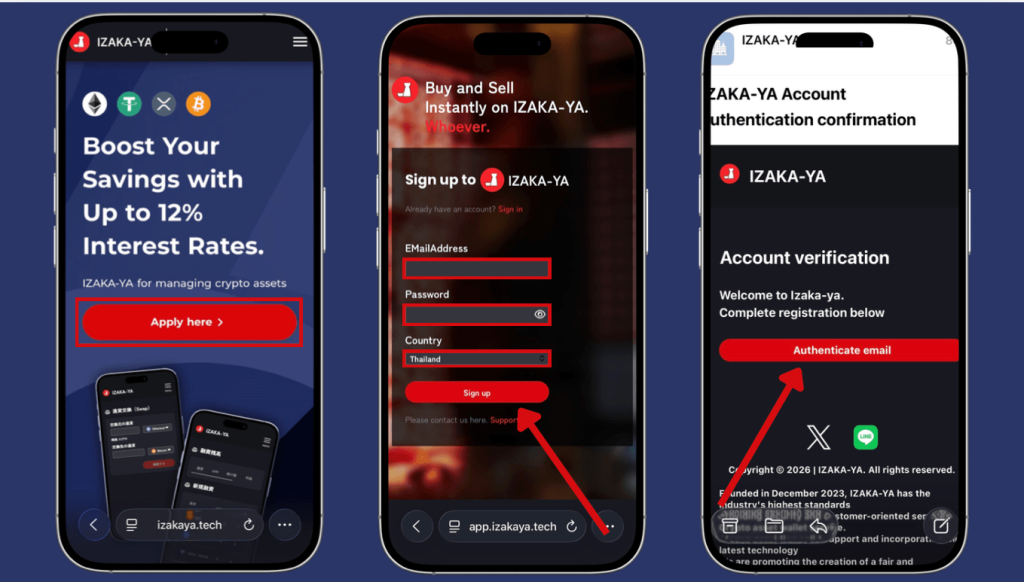
One newer option gaining attention is Izaka-Ya, a Web3 wallet designed to feel cleaner and less intimidating for everyday users. Instead of overwhelming beginners with overly technical interfaces, it focuses on making crypto navigation feel more approachable while still supporting core Web3 features.
For users who interact with crypto regularly and want a smoother day-to-day experience, Izaka-Ya can work well alongside long-term cold storage solutions.
Register IZAKA-YAkeyboard_arrow_right
Types of Crypto Cold Storage Wallets
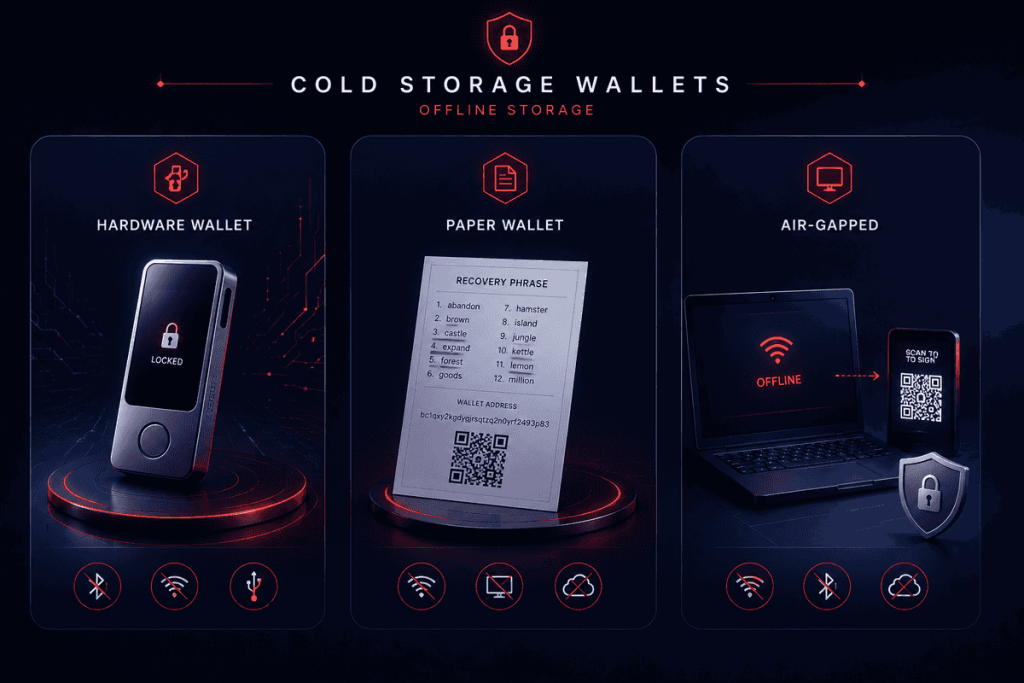
Not every cold wallet works the same way.
Some focus on portability, while others prioritize maximum security.
Hardware Wallets
Hardware wallet is a physical device built specifically for storing crypto offline.
Popular examples include Ledger and Trezor.
These devices typically connect through USB, Bluetooth, or NFC when approving transactions. However, the private keys themselves stay isolated inside the wallet.
Pros:
- Strong offline security
- Beginner-friendly setup
- Wide crypto support
- Reliable backup systems
Cons:
- More expensive than hot wallets
- Recovery phrases still require careful storage
Paper Wallets
Paper wallets were much more common during Bitcoin’s earlier years.
The idea is simple: private keys or seed phrases get printed onto paper and stored somewhere safe offline.
Technically, they still work. However, paper wallets have become far less popular because paper can easily be damaged, lost, or exposed accidentally.
Air-Gapped Devices
Some advanced users prefer fully air-gapped systems that never directly connect to the internet at all.
These setups often rely on QR-code signing or isolated computers dedicated entirely to crypto storage.
While extremely secure, they usually appeal more to experienced users than beginners.
Best Cold Storage Wallet Options in 2026
The best cold storage wallet really depends on how you use crypto.
Some users prioritize maximum offline security for long-term holdings, while others care more about convenience, portability, touchscreen usability, or mobile-friendly features. Because of that, most major wallet brands now offer several different models aimed at different types of crypto users.
Ledger
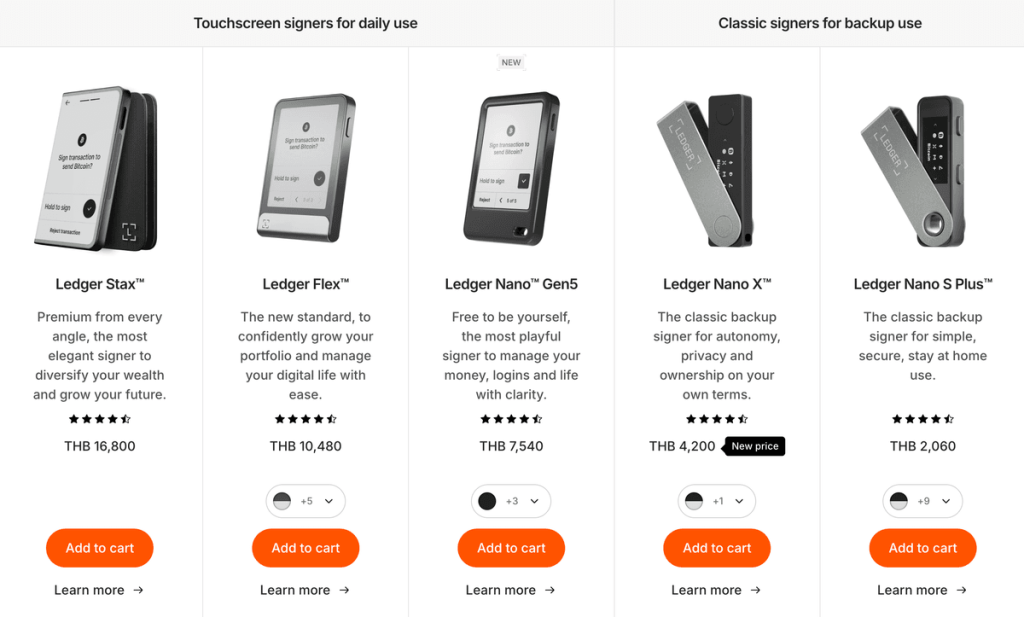
Ledger remains one of the most widely recognized names in crypto security.
Its lineup ranges from beginner-friendly hardware wallets to premium touchscreen devices designed for power users and active Web3 participants.
| Wallet | Best For | Key Features |
| Ledger Nano S Plus | Beginners | Affordable entry-level cold wallet, USB-C connectivity, reliable offline storage |
| Ledger Nano X | Mobile users | Bluetooth support, portable design, larger app capacity |
| Ledger Nano Gen5 | Everyday crypto users | Updated security architecture and improved usability |
| Ledger Flex | Modern mobile-first users | Flexible touchscreen experience with easier navigation |
| Ledger Stax | Premium users | Curved E Ink touchscreen, premium design, advanced user experience |
Ledger wallets support thousands of cryptocurrencies and integrate with a large ecosystem of apps, staking platforms, and blockchain networks. For many users, the combination of security and usability is what keeps Ledger at the top of the market.
Tangem
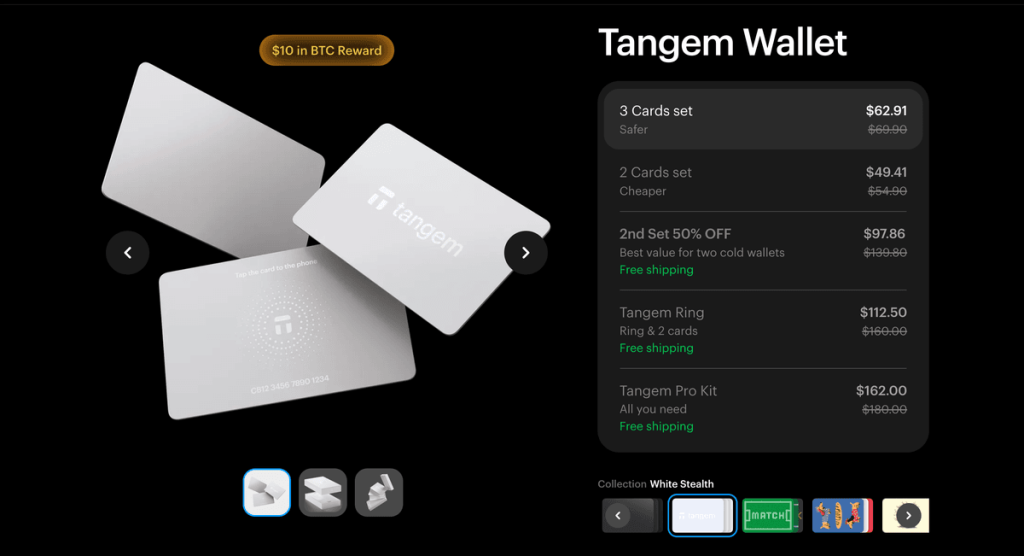
Tangem Wallet takes a noticeably different approach compared to traditional hardware wallets.
Instead of relying on USB devices and cables, Tangem uses NFC-enabled smart cards and wearable devices that connect directly to smartphones. That simplicity has made the brand especially appealing to beginners.
| Wallet | Best For | Key Features |
| Tangem Card Set | Beginners | Tap-to-use NFC setup, simple mobile onboarding |
| Tangem Ring | Everyday convenience | Wearable cold wallet experience with NFC access |
| Tangem 2.0 | Security-focused mobile users | Improved backup and recovery architecture |
| Tangem Wallet App | Mobile management | Clean portfolio management and transaction interface |
Tangem still keeps private keys generated and stored offline, but the overall experience feels much less intimidating than traditional hardware wallets.
Arculus Cold Storage Wallet
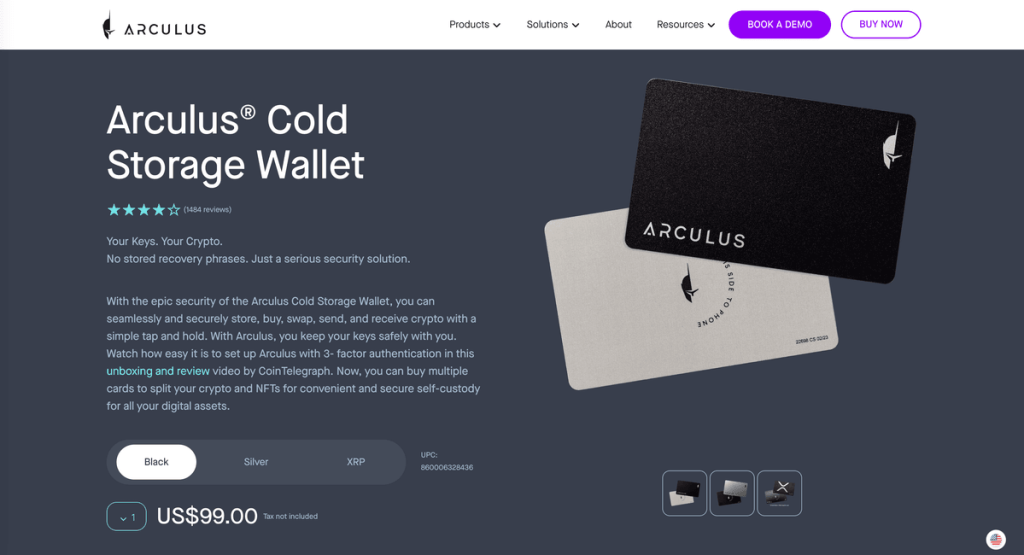
The Arculus cold storage wallet focuses heavily on sleek design and user-friendly security.
Rather than using cable-heavy hardware devices, Arculus combines card-based authentication with a mobile app to create a smoother experience for newer crypto users.
| Wallet | Best For | Key Features |
| Arculus Card | Mobile-first users | NFC authentication, minimalist card-based security |
| Arculus Wallet App | Everyday crypto activity | Portfolio tracking, transaction approval, mobile integration |
| Arculus Cold Storage Bundle | Long-term holders | Combined offline protection with app-based management |
For users who find traditional hardware wallets too technical or intimidating, Arculus often feels far more approachable.
Trezor
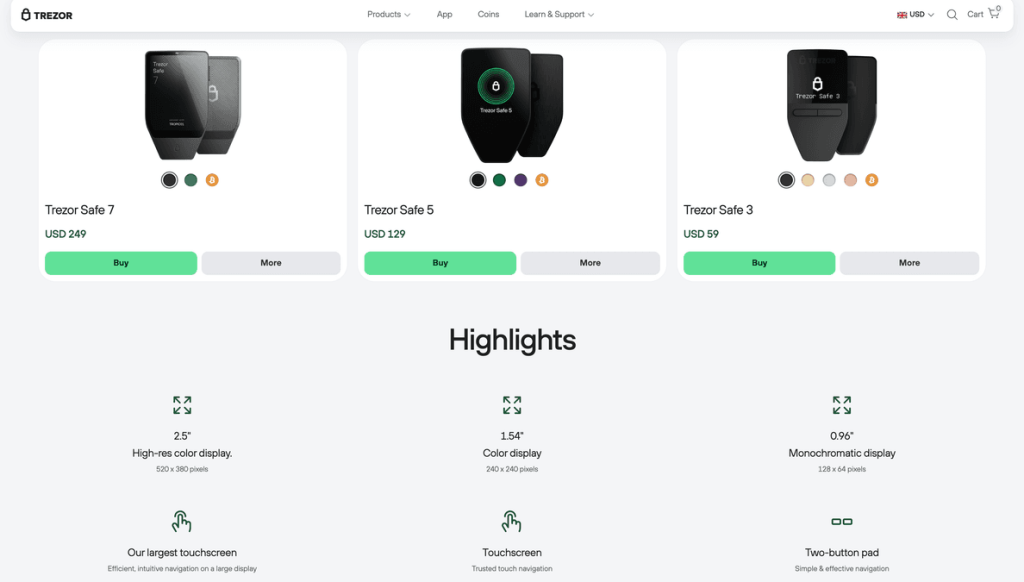
Trezor has built one of the strongest reputations in crypto through transparency and open-source security.
It remains especially popular among serious Bitcoin holders and users who value long-term self-custody.
| Wallet | Best For | Key Features |
| Trezor Safe 3 | Beginners | Modern entry-level security with improved chip protection |
| Trezor Safe 5 | Advanced users | Touchscreen display, upgraded UX, stronger security features |
| Trezor Safe 7 | Power users | Premium security-focused flagship model with advanced functionality |
Many experienced crypto users appreciate Trezor’s open-source philosophy and long-standing credibility, especially when transparency and security verification matter most.
Bitcoin Cold Storage Wallet: Why Bitcoin Holders Prefer Offline Security
Bitcoin investors tend to focus heavily on long-term security.
Unlike active traders constantly moving between tokens, many Bitcoin holders simply want the safest possible environment for storing assets over several years.
That’s one reason the bitcoin wallet concept became so important within the Bitcoin community.
For many people, Bitcoin is less about short-term trading and more about long-term ownership. Naturally, offline storage fits that mindset very well.
What Is the Best Cold Storage Wallet for Different Types of Users?
There’s no single answer to what is the best cold storage wallet because every crypto user has different priorities.
Here’s a simpler breakdown:
| User Type | Recommended Wallet Style |
| Beginners | Tangem, Arculus |
| Long-term Bitcoin holders | Ledger, Trezor |
| Active DeFi users | Hybrid setup (hot + cold wallet) |
| Mobile-first users | Tangem |
| Security-focused advanced users | Air-gapped wallets |
In the end, the best wallet usually comes down to your experience level, security preferences, and how often you actually move your crypto.
Common Mistakes to Avoid With a Cold Storage Wallet
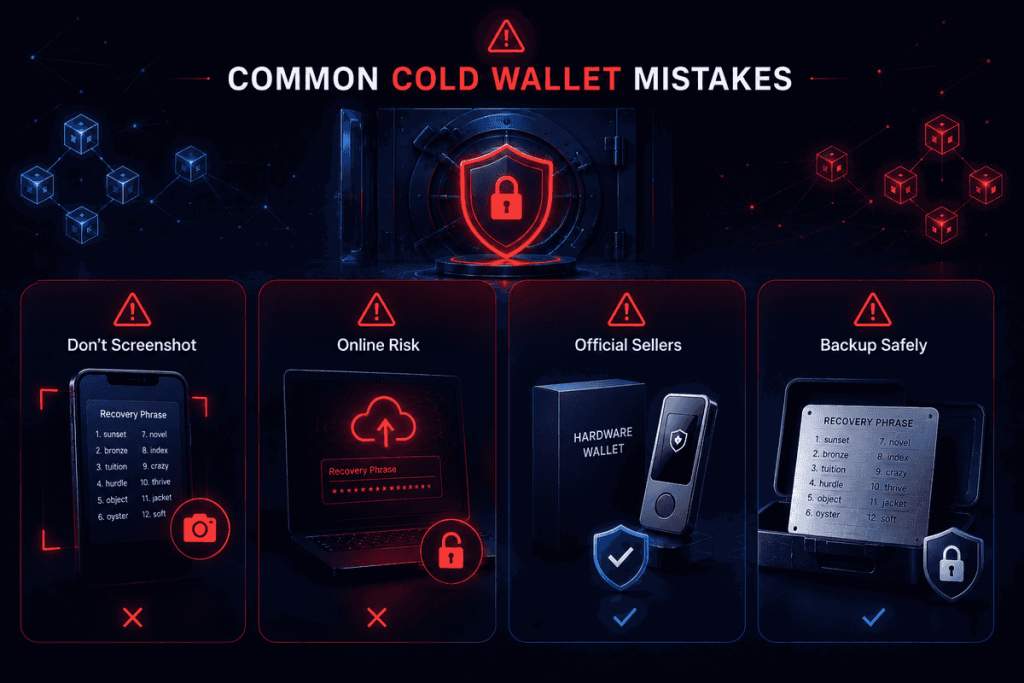
Cold wallets are highly secure, but mistakes still happen.
In fact, user error causes many crypto losses.
Some of the most common mistakes include:
- Storing recovery phrases digitally
- Taking screenshots of seed phrases
- Buying wallets from unofficial sellers
- Forgetting to test recovery backups
- Losing access to backup phrases
- Keeping every backup in one physical location
Good wallet security is usually less about paranoia and more about consistency.
Simple habits often make the biggest difference.
Final Thoughts
A cold storage wallet is no longer something used only by hardcore crypto enthusiasts.
As crypto becomes more mainstream, more everyday users are starting to care about self-custody and long-term asset protection.
For beginners, the goal shouldn’t be finding the “perfect” wallet immediately. It’s simply about understanding the basics, building strong security habits early, and choosing a setup that feels comfortable enough to use consistently.
Some users may prefer the simplicity of Tangem or the modern feel of the Arculus cold storage wallet. Others may trust the long-standing reputation of Ledger or Trezor.
Meanwhile, users who prioritize convenience and daily Web3 activity may feel more comfortable using hot wallet options like Izaka-Ya alongside cold storage.
At the end of the day, the best cold storage wallet is usually the one that fits both your security needs and the way you actually use crypto.
FAQs
A cold storage wallet is a crypto wallet that stores private keys offline instead of staying constantly connected to the internet. Because of that, it offers stronger protection against hacking and online attacks.
The best cold storage wallet for beginners usually depends on ease of use and security preferences. Many newer users prefer options like Tangem or Arculus because they offer more beginner-friendly experiences.
In most cases, yes. A bitcoin cold storage wallet is generally safer because it keeps private keys offline, reducing exposure to phishing attacks, malware, and wallet exploits.
Yes, many cold wallets can still connect to DeFi platforms and decentralized applications when needed. However, transactions are typically approved securely through the hardware device itself.
Whether WLFI on cold wallet storage is supported depends on wallet compatibility and the blockchain network involved. In many cases, if a wallet supports the underlying blockchain standard used by WLFI, storage may be possible through compatible integrations. However, users should always verify token support before transferring assets.
If you still have your recovery phrase or seed phrase, you can usually restore access to your crypto on another compatible wallet. However, losing both the device and recovery phrase may result in permanent loss of funds.