



If you have ever bought or sold cryptocurrency, you may have already experienced liquidity even if you did not realize it, leaving you to ask, “what is liquidity in crypto?” Have you ever tried to sell a coin and noticed a sudden price drop right before you hit the confirm button? This is the impact of liquidity.
Whether you are holding Bitcoin or Ethereum for the long term, collecting different altcoins, or exploring decentralized finance, understanding liquidity can help you make better decisions. Liquidity affects how quickly you can trade, how much prices move, and how much you ultimately pay in trading costs. It also opens the door to opportunities such as crypto lending and liquidity pools that allow your assets to generate additional returns instead of sitting idle.
This guide explains crypto liquidity in simple terms, explores liquidity pools, discusses Bitcoin liquidity, and shows how to avoid problems caused by low liquidity.
What Does Liquidity Mean in Crypto?
Every market needs buyers and sellers to function. Liquidity refers to how easily a cryptocurrency can be bought or sold without causing a large change in its price. If a coin has high liquidity, you can trade large amounts instantly because many people want to trade that specific asset at the same time.
A highly liquid cryptocurrency has plenty of buyers and sellers. As a result:
- Orders fill quickly.
- Prices stay relatively stable.
- The difference between buying and selling prices remains small.
A low liquidity asset has fewer active traders. Even a moderately sized order can push the market price significantly higher or lower.
💸 Think about selling a house compared to selling a smartphone. A house takes months to sell because real estate lacks liquidity. A smartphone sells instantly because there are many potential buyers. High crypto liquidity means thousands of active traders stand ready to take the other side of your trade at any given second.
Why Crypto Liquidity Matters
Believe it or not, liquidity influences almost every crypto transaction. Even experienced investors monitor liquidity and check market depth before they click the buy button. They do this to secure three massive advantages.
- Price Stability: A healthy market handles large trades easily. Thousands of buyers and sellers balance out the market pressure naturally. This balance prevents massive price crashes and allows you to trade with total confidence.
- Instant Execution: High crypto liquidity guarantees your trade goes through immediately. You get the exact price you see on your screen without any stressful delays.
- Cheaper Trading Costs: Deep markets save you money. You experience lower slippage and smaller gaps between buying and selling prices. These small savings add up quickly and protect your overall trading profits over time.
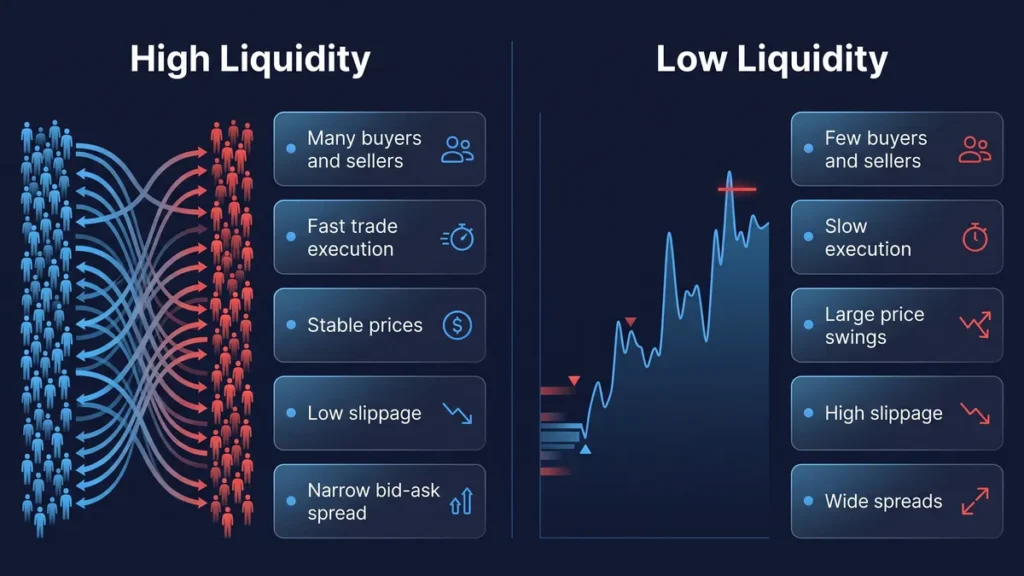
This comparison table is a simple breakdown of what you can expect when trading in different market conditions.
Market Condition
High Liquidity
Low Liquidity
Execution Speed
Fast and instant
Slow and delayed
Price Impact
Small price changes
Massive price swings
Slippage Risk
Very low slippage
Very high slippage
Spread Size
Narrow price gaps
Wide price gaps
Market Activity
Crowded with active traders
Empty with very few traders
Low Liquidity: The Financial Trap You Should Be Aware Of
Holding tokens in a ghost town market creates massive financial risk. When trading volume dries up, traders face low liquidity conditions that can quickly destroy their portfolio value. This market trap does not happen by accident; several specific factors drive liquidity away from a token.
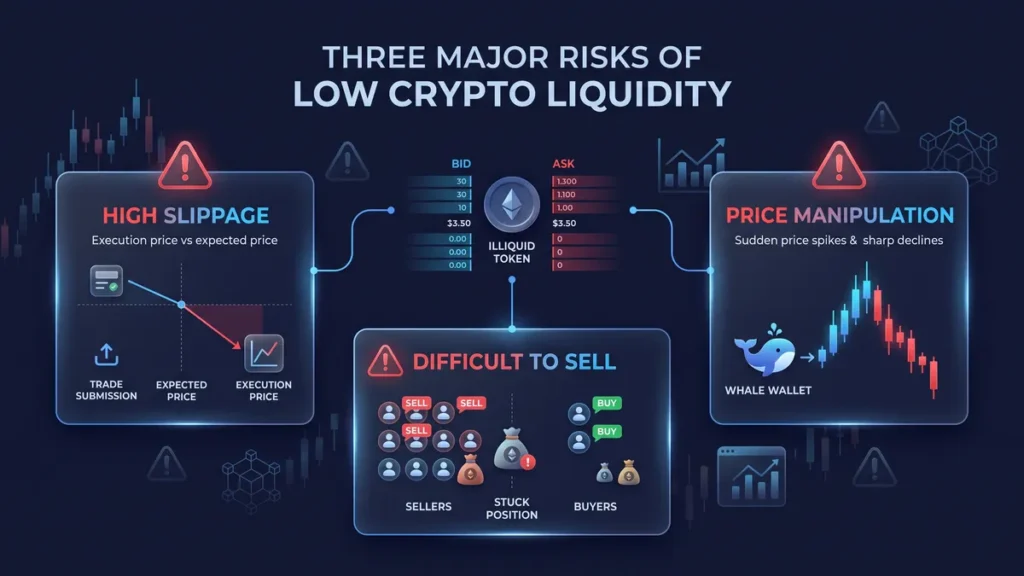
Usually, low liquidity stems from a few common issues:
- Small User Communities: If a project fails to attract a dedicated group of active holders, the marketplace remains empty.
- Limited Exchange Listings: When a token sits on only one obscure decentralized platform, everyday investors cannot access it easily.
- Low Daily Trading Volume: A lack of daily transactions means the market stays stagnant, making it hard to find active participants.
- New or Obscuring Projects: Brand new tokens often launch without enough initial funding, creating thin market depth right from the start.
- Negative Market Sentiment: Bad news or a general crypto bear market can cause investors to flee a project entirely, instantly draining the available liquidity.
When these factors combine, they trigger three devastating traps for unsuspecting investors:
- Brutal Price Slippage: You attempt to sell your tokens. The lack of active buyers forces the exchange to lower the price instantly to find someone willing to buy. You receive far less money than the screen originally promised.
- The Roach Motel Effect: You hold a rare altcoin that was pumped last month. Now, nobody wants to buy it. You cannot exit your position at any price. Your portfolio looks valuable on paper but has zero actual cash value.
- Predatory Market Manipulation: A single whale buys a massive chunk of a quiet coin. This sudden action causes a huge, artificial price spike. Retail traders rush in to buy the hype, and the whale dumps their bags on the trapped newcomers.
What is a Liquidity Pool in Crypto?
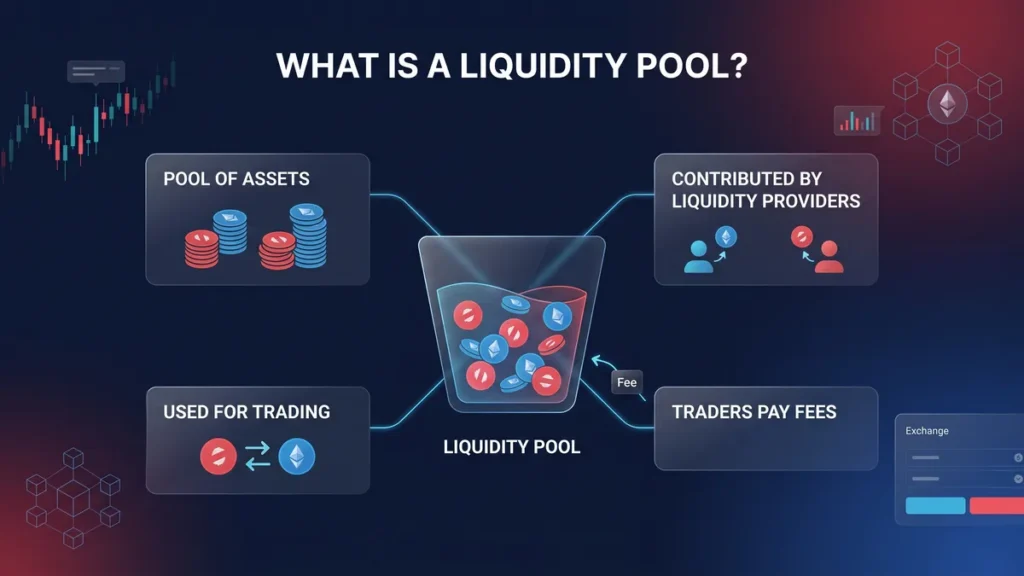
Traditional stock markets rely on central companies to match buyers with sellers. Decentralized finance takes a completely different approach. People often ask what is the liquidity pool in crypto and how it replaces traditional exchange systems.
A liquidity pool is a collection of cryptocurrencies locked inside a smart contract. Instead of waiting for a human buyer, decentralized exchanges use these pools to facilitate trading. Everyday users provide these funds to earn trading fees as a reward. This system completely changes how decentralized exchanges operate.
Without the liquidity pools, many DeFi platforms would not function efficiently.
How What is Liquidity Pools in Crypto Actually Works
Many beginners search online to understand what liquidity pools in crypto. The mechanics operate simply: two different tokens sit in a smart contract. You put one token in, and you take the other token out. An algorithm automatically adjusts the price based on how many tokens remain in the pool.
🪙 Suppose a liquidity pool contains: ETH and USDC When someone swaps ETH for USDC, the smart contract automatically adjusts the balance inside the pool. Prices update continuously based on supply and demand within the pool.
Why Bitcoin Liquidity Leads the Market
Top cryptocurrencies dominate the trading volume charts every single day. Bitcoin liquidity remains the highest in the entire industry.
Retail investors, automated trading bots, and massive financial institutions trade Bitcoin continuously across hundreds of global platforms. Because so many participants constantly bid on the asset, the market creates a steong fortress of order depth. You could execute a ten million dollar market order right now, and the active buyers would absorb your trade instantly without moving the market price.
This immense volume completely eliminates slippage risk and gives long-term investors ultimate peace of mind during volatile market conditions.
How to Measure Crypto Liquidity Before You Trade
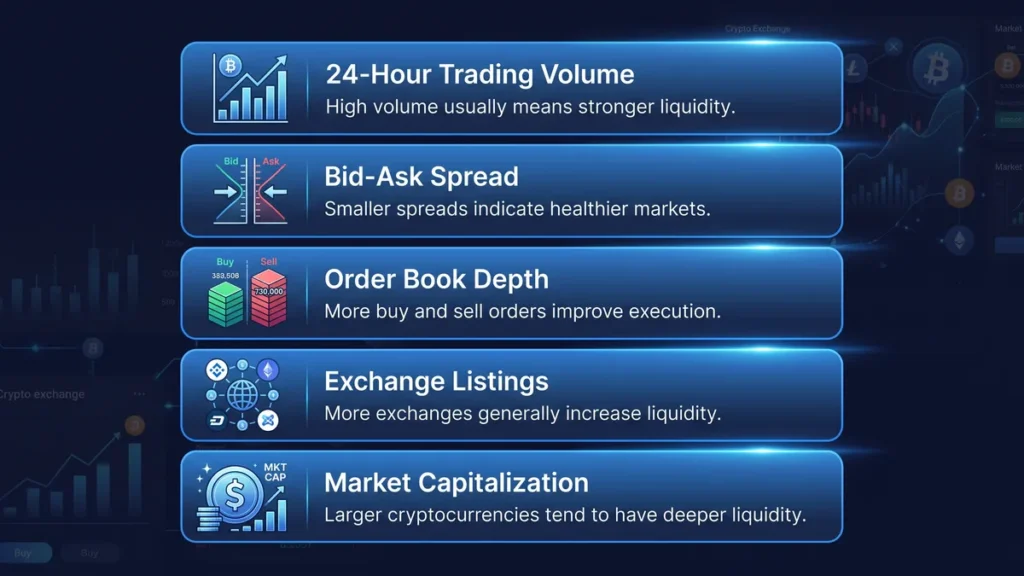
Now that you understand the dangers of empty markets and how low liquidity traps your assets, you need a reliable way to protect your capital. Let’s look at how you can measure crypto liquidity before you execute your next trade.
You do not have to guess whether a cryptocurrency has enough market depth. You can easily measure crypto liquidity yourself by checking a few simple metrics on any major crypto tracking website or exchange. Smart traders always look at these two core indicators before risking their capital.
- 24-Hour Trading Volume: This number shows the total dollar amount of a token that people bought and sold over the last day. High trading volume means an active marketplace filled with eager participants. If a coin trades millions of dollars a day, you can easily buy and sell your tokens. If the volume sits at a few thousand dollars, you are entering a dangerous market.
- The Order Book Depth: When you open an exchange, you will see a list of live buy orders (bids) and sell orders (asks). Look closely at the gap between the highest buy price and the lowest sell price. Traders call this the bid-ask spread. A tight spread means high liquidity and fair pricing. A wide spread warns you that you will pay an unfair premium to enter or exit your position.
Checking these metrics takes less than a minute, but this simple habit protects your hard-earned digital assets from unexpected losses.
Different Ways to Put Your Crypto to Work
Many investors buy crypto and simply leave it in their wallets. However, there are several ways to make your holdings more productive.
Crypto Lending

Crypto lending allows you to lend digital assets and earn interest over time. This option is often attractive to long-term holders who want passive income while keeping ownership of their crypto.
IZAKA-YA offers a simple way for eligible users to earn interest on supported crypto assets while maintaining an easy-to-use experience. You can put your digital assets to work right inside the application.
Instead of forcing you to navigate confusing external exchanges, IZAKA-YA lets you lend your coins to earn passive returns or swap tokens directly in one place. This all-in-one approach saves you time and completely eliminates the stressful steps that moving funds usually requires. The entire layout feels incredibly intuitive, making it the ideal choice if decentralized finance jargon still feels overwhelming.
Register IZAKA-YAkeyboard_arrow_right
Staking
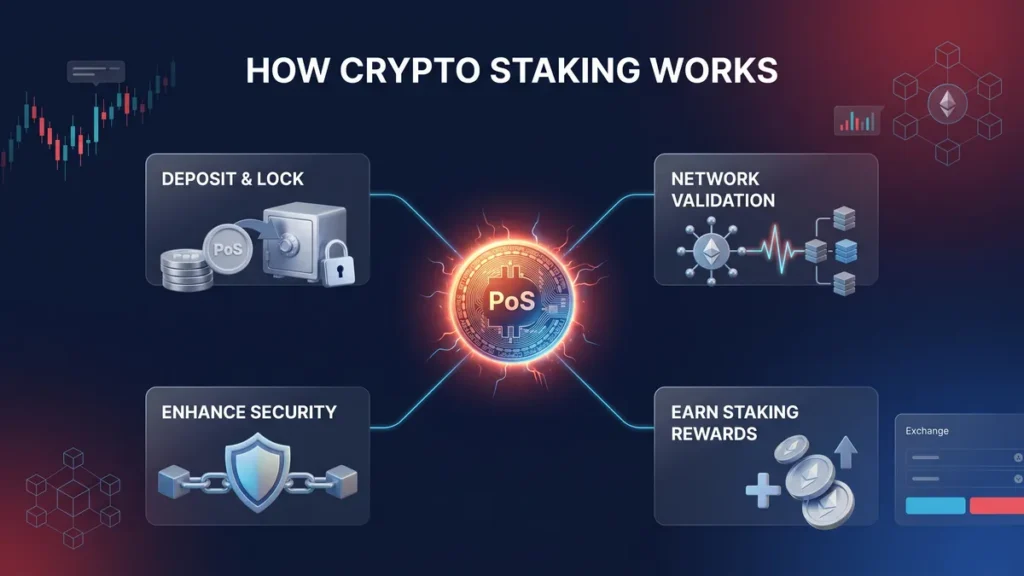
If providing funds to a liquidity pool sounds too complicated or risky, you have another excellent option to generate passive income. You can explore crypto staking instead.
While liquidity pools help decentralized exchanges facilitate user trades, crypto staking helps secure the actual blockchain network itself. You lock your digital assets directly into the network protocol. The blockchain then uses your locked tokens as collateral to validate new transactions and keep the entire system safe from attackers. In return for your service, the network pays you steady rewards using newly minted coins.
Each earning strategy in crypto offers completely different levels of potential return, flexibility, and risk, so you must choose the one that fits your comfort level.
Method
Main Purpose
Risk Level
Typical Rewards
Crypto Lending
Earn interest
Low to Medium
Interest payments
Staking
Support blockchain
Medium
Staking rewards
Frequently Asked Questions (FAQ)
Yes, liquidity directly impacts price stability. Markets with high trading volume resist sudden price drops better than quiet markets.
You can look at the 24-hour trading volume on major tracking websites. High volume usually indicates a healthy and liquid market.
You can earn a portion of the trading fees when you deposit your own tokens into a decentralized exchange pool.
Bitcoin has the largest user base, the highest trading volume, and listings on nearly every major exchange. These factors create deeper markets and more consistent trading activity.
They serve different purposes. Crypto lending generally offers more predictable returns, while liquidity pools may provide higher rewards but involve additional risks such as impermanent loss and changing market conditions.