



Cryptocurrency has become much easier to access than it was a few years ago. Today, you can buy digital assets through centralized exchanges, decentralized platforms, or directly from another person. Among these options, the P2P crypto exchange has become increasingly popular because it gives users more flexibility and control over how they trade.
What Is a P2P Crypto Exchange?
A P2P crypto exchange, short for peer-to-peer cryptocurrency exchange, is a decentralized marketplace that connects buyers and sellers directly, without the need for a corporate intermediary to process the trades. Instead of trading against an order book owned by a massive platform, you are dealing with a real human being on the other side of the screen.
To keep everyone safe, these platforms use a built-in escrow system. When a trade begins, the seller’s cryptocurrency is locked up automatically by the platform. Once the buyer sends the agreed payment through a bank transfer, cash, or digital wallet, and the seller confirms receipt, the platform releases the crypto to the buyer. This setup ensures that neither party can simply walk away with the funds.
Core Features of a P2P Exchange
A modern P2P platform typically includes:
- User registration
- Identity verification
- Escrow system
- Order matching
- Payment integration
- Wallet management
- Admin dashboard
- Dispute management
- Security monitoring
- Mobile compatibility
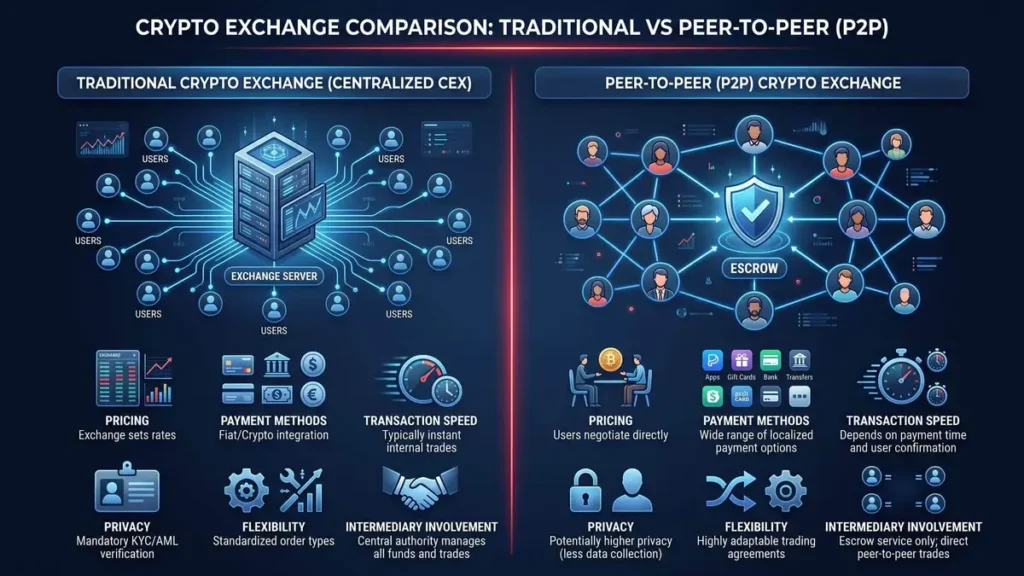
Now that we looked into the core features of a P2P exchange, let’s compare a typical traditional exchange and a P2P exchange transaction
| Traditional Exchange | P2P Exchange |
| Buy from exchange liquidity | Buy directly from another user |
| Fixed trading interface | Users create their own offers |
| Limited payment methods | Many payment methods available |
| Exchange determines pricing | Buyers and sellers negotiate prices |
| Instant transaction | Speed usually depends on counterparties |
If you value flexibility and a wide variety of payment methods, P2P trading may suit you better. But, If you prioritize speed and simple order execution, a centralized exchange may be the better option.
Many experienced investors actually use both. They buy crypto through whichever option offers the best value at the time and then transfer their assets into a secure wallet.
How Does a P2P Crypto Exchange Work?
At first glance, a P2P marketplace may seem complicated, but the process is surprisingly straightforward. Instead of matching orders automatically, the platform allows buyers and sellers to negotiate directly while providing tools that keep the transaction secure.
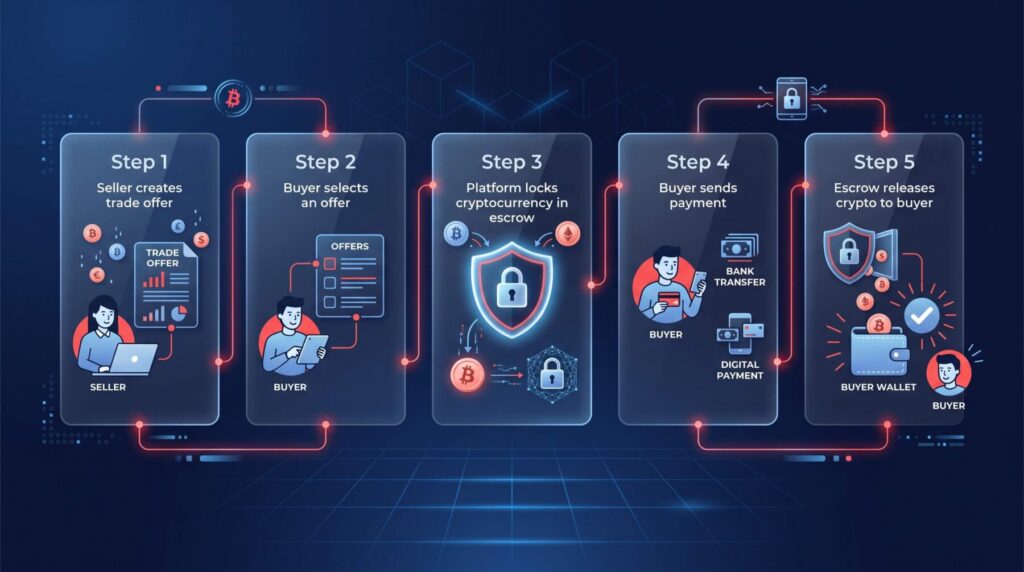
Let’s walk through the process.
Step 1: Creating a Trade Offer
A seller begins by creating an offer that specifies:
- Cryptocurrency being sold
- Available amount
- Price
- Accepted payment methods
- Trading limits
- Any special conditions
Some sellers prefer bank transfers, while others accept mobile payment apps or local payment services. This variety makes P2P trading attractive in countries where traditional payment options are limited.
Step 2: Finding a Matching Buyer or Seller
Buyers browse available listings and compare several factors before choosing an offer.
They typically consider:
- Price
- Seller reputation
- Number of completed trades
- Response time
- Payment method
- Transaction limits
Choosing an experienced trader with positive feedback can significantly reduce the risk of disputes.
Step 3: Escrow Protection
One of the most important security features is escrow.
Once the buyer starts a transaction, the seller’s cryptocurrency is temporarily locked by the platform. This prevents the seller from cancelling the trade after receiving payment. Only after both parties confirm that payment has been completed will the crypto be released to the buyer.
Without escrow, peer-to-peer trading would carry much greater risk.
Step 4: Completing Payment
The buyer sends payment using the agreed method.
After payment is made:
- The buyer uploads proof if required.
- The seller verifies receipt.
- The platform releases the cryptocurrency from escrow.
- The trade is completed.
If there is a disagreement, most reputable platforms have a dispute resolution process where moderators review evidence from both parties.
P2P Crypto Exchange vs Crypto Wallet: What is the Difference?
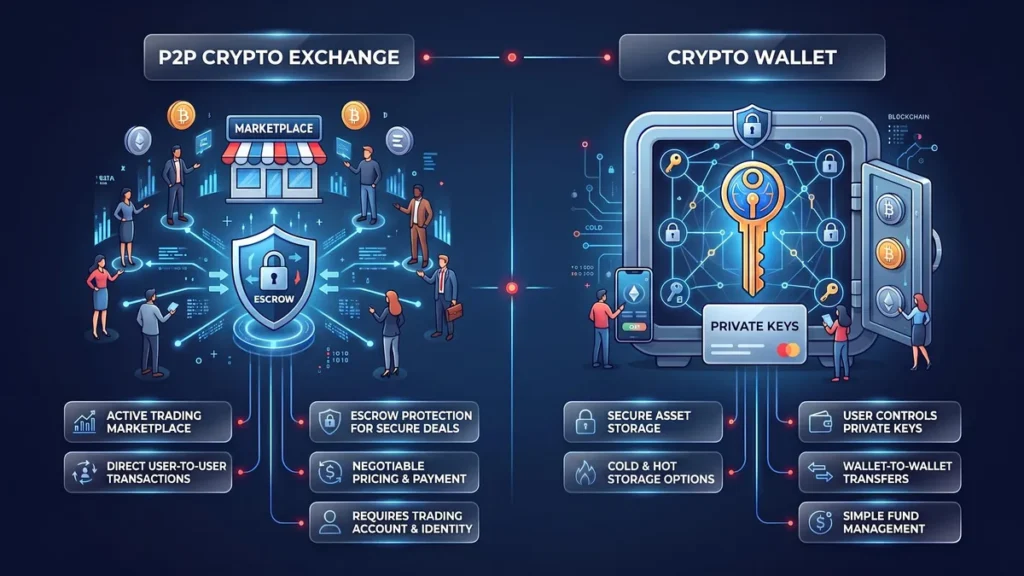
Newcomers often mix up platforms and storage systems, so clearing up the distinction between an exchange and a wallet is essential before you start trading.
An exchange is a marketplace designed specifically for trading, matching you with other users or order books so you can swap tokens. A wallet, on the other hand, is a digital tool used strictly for storing your public and private keys, which gives you access to your funds on the blockchain.
💡 If your primary goal is to buy or sell, you use an exchange. If your goal is simply to hold your assets securely for the long term, you move those assets into a private wallet where you control the security keys.
The Benefits of Trading Peer-to-Peer
Trading directly with other individuals brings several unique advantages that traditional corporate platforms simply cannot offer.
Enhanced Privacy: Looking for a P2P Crypto Exchange with No KYC?
Many traders value privacy above all else and actively seek out a P2P crypto exchange with no KYC (Know Your Customer). Traditional platforms require you to upload passports, ID cards, and proof of address before you can place a single trade. Peer-to-peer platforms that skip these strict identity checks allow you to preserve your financial anonymity, letting you trade assets based purely on mutual trust and escrow protection.
Global Access and Better Payment Variety
Because you are dealing with individual sellers worldwide, peer-to-peer marketplaces offer hundreds of payment methods that standard corporations do not support. You can buy crypto using local bank transfers, regional digital apps, gift cards, or even cash in person. This makes it arguably the best place to buy crypto if you live in a region with limited banking support or strict corporate restrictions.
How to Choose the Best P2P Crypto Exchange for Your Needs
Finding the best p2p crypto exchange comes down to balancing security features, user traffic, and fee structures.
- Look for High Traffic: A platform with a massive user base means you will find buyers and sellers quickly, leading to faster transaction times.
- Check the Fee Structure: Some platforms charge the person who posts the trade ad but keep it free for the person responding to it.
- Evaluate Escrow and Support: Ensure the platform has a robust dispute resolution system in case a trade stalls.
Why Do People Use a P2P Crypto Exchange?
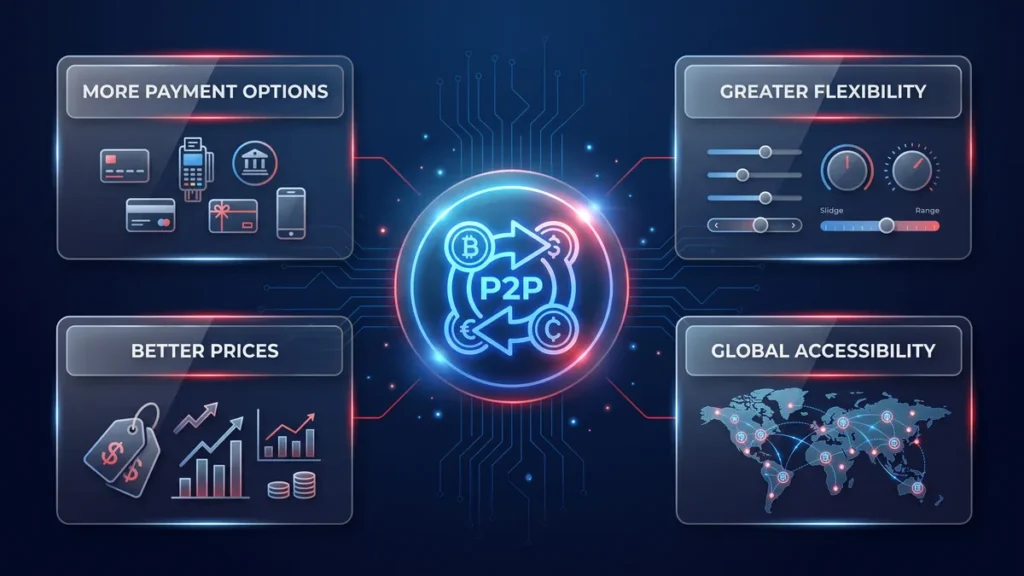
P2P trading offers several advantages that appeal to both beginners and experienced crypto users. While centralized exchanges remain popular, peer-to-peer marketplaces solve different problems.
More Payment Options
Traditional exchanges often support only a limited number of payment methods depending on your country.
P2P platforms usually allow:
- Local bank transfers
- Mobile payment apps
- Digital wallets
- Cash deposits
- Regional payment services
This makes cryptocurrency accessible to users who may not have access to international banking services.
Greater Flexibility
Every trader has different preferences. Some prioritize the lowest price. Others value speed. Some only want to trade with highly rated sellers.
A P2P marketplace lets users choose the offer that best matches their needs rather than accepting a single market price.
Potentially Better Prices
Competition between sellers often leads to attractive pricing.
Depending on market conditions, buyers may occasionally find better deals than those available on centralized exchanges. However, prices vary throughout the day, so comparing multiple offers is recommended.
Access in Different Regions
In some countries, traditional exchanges may have limited banking support or restricted services. P2P trading allows local buyers and sellers to transact using payment methods that work within their own financial systems.
This regional flexibility has made peer-to-peer exchanges an important part of the global cryptocurrency ecosystem.
What Is P2P Crypto Exchange Development?
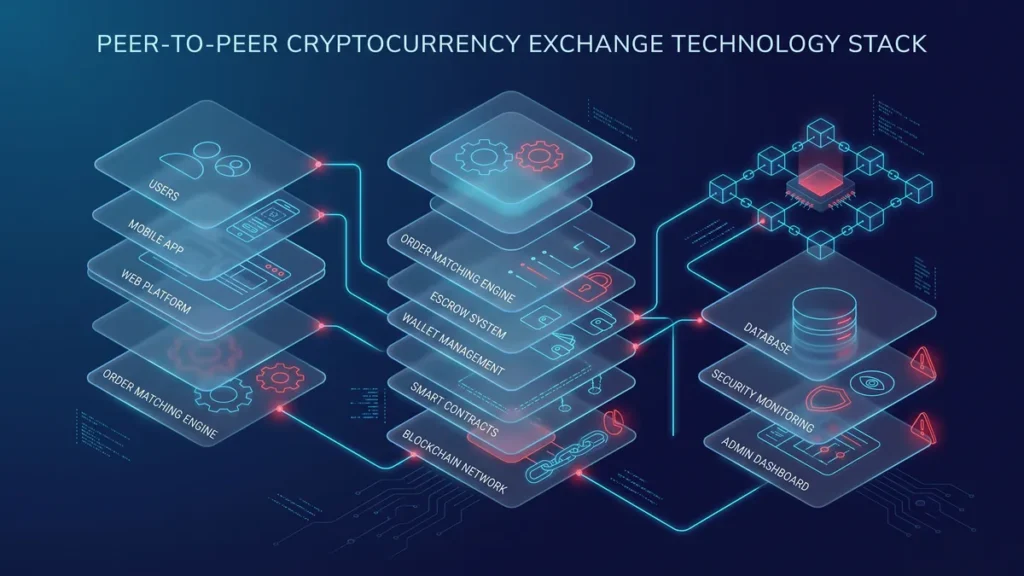
As cryptocurrency adoption grows, more businesses are interested in launching their own trading platforms. This has increased demand for P2P crypto exchange development services.
Instead of building everything from scratch, companies often work with experienced developers who specialize in blockchain infrastructure.
Choosing a P2P Crypto Exchange Development Company
If your business plans to launch a marketplace, selecting the right P2P crypto exchange development company is one of the most important decisions.
Look for a company with experience in:
- Blockchain development
- Smart contract security
- Regulatory compliance
- High-performance trading systems
- Ongoing maintenance and support
Reviewing previous projects and security audits can also provide confidence before committing to a development partner.
Make Your Crypto Work While You Hodl
Many investors buy cryptocurrency with the intention to Hodl (hold on for dear life), meaning they hold their assets for the long term instead of trading frequently. However, holding crypto does not necessarily mean your assets have to remain idle.
Keeping them sitting in a basic wallet means missing out on potential wealth generation. While alternative software wallets like Trust Wallet, Atomic Wallet, or Exodus let you store and swap your tokens easily, they don’t actively grow your capital on their own.
Some platforms offer crypto lending services that allow eligible users to earn returns on supported digital assets while maintaining ownership. If you’re planning to Hodl for months or years, IZAKA-YA Crypto Lending Wallet provides a convenient way to put selected assets to work while you continue building your long-term portfolio.
Ultimately, the right strategy depends on your investment goals and your comfort with risk.
Frequently Asked Questions (FAQ)
Yes, provided you stick to reputable platforms that utilize automated escrow services. The escrow system prevents the seller from running away with your money, but you must still practice caution, read trader reviews, and never release funds until you verify payment receipt in your bank account.
A crypto exchange allows you to buy, sell, and trade cryptocurrencies. A crypto wallet stores your digital assets and gives you control over your private keys. Many investors purchase crypto on an exchange and then transfer it to a personal wallet for added security.
Yes, many peer-to-peer marketplaces allow users to trade without completing identity verification. Look for platforms labeled as no-KYC options if you wish to keep your personal identification private.
Sometimes. Because users set their own prices, you may find more competitive offers during certain market conditions. However, always compare the total cost, including fees, exchange rates, and payment charges.
If a seller receives your payment but refuses to release the funds, you can open an official dispute with the platform. You will need to provide proof of payment, such as a bank receipt screenshot, and the customer support team will manually verify the transfer and award the locked crypto to you.