



What is blockchain, and why do so many people talk about it today?
From Bitcoin and crypto to digital payments and online security, blockchain has become one of the most influential technologies of the digital age. Yet despite its growing adoption, many people still aren’t sure how it works or why it matters.
At its core, blockchain is a system for storing and sharing information across a network of computers. Instead of relying on a single database, multiple participants maintain the same records, making the data more transparent and difficult to tamper with.
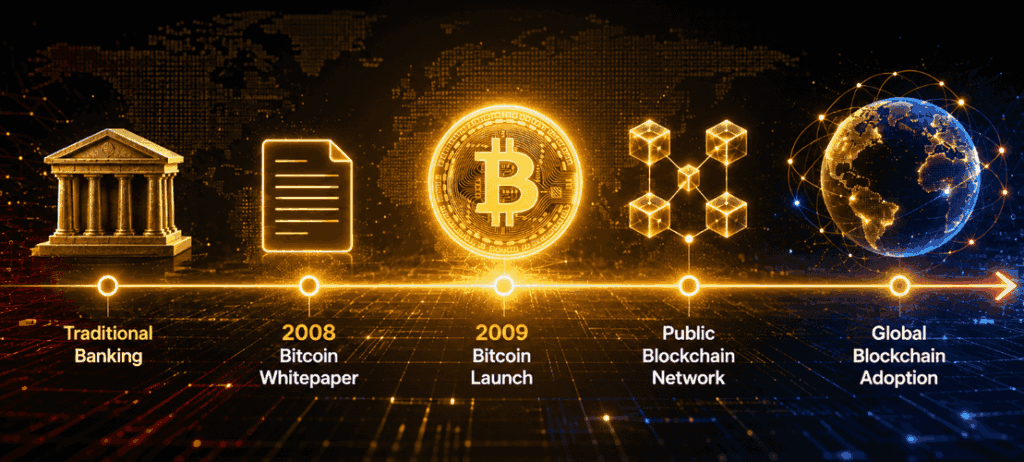
Blockchain first gained global attention through Bitcoin, but its applications now extend far beyond cryptocurrency. Today, organizations use the technology for everything from supply chain tracking and digital identity verification to financial services and data management.
In this guide, you’ll learn the blockchain meaning, how blockchain technology works, what its main purpose is, and where it’s being used in the real world.
Blockchain Meaning and Definition
Before exploring how blockchain works, it helps to understand the basic concept.
A blockchain is a decentralized digital ledger that records information across a network of computers. Rather than storing data in one location, the network shares and updates the same records across multiple participants.
New information is grouped into blocks, and each block connects to the one before it, creating a chain of records that grows over time. This structure helps maintain transparency and makes unauthorized changes much harder.
What Is Blockchain in Simple Words?
Think of blockchain as a shared digital notebook. Whenever someone adds a new entry, every participant sees the updated version. Because everyone works from the same record, the network can quickly identify attempts to alter information, helping keep the data accurate and trustworthy.
What Is Blockchain Technology and How Does It Work?
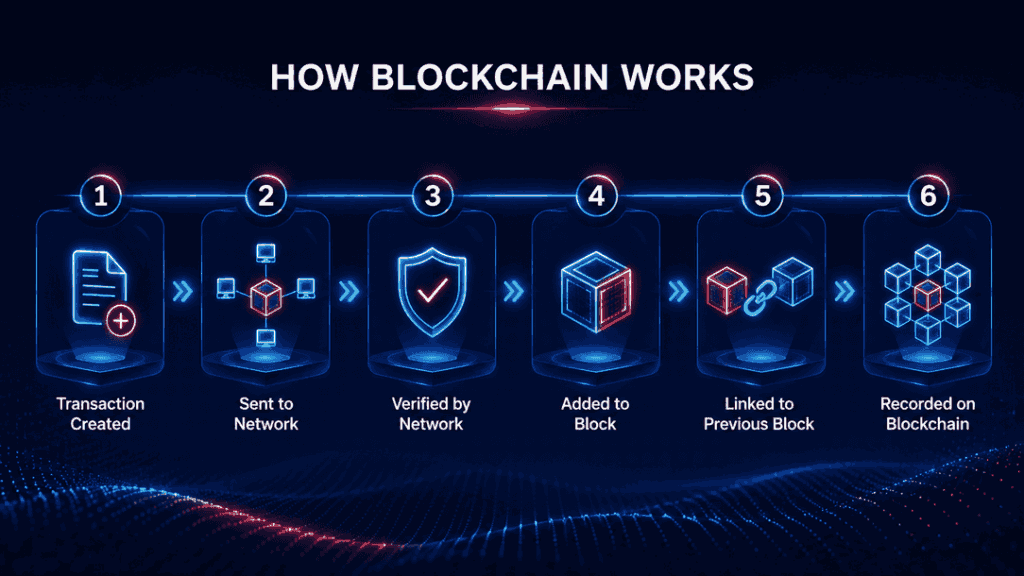
Now that we’ve covered the basics, let’s look at how blockchain actually works.
Although the technology behind it can be complex, the overall process is surprisingly easy to understand.
Blocks, Data, and Cryptography
Every block contains information that needs to be recorded. Depending on the blockchain, that information might include transactions, ownership records, smart contract activity, or other types of data.
Each block also contains:
Component
Purpose
Transaction Data
Information being recorded
Timestamp
Shows when the block was created
Hash
A unique digital fingerprint
Previous Hash
Links the block to the one before it
The hash is particularly important. If someone tries to change information inside a block, the hash changes immediately, making tampering easy to detect.
How Transactions Are Added
Whenever someone submits a transaction, the network first checks whether it’s valid.
Once verified, the transaction joins other verified transactions inside a new block. That block is then added to the existing chain and shared across the network.
The process typically follows these steps:
- A transaction is created.
- The transaction is broadcast to the network.
- Network participants verify the information.
- Verified transactions are grouped into a block.
- The block is added to the chain.
- The ledger updates across the network.
As a result, everyone maintains the same version of the records.
Why Blockchain Is Difficult to Alter
One of blockchain’s biggest strengths is the way it protects data from unauthorized changes.
Unlike a traditional database that stores information in one place, blockchain spreads records across a network of computers. If someone tries to change a past record, they would need to modify countless copies of the ledger across the network while overcoming multiple layers of security.
As a result, confirmed records remain highly resistant to manipulation. That’s why people often describe blockchain as immutable, meaning the data becomes extremely difficult to change once the network adds it to the chain.
The Bitcoin Blockchain: Where It All Started
What Is the Purpose of Blockchain Technology?
A common question among beginners is: what is the purpose of blockchain technology?
While the answer depends on the specific use case, most blockchain networks are designed to achieve four key goals.
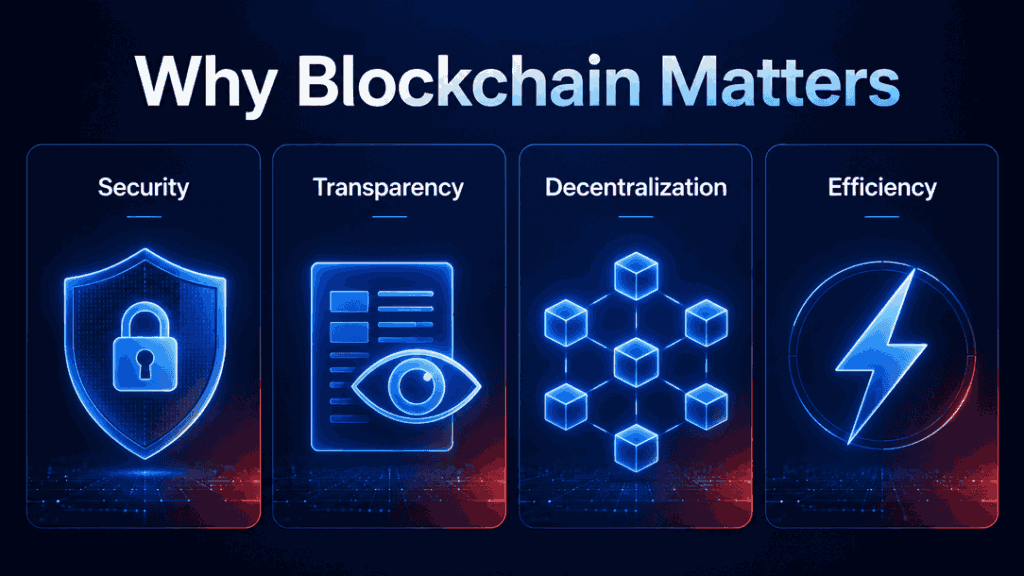
Security
Blockchain uses cryptographic methods to help protect data and verify transactions.
Transparency
Many blockchain networks allow participants to view transaction histories, making activity easier to verify.
Decentralization
Rather than giving control to a single organization, blockchain distributes responsibility across the network.
Efficiency
In some situations, blockchain can reduce paperwork, eliminate intermediaries, and streamline verification processes.
Together, these benefits help create systems that are more trustworthy and resilient.
Key Features of Blockchain Technology
Several features set blockchain apart from traditional databases.
Distributed Ledger
Instead of relying on a single server, copies of the ledger are stored across multiple computers.
Immutability
Once data has been verified and added to the chain, changing it becomes extremely difficult.
Consensus Mechanisms
Blockchain networks need a way to agree on which transactions are valid.
Common consensus mechanisms include:
- Proof of Work (PoW)
- Proof of Stake (PoS)
- Delegated Proof of Stake (DPoS)
Smart Contracts
Smart contracts are programs that automatically execute actions when specific conditions are met.
Because they operate automatically, they can reduce the need for manual oversight and intermediaries.
Common Types of Blockchain Networks
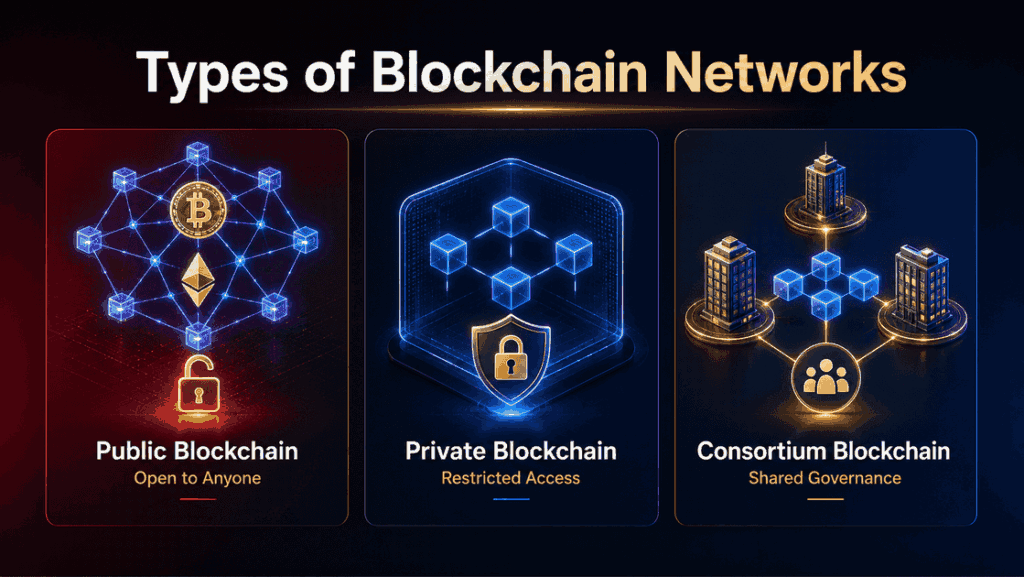
Not all blockchain networks are designed for the same purpose.
Public Blockchains
Public blockchains are open to anyone.
Popular examples include Bitcoin and Ethereum, where anyone can participate, verify transactions, and access network data.
Private Blockchains
Private blockchains restrict access to approved users.
These networks are commonly used by businesses that need greater control over who can view and modify information.
Consortium Blockchains
Consortium blockchains are managed by multiple organizations rather than a single entity.
They’re often used in industries where several companies need to share information securely.
What Is a Blockchain Explorer?
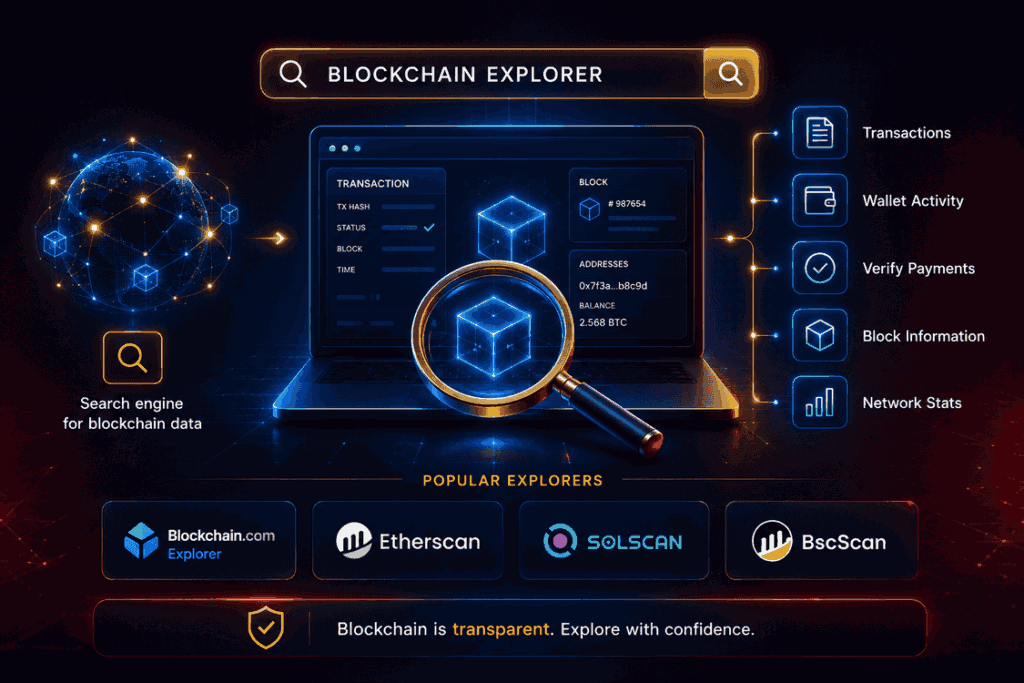
As you explore blockchain, you’ll likely come across the term blockchain explorer.
So, what is a blockchain explorer?
Simply put, it’s a tool that allows users to view information stored on a blockchain network.
Think of it as a search engine for blockchain data.
Using a blockchain explorer, you can:
- Search for transactions
- Check wallet activity
- Verify payments
- View block information
- Monitor network statistics
Popular examples include Blockchain.com Explorer, Etherscan, Solscan, and BscScan.
Because blockchain networks are transparent, explorers make it easy for anyone to verify activity independently.
What Is Big Tech’s Involvement in Blockchain?
As blockchain adoption has grown, many major technology companies have started exploring its potential.
So, what is big tech’s involvement in blockchain?
The answer varies by company, but most involvement falls into three main areas.
Enterprise Solutions
Many large organizations have experimented with blockchain-based systems for supply chain management, record keeping, digital identity, and financial services.
Cloud Infrastructure
Some technology providers offer tools and infrastructure that help businesses build and manage blockchain applications more easily.
This reduces the cost and complexity of adoption.
Research and Development
Big Tech companies continue investing in distributed systems, digital assets, tokenization, and blockchain security research.
While adoption is still evolving, blockchain remains a significant area of interest across the technology sector.
Real-World Applications of Blockchain
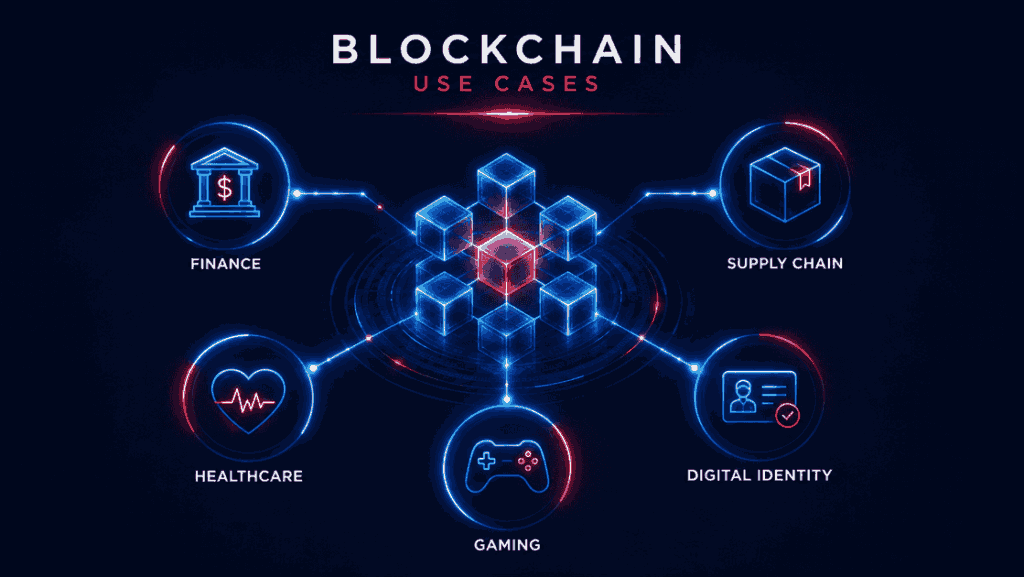
One reason blockchain continues to attract attention is its versatility.
Today, the technology is being used in a growing number of industries.
Finance
Blockchain supports digital payments, asset tokenization, trading platforms, and cross-border transfers.
Supply Chain Management
Companies can track products throughout their journey, improving transparency and reducing fraud.
Healthcare
Blockchain can help secure medical records while improving data sharing between authorized parties.
Gaming
Many blockchain-based games allow players to own, buy, and trade digital assets.
Digital Identity
Blockchain can provide more secure ways to verify identities while giving users greater control over personal information.
Advantages and Challenges of Blockchain
Like any technology, blockchain has strengths and limitations.
Advantages
Challenges
Strong security
Scalability limitations
Greater transparency
Regulatory uncertainty
Reduced reliance on intermediaries
Technical complexity
Tamper-resistant records
Adoption challenges
Global accessibility
Energy usage in some networks
Understanding both sides is important when evaluating where blockchain can provide real value.
The Future of Blockchain Technology
Blockchain technology is still evolving.
Developers continue working on ways to make networks faster, cheaper, and more scalable. At the same time, businesses and governments are exploring new use cases that go far beyond cryptocurrency.
While it’s impossible to predict exactly how the industry will develop, blockchain is increasingly becoming part of the digital infrastructure that powers modern applications and services.
As adoption grows, understanding the basics of blockchain will become increasingly valuable for anyone interested in technology, finance, or the future of the internet.
Frequently Asked Questions
Blockchain is a digital record-keeping system that stores information across a network of computers instead of in one central location. Because everyone shares the same record, it’s much harder for anyone to tamper with the data.
Blockchain works by grouping transactions into blocks and linking those blocks together in chronological order. Before a new block is added, the network verifies the information, helping ensure that the records remain accurate and secure.
The main purpose of blockchain technology is to create a secure and transparent way to store and transfer information without relying on a central authority. This can reduce fraud, improve trust, and make certain processes more efficient.
A blockchain explorer is a tool that lets anyone view activity on a blockchain network. Users can search for transactions, wallet addresses, block data, and other information stored on the ledger.
No. Although blockchain first became popular through Bitcoin, it is now used in many industries, including finance, healthcare, supply chain management, gaming, and digital identity systems.
Blockchain uses cryptography, distributed data storage, and network-wide verification to protect information. Since records are shared across many computers, altering past data is extremely difficult.


