



If you’ve been exploring cryptocurrency platforms, chances are you’ve come across the Uphold wallet. It’s often mentioned alongside popular exchanges and crypto apps, but many people aren’t entirely sure what it actually does.
Is it a wallet? An exchange? A place to buy crypto? The answer is a little more interesting than a simple yes or no.
Unlike traditional crypto wallets that focus mainly on storage, Uphold combines several functions into a single platform. You can buy crypto, hold it, exchange it for other assets, and transfer it to external wallets without juggling multiple accounts or services.
For beginners, that simplicity is one of Uphold’s biggest strengths. Everything is designed to be accessible, even if you’re new to cryptocurrency.
In this guide, we’ll take a closer look at what the Uphold wallet is, how it works, its pros and cons, and whether it’s the right choice for your crypto journey.
What Is Uphold Wallet?
The easiest way to understand Uphold is to think of it as a digital asset platform that lets you manage different types of assets from one account.
With Uphold, you can:
- Buy cryptocurrencies
- Store supported digital assets
- Send and receive crypto
- Convert one asset into another
- Hold traditional currencies
- Access precious metals markets
Rather than focusing solely on cryptocurrency, Uphold aims to give users access to multiple financial assets within a single ecosystem.
For example, someone could buy Bitcoin, convert part of it into US dollars, and later exchange those funds for gold—all without leaving the platform.
That flexibility is one reason Uphold has become popular among both crypto newcomers and casual investors.
Is Uphold a Wallet or Exchange?
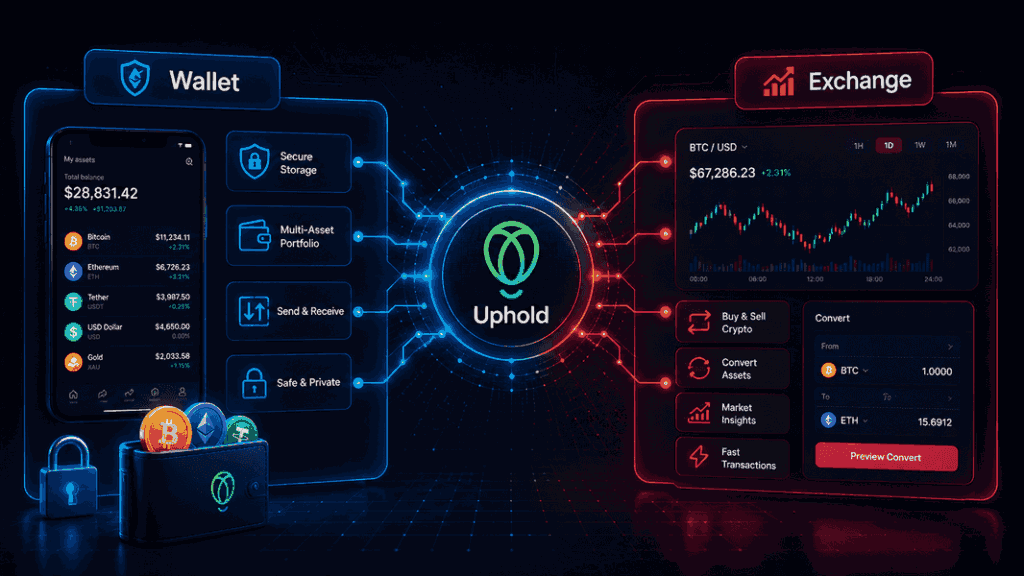
One of the most common questions people ask is: Is Uphold a crypto wallet or exchange?
The answer is that it’s both.
A traditional crypto exchange allows users to buy and sell digital assets. A crypto wallet is designed to store those assets.
Uphold combines these functions together.
You can:
- Purchase cryptocurrencies
- Store them within your account
- Convert them into other assets
- Transfer them to external wallets
- Receive supported cryptocurrencies
This all-in-one approach eliminates much of the complexity that new users often encounter when entering the crypto space.
Instead of managing separate wallets and exchanges, everything happens within the same interface.
Understanding Custodial Storage
While Uphold offers wallet functionality, it’s important to understand how it stores assets.
Uphold is primarily a custodial platform, which means the company manages the private keys associated with user accounts.
For beginners, this can be convenient because:
- Account recovery is easier
- Security management is handled by the platform
- There is no need to store recovery phrases manually
However, users who prefer complete control over their assets often choose non-custodial wallets where they personally hold their private keys.
Is Uphold a Cold Wallet?
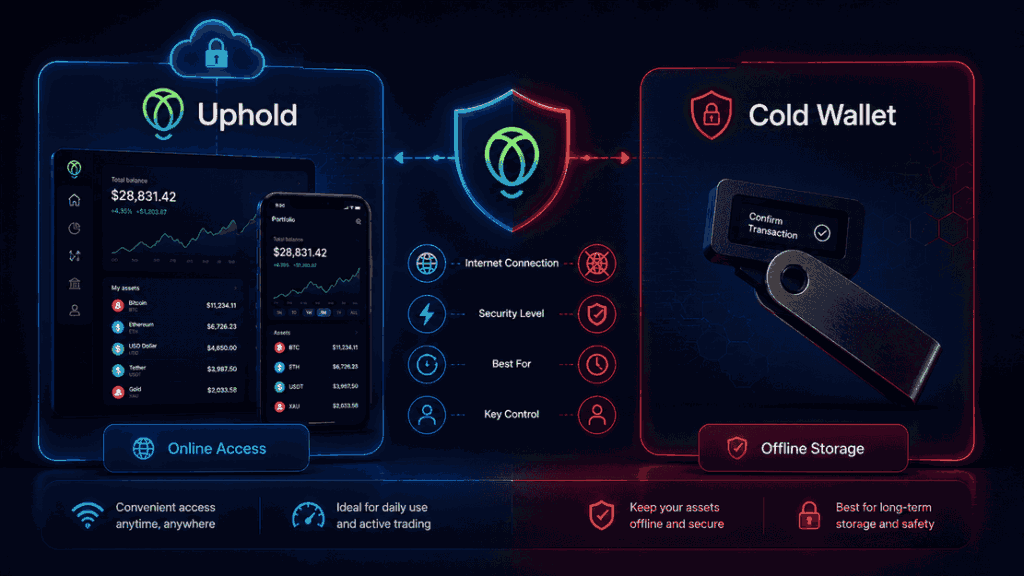
Security is one of the most important topics in cryptocurrency, which leads many people to ask:
Is Uphold a cold wallet?
The answer is no, it is a hot wallet.
What Is a Cold Wallet?
A cold wallet stores private keys offline and remains disconnected from the internet most of the time.
Examples include:
- Hardware wallets
- Air-gapped devices
- Offline storage systems
Because they stay offline, cold wallets are often considered one of the safest ways to store cryptocurrency long term.
How Uphold Differs
Uphold is an online custodial platform.
Users access their accounts through internet-connected applications, which means it does not function like a traditional cold wallet.
That doesn’t mean it’s insecure.
Uphold employs various security measures to protect customer funds, but it’s designed for convenience and accessibility rather than offline self-custody.
Many investors use platforms like Uphold for active management and move long-term holdings to hardware wallets for additional security.
Key Features of the Uphold Wallet
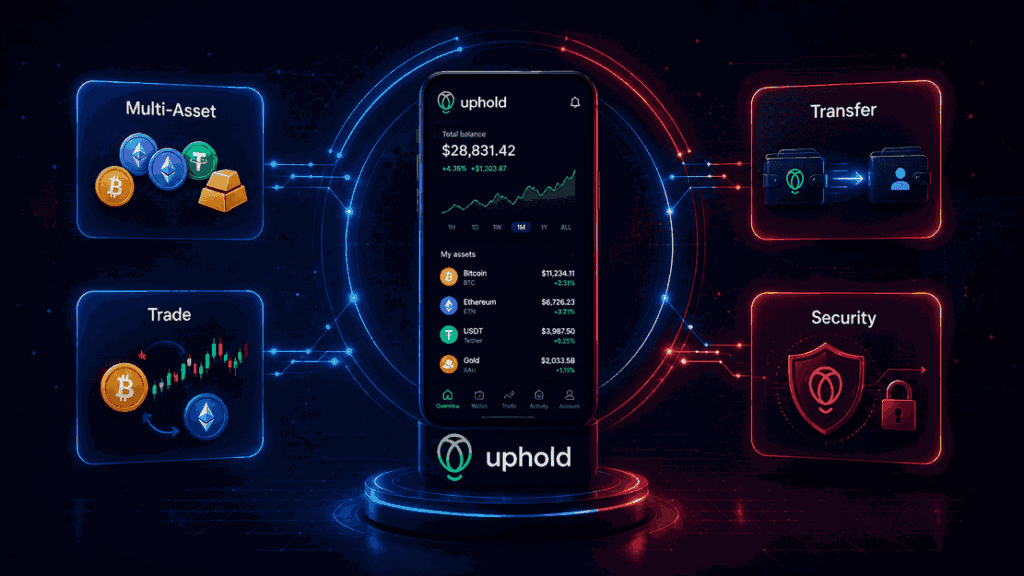
The platform offers several features that make it appealing to a broad audience.
Multi-Asset Support
Most crypto apps focus exclusively on digital currencies.
Uphold takes a different approach.
Users can access:
Asset Type
Examples
Cryptocurrencies
Bitcoin, Ethereum, XRP, Solana
Stablecoins
USDT, USDC
National Currencies
USD, EUR, GBP
Precious Metals
Gold, Silver
Having multiple asset classes available in one place makes portfolio management much simpler.
Easy Buying and Selling
One reason beginners gravitate toward Uphold is its straightforward interface.
The buying process is simple:
- Add funds to your account.
- Select the asset you want.
- Confirm the purchase.
There’s very little learning curve compared to some advanced trading platforms.
Direct Asset Conversion
Uphold allows users to move between assets without complicated trading steps.
For example, you can convert:
This streamlined experience saves time and reduces complexity.
Mobile and Web Access
Whether you prefer managing your portfolio from a phone or desktop computer, Uphold provides both options.
Users can:
- Monitor balances
- Review transaction history
- Send and receive crypto
- Manage investments
from virtually anywhere.
Uphold Wallet Review: Pros and Cons
Every platform has strengths and weaknesses, and Uphold is no exception.
What Users Like About Uphold
- Beginner-Friendly Design – The interface is clean and easy to navigate, making it approachable for newcomers.
- Multiple Assets in One Place – Managing crypto, traditional currencies, and precious metals from a single account is convenient.
- Simplified Trading – Direct conversions between assets reduce the need for multiple transactions.
- Accessibility – The platform is available through both mobile and web applications.
Potential Drawbacks
- Not Fully Self-Custodial – Users do not directly control private keys in the same way they would with a hardware wallet.
- Fees Can Vary – Transaction costs depend on asset type, market conditions, and network activity.
- Advanced Traders May Want More Tools – Experienced traders may find specialized exchanges offer more advanced features.
Overall, this Uphold wallet review reveals a platform that prioritizes simplicity and convenience over advanced trading functionality.
How to Send Crypto From Uphold to Another Wallet
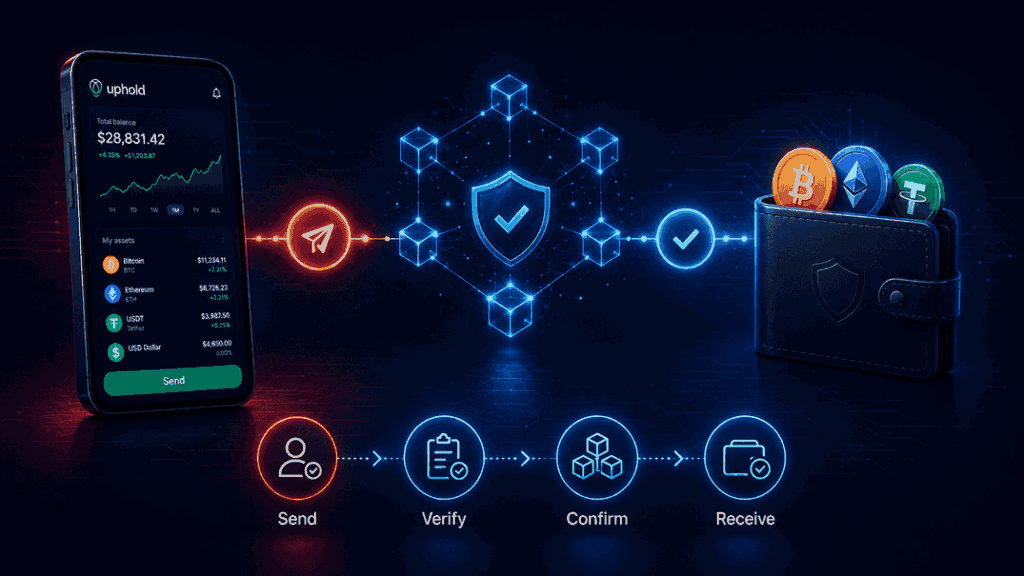
At some point, you may want to transfer cryptocurrency from Uphold to a personal wallet or another platform.
If you’re wondering how to send crypto from Uphold to another wallet, the process is generally straightforward.
Step-by-Step Guide
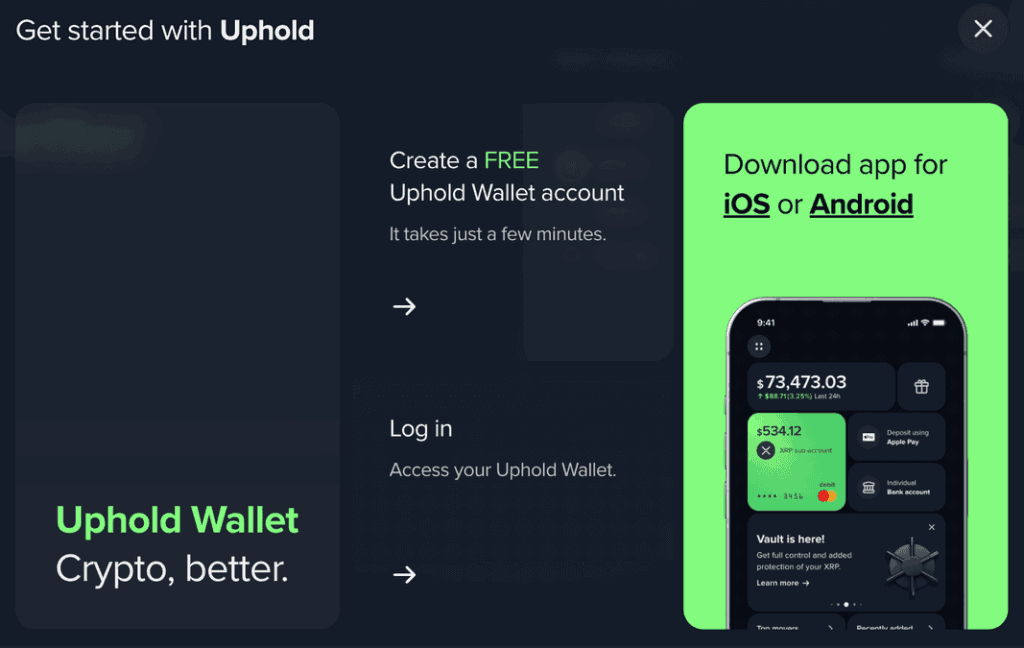
1. Download and log in to your Uphold account.
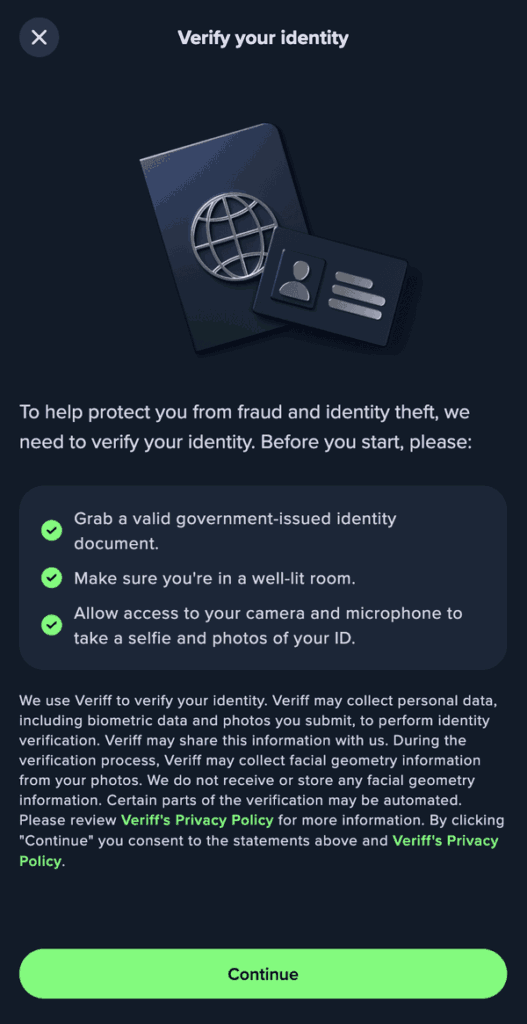
2. Complete verification process.
3. Select the cryptocurrency you want to send.
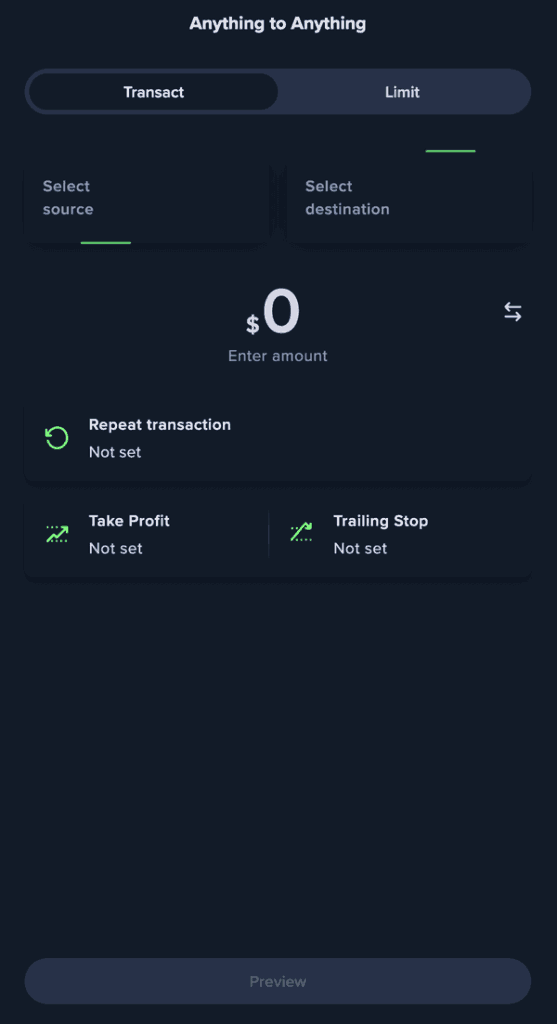
4. Choose the send option and enter the recipient wallet address.
6. Confirm the correct blockchain network.
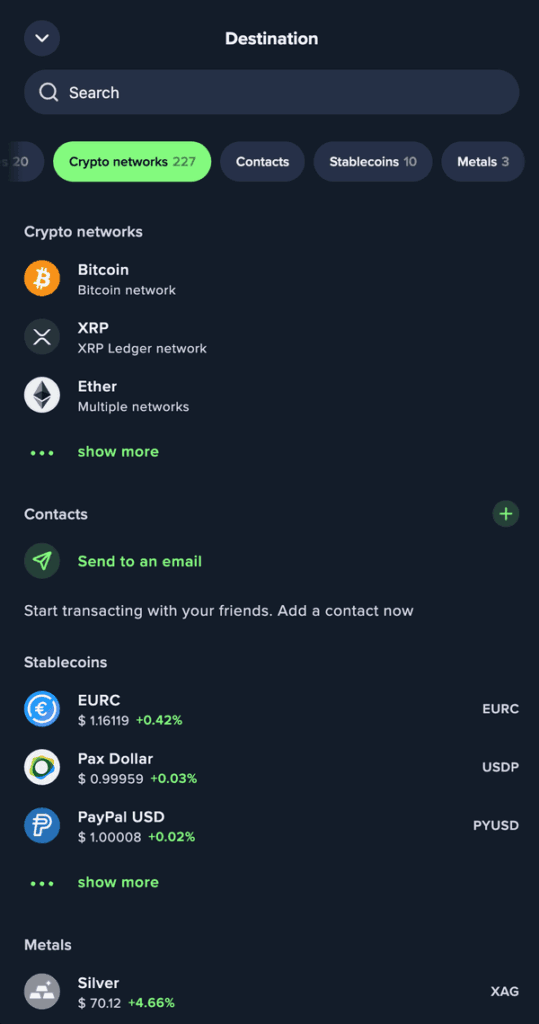
7. Review all transaction details by tapping “Preview”.
8. Complete any required security verification.
9. Submit the transfer.
Once confirmed, the transaction will be processed through the relevant blockchain network.
Double-Check Before Sending
Crypto transfers are irreversible.
Before clicking send, verify:
- Wallet address accuracy
- Supported blockchain network
- Withdrawal limits
- Network fees
- Recipient wallet compatibility
A simple mistake can result in permanent loss of funds.
How to Move Crypto From Uphold to Wallet Safely
Learning how to move crypto from Uphold to wallet storage safely is just as important as understanding the transfer process itself.
Choose the Right Wallet
Different wallets serve different purposes.
Wallet Type
Best For
Hardware Wallet
Long-term storage
Mobile Wallet
Everyday use
Desktop Wallet
Regular portfolio management
Exchange Wallet
Frequent trading
For larger balances, many investors prefer hardware wallets because they offer greater control and offline storage.
Use a Test Transaction
A good habit is sending a small amount first.
If the test transaction arrives successfully, you can proceed with the full transfer.
This extra step can prevent expensive mistakes.
Uphold Wallet Security and Fees
Before using any crypto platform, it’s worth understanding both security and costs.
Security Features
Uphold provides several layers of protection, including:
- Two-factor authentication (2FA)
- Identity verification
- Account monitoring systems
- Encryption technologies
Users should also follow good security practices, such as using strong passwords and enabling all available security features.
Fees
Fees can vary depending on:
- Asset type
- Market conditions
- Payment method
- Withdrawal method
- Blockchain network congestion
Checking current fees before making large transactions is always a smart move.
Who Should Use the Uphold Wallet?
Not every crypto platform is designed for the same type of user.
Uphold tends to work best for:
Beginners
People new to cryptocurrency often appreciate the straightforward setup and user-friendly design.
Casual Investors
Users who want to buy, hold, and occasionally trade crypto without dealing with complicated tools may find Uphold ideal.
Multi-Asset Investors
If you like the idea of managing cryptocurrencies, traditional currencies, and precious metals from one account, Uphold offers a convenient solution.
Who Might Prefer Another Option?
Advanced traders may prefer specialized exchanges with more sophisticated trading tools.
Similarly, users who prioritize complete control over private keys may choose a dedicated non-custodial or hardware wallet.
Final Thoughts
The Uphold wallet sits somewhere between a traditional crypto wallet and a full-featured exchange. It combines storage, trading, asset conversion, and transfers into a single platform that’s easy to use and accessible to beginners.
While it isn’t a cold wallet and doesn’t offer the same level of self-custody as hardware wallets, it provides a convenient way to buy, manage, and move digital assets without unnecessary complexity.
For many users, especially those just entering the crypto space, that balance between convenience and functionality is exactly what makes Uphold attractive.
Frequently Asked Questions
Uphold wallet is a custodial digital asset platform that allows users to buy, sell, hold, convert, and transfer cryptocurrencies and other supported assets from a single account. Uphold is both a wallet and an exchange. Users can store assets within their accounts while also buying, selling, and converting cryptocurrencies and other supported assets. No. Uphold is not a cold wallet. It is an online custodial platform that provides wallet functionality but does not operate like an offline hardware wallet. To send crypto from Uphold to another wallet, select the asset you want to transfer, choose the send or withdraw option, enter the recipient wallet address, verify the network, review the details, and confirm the transaction. You can move crypto from Uphold to a personal wallet by initiating a withdrawal, entering your wallet address, confirming the correct blockchain network, and completing the transfer. Uphold includes security features such as two-factor authentication, identity verification, encryption, and account monitoring. Users should also follow good security practices to protect their accounts. Yes. Uphold supports major cryptocurrencies including Bitcoin, Ethereum, and many other digital assets, along with stablecoins, traditional currencies, and precious metals.