



If you’ve recently started learning about cryptocurrency, you’ve probably come across the question: what is staking crypto? It’s a term that appears frequently when people discuss earning passive income from digital assets, but many beginners aren’t entirely sure what it means.
The good news is that staking is much easier to understand than it sounds. Instead of leaving certain cryptocurrencies sitting idle in a wallet, staking allows you to put them to work. In return for helping support a blockchain network, you can earn additional crypto as a reward.
Whether you’re completely new to crypto or looking for ways to grow your holdings over time, understanding staking can help you make more informed decisions. Let’s start with the basics.
What Is Staking Crypto?
Staking is the process of locking up cryptocurrency to help operate and secure a blockchain network. When you stake your coins, you’re contributing to the network’s ability to process transactions and remain secure.
As a reward for participating, the network pays you additional cryptocurrency.
Not every crypto asset can be staked. Staking is mainly available on blockchains that use a system called Proof of Stake (PoS), which relies on users and validators rather than energy-intensive mining equipment.
You can think of staking as putting your crypto to work rather than letting it sit unused.
What Does It Mean to Stake Crypto?
When people ask, what does it mean to stake crypto, they’re simply asking what happens when someone stakes their coins.
By staking crypto, you:
- Commit coins to a blockchain network
- Help validate transactions
- Support network security
- Become eligible to earn staking rewards
The exact process varies between networks, but the idea remains the same: you contribute to the blockchain and receive rewards in exchange.
How Does Crypto Staking Work?

Now that you know what staking is, it’s helpful to understand how does crypto staking work behind the scenes.
Most staking networks use Proof of Stake, a system designed to verify transactions without requiring large amounts of computing power.
Understanding Proof of Stake
Every blockchain needs a way to confirm that transactions are legitimate. Bitcoin uses mining for this purpose, but many newer blockchains use Proof of Stake instead.
In a Proof of Stake network:
- Users stake their cryptocurrency
- Validators are selected to verify transactions
- Honest validators earn rewards
- Malicious behavior can result in penalties
This approach consumes far less energy than traditional crypto mining.
Why Staking Matters
Without participants staking their assets, many Proof of Stake blockchains wouldn’t function properly.
Staking helps:
- Keep networks secure
- Verify transactions
- Reduce fraud and attacks
- Maintain decentralization
It’s one of the reasons staking has become such an important part of the crypto ecosystem.
Where Do Staking Rewards Come From?
Rewards typically come from:
- Newly issued coins
- Transaction fees
- Network incentive programs
The amount you earn depends on the blockchain, the amount staked, and overall network participation.
What Does Staking Crypto Do?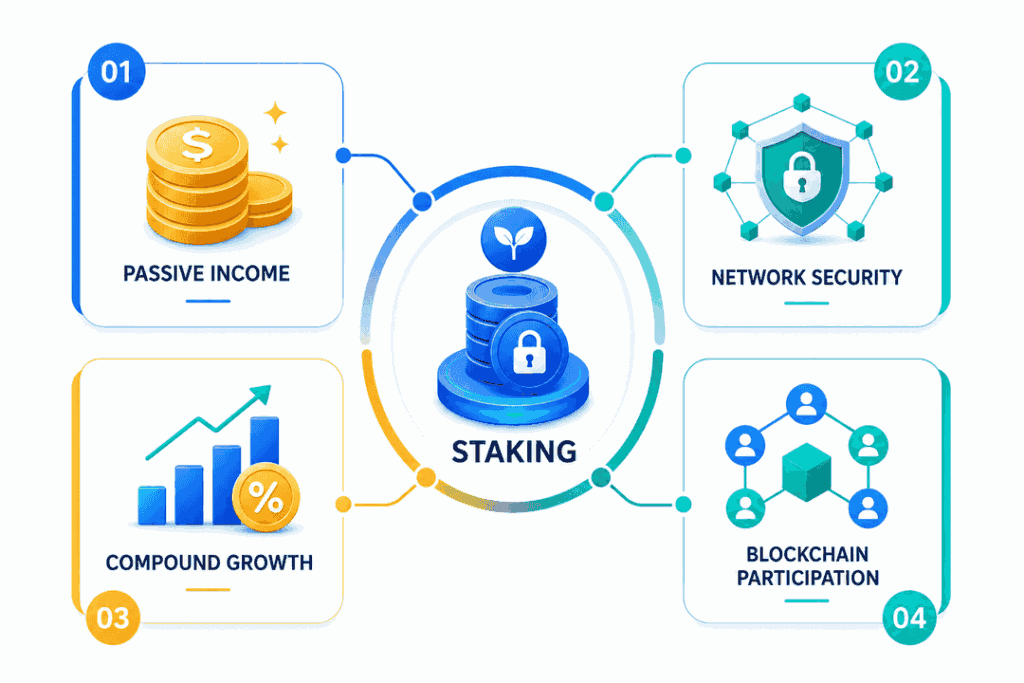
A common beginner question is what is staking crypto and what does staking crypto do besides generating rewards.
The answer is that staking benefits both investors and blockchain networks.
Benefits for Crypto Holders
For investors, staking can provide:
- Passive income opportunities
- Additional coin accumulation
- Long-term participation in a blockchain project
- Potential compound growth when rewards are restaked
Many long-term holders stake their assets because they plan to keep them anyway and would rather earn rewards than leave them unused.
Benefits for Blockchain Networks
For networks, staking helps:
- Improve security
- Validate transactions
- Encourage participation
- Support decentralization
- Strengthen the ecosystem
The relationship benefits both sides, which is why staking has become a key feature of many modern blockchains.
Which Cryptocurrencies Can Be Staked?

Not all cryptocurrencies support staking.
If you’re researching what is staking crypto, it’s important to understand that not every blockchain allows users to stake their coins.
Generally, staking is available on Proof of Stake networks and similar blockchain systems.
Ethereum Staking
Ethereum staking is one of the most popular forms of staking in the crypto market.
After Ethereum transitioned to Proof of Stake, users gained the ability to stake ETH and earn rewards while helping secure the network.
There are several ways to stake Ethereum:
- Running your own validator
- Joining a staking pool
- Using exchange staking services
- Using liquid staking platforms
Bitcoin Staking
Many newcomers search for Bitcoin staking, but native Bitcoin cannot actually be staked.
That’s because Bitcoin uses Proof of Work, the same system that relies on mining.
Some platforms advertise Bitcoin staking products, but these usually involve:
- Lending Bitcoin
- Wrapping Bitcoin on another blockchain
- Participating in third-party yield programs
These products are different from traditional staking.
Other Popular Staking Coins
Some of the most widely staked cryptocurrencies include:
- Ethereum (ETH)
- Solana (SOL)
- Cardano (ADA)
- Avalanche (AVAX)
- Polkadot (DOT)
- Cosmos (ATOM)
- Sui (SUI)
Each network has its own staking requirements, reward rates, and lock-up periods.
Different Ways to Stake Crypto
One of the best things about staking is that there are multiple ways to participate.
Direct Staking
Direct staking involves interacting with the blockchain itself.
Advantages:
- Greater control over assets
- Often lower fees
Disadvantages:
- More technical setup
- May require minimum staking amounts
Staking Pools
Staking pools combine assets from multiple users.
Advantages:
- Easier for beginners
- Lower entry requirements
Disadvantages:
- Pool operators usually charge fees
Exchange Staking
Many crypto exchanges offer simple staking services.
Advantages:
- Quick setup
- Beginner-friendly experience
- No technical knowledge required
Disadvantages:
- Requires trusting a third party
- Less control over funds
Liquid Staking
Liquid staking allows users to stake assets while receiving a token that represents their staked position.
Advantages:
- Keeps assets productive
- Provides additional flexibility
Disadvantages:
- Additional smart contract risks
- More complexity than standard staking
How Much Can You Earn From Staking?
When learning what is staking crypto, one of the most common questions investors ask is how much they can earn from staking rewards.
Returns vary depending on:
- The cryptocurrency
- Network participation levels
- Validator performance
- Market conditions
- Reward structures
Some networks offer annual returns of around 3% to 6%, while others may offer higher rates.
However, it’s important to remember that staking rewards are only part of the picture. If the value of the cryptocurrency falls significantly, your overall investment can still lose value.
For that reason, staking should be viewed as a way to earn additional crypto rather than guaranteed profit.
Is Staking Crypto Safe?

Another common question is is staking crypto safe.
For many investors, staking is considered one of the lower-risk ways to participate in crypto. However, it isn’t completely risk-free.
Common Staking Risks
| Risk | What It Means |
| Market Risk | The value of your crypto can fall |
| Lock-Up Risk | Your funds may be inaccessible for a period of time |
| Validator Risk | Poor validator performance can reduce rewards |
| Slashing Risk | Some networks penalize validator mistakes |
| Platform Risk | Exchanges or staking providers can fail |
| Smart Contract Risk | Bugs or exploits may affect staking protocols |
How to Reduce Risk
You can lower risk by:
- Using reputable platforms
- Choosing established blockchains
- Researching validators carefully
- Diversifying your holdings
- Understanding lock-up periods before staking
Taking time to understand the process can help you avoid many common mistakes.
Is Staking Crypto Taxable?
One question that often comes up is is staking crypto taxable.
In many countries, staking rewards are generally treated as income when they are received. If those rewards are later sold, additional capital gains taxes may apply depending on local regulations.
Because tax laws vary widely between jurisdictions, it’s important to check the rules where you live.
Good record-keeping can make tax reporting much easier. Many investors track:
- Reward amounts
- Dates received
- Asset values at the time of receipt
- Sale transactions
If you’re unsure how staking is taxed in your country, consider speaking with a qualified tax professional.
Staking vs Mining: What’s the Difference?
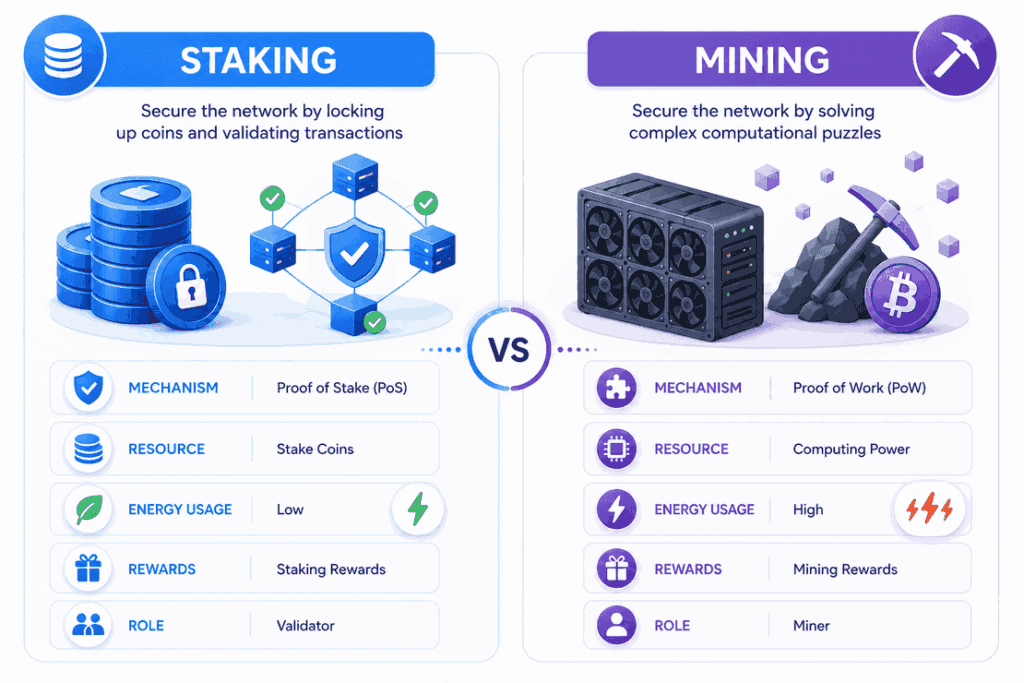
People often compare staking and mining because both help secure blockchain networks.
Here’s a quick overview:
| Feature | Staking | Mining |
| System | Proof of Stake | Proof of Work |
| Equipment Required | Crypto holdings | Mining hardware |
| Energy Usage | Low | High |
| Setup Difficulty | Usually easier | Often more complex |
| Entry Cost | Lower | Higher |
For most everyday investors, staking is generally more accessible than mining.
How to Start Staking Crypto
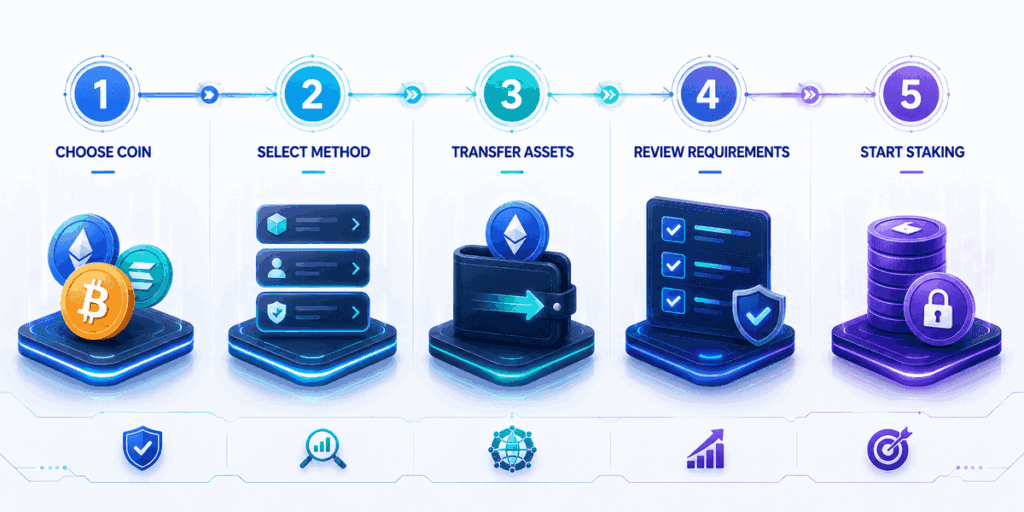
Getting started doesn’t have to be complicated.
Here are the basic steps:
1. Choose a Staking Cryptocurrency
Select a cryptocurrency that supports staking, such as Ethereum, Solana, or Cardano.
2. Decide How You Want to Stake
Choose between:
- Direct staking
- Staking pools
- Exchange staking
- Liquid staking
3. Move Your Crypto
Transfer your assets to a compatible wallet or staking platform.
4. Review the Requirements
Before staking, check:
- Reward rates
- Fees
- Lock-up periods
- Minimum staking amounts
5. Stake Your Assets
Once everything is set up, you can stake your crypto and begin earning rewards according to the network’s schedule.
Final Thoughts
By now, you should have a clear understanding of what is staking crypto, how it works, and why so many investors use it as part of their crypto strategy.
Staking offers a way to earn rewards while supporting blockchain networks, making it appealing to long-term holders who want their assets to do more than simply sit in a wallet. At the same time, it’s important to understand the risks, tax considerations, and differences between staking methods before committing your funds.
For beginners, starting with a well-established blockchain and a trusted staking platform is often the simplest way to learn. As you gain experience, you’ll be in a better position to decide whether staking deserves a place in your broader investment strategy.
Frequently Asked Questions
The staking period depends on the blockchain and staking method you choose. Some networks allow you to unstake at any time, while others require your assets to remain locked for days or even weeks before they can be withdrawn.
Yes. While staking rewards can generate additional income, the value of the cryptocurrency itself can fall. Some networks also impose penalties on validators that fail to meet performance requirements.
Minimum staking requirements vary by network. Some blockchains require a significant amount of crypto to run a validator, while staking pools and exchanges often allow users to start with much smaller amounts.
In most cases, staked crypto cannot be sold until it is unstaked. However, some liquid staking solutions provide tradable tokens that represent your staked assets.
No. Reward rates can change over time based on network conditions, validator performance, and overall participation levels. Future returns are never guaranteed.
Staking helps secure a blockchain network and earns rewards from network participation. Crypto lending involves providing assets to borrowers or platforms in exchange for interest payments.