



Bitcoin price prediction has become one of the most searched topics among crypto investors in recent years. Every major move in BTC—whether a powerful rally or a sharp correction—can influence sentiment across the entire digital asset market. As a result, many investors are asking the same question: where could Bitcoin be heading next?
That question has become even more relevant as BTC continues to trade within the key $60,000–$70,000 range. Many analysts view this area as a period of accumulation before Bitcoin’s next major move, making it an important level to watch for both new and experienced investors.
In this guide, we’ll explore the current Bitcoin price, the key drivers behind Bitcoin price analysis, and what they could mean for the future. We’ll also examine Bitcoin price prediction scenarios for 2026, 2027, 2028, 2030, and 2040, helping investors better understand the potential long-term outlook for BTC.
What Does the Current Bitcoin Price Tell Us About the Market?
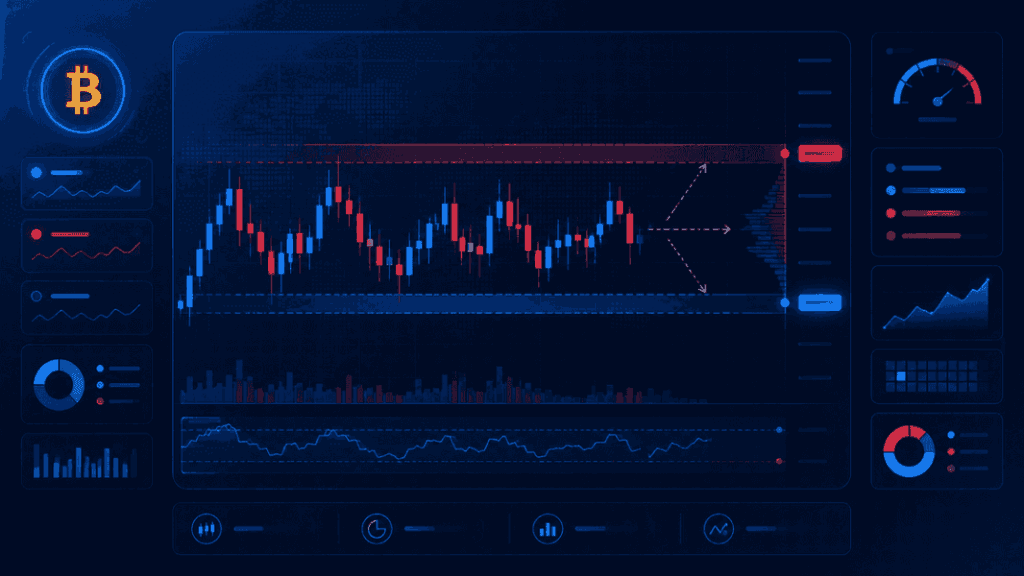
Before looking ahead and asking whether now is the right time to buy Bitcoin, it’s worth understanding what Bitcoin’s current price is signaling about the market today.
From a market structure perspective, the BTC price remains in a broad consolidation phase following a significant correction in the previous cycle. The $60,000–$70,000 range continues to act as an important psychological support zone, while investors are closely watching whether Bitcoin can eventually retest the $90,000 level.
Several key factors are currently reflected in the market price:
- Capital inflows from Spot Bitcoin ETFs
- Federal Reserve interest rate expectations
- Accumulation behavior among institutional investors
- Selling pressure from miners facing higher operating costs
As a result, the Bitcoin price today reflects far more than retail investor sentiment. It also incorporates global macroeconomic conditions, liquidity trends, and institutional positioning.
From Bitcoin’s Early Days to Today’s Price: A Look Back
To better understand the future of Bitcoin, it helps to revisit Bitcoin’s early price history and see how dramatically the asset has evolved over time.
Period
Approximate Price
Early Stage
Below $1
First Major Milestone
Above $1,000
Mainstream Recognition
Above $10,000
Current Range
$60,000–$70,00+
As the table shows, while the Bitcoin price has experienced multiple boom-and-bust cycles, its long-term trajectory has remained upward. This is one of the key reasons why investors continue to pay close attention to every Bitcoin price prediction and long-term Bitcoin forecast.
Bitcoin Price Analysis: The Key Factors Driving BTC’s Future
To make a meaningful Bitcoin price prediction, it’s important to look beyond headlines and understand the forces that influence both supply and demand. Bitcoin’s price movements aren’t driven by a single event—they’re the result of capital flows, market liquidity, investor sentiment, and broader economic conditions all working together.
Spot Bitcoin ETFs and Institutional Demand
Since the launch of Spot Bitcoin ETFs, institutional investors have gained a more accessible way to gain exposure to BTC. As a result, ETF inflows have become one of the most closely watched indicators in any Bitcoin price analysis.
Large and consistent inflows can create significant buying pressure, especially when Bitcoin is approaching key resistance levels. If institutional demand remains strong, it could continue supporting market sentiment and play a major role in the medium-term Bitcoin forecast.
Bitcoin Halving and the Supply Shock Effect

Another major factor behind many BTC price prediction models is Bitcoin Halving.
Halving occurs roughly every four years and reduces the block reward earned by miners by 50%, effectively slowing the rate at which new Bitcoin enters circulation.
When supply growth decreases while demand remains steady—or increases—the market often experiences a supply squeeze. This reduced availability can create favorable conditions for price appreciation over time.
Historically, several Bitcoin halving cycles have been followed by significant gains in the months and years that followed. For that reason, many investors view halving as one of the most important factors when evaluating the future of Bitcoin.
Interest Rates and Global Economic Conditions
Interest rates and global liquidity are two macroeconomic variables that should never be overlooked.
When central banks begin lowering interest rates, risk assets such as Bitcoin often benefit from improved investor sentiment. Lower borrowing costs and increased liquidity typically encourage investors to take on more risk, which can support higher asset prices.
As a result, macroeconomic trends remain a critical component of any Bitcoin forecast and can have a direct impact on Bitcoin’s long-term trajectory.
BTC Price Prediction: Short-Term vs. Medium-Term Outlook
Now that we’ve covered the fundamentals, let’s break down Bitcoin’s outlook across different timeframes. The factors affecting Bitcoin today may not be the same ones driving the market six to twelve months from now.
Short-Term Bitcoin Price Prediction
In the short term, Bitcoin tends to react quickly to news events, market flows, and shifts in investor sentiment.
Key levels and indicators to watch include:
- Support around $70,000
- Resistance near $90,000
- Daily Spot ETF inflows
- U.S. economic data releases
- Global political developments
- Overall crypto market sentiment
These factors can heavily influence short-term price action and shape near-term Bitcoin price predictions.
Medium-Term Bitcoin Forecast
From a medium-term perspective, a decisive move above the $90,000 level could open the door to another push toward the $100,000–$120,000 range.
Despite occasional corrections, many analysts remain optimistic about the future of Bitcoin. Several long-term trends continue to support this view, including growing mainstream adoption and increasing institutional participation.
Public companies are adding BTC to their balance sheets, Spot Bitcoin ETFs have made investing more accessible, and traditional financial institutions are expanding their digital asset offerings. Together, these developments strengthen the long-term investment case for Bitcoin.
Beyond speculation, Bitcoin is increasingly being viewed as a store of value, a tool for cross-border transfers, and a key component of the modern financial ecosystem. These use cases continue to reinforce a positive long-term BTC price prediction.

Bitcoin Price Prediction 2026–2040
After reviewing the broader market scenarios, let’s look at a conservative Bitcoin price prediction based on gradual, sustainable growth.
In this model, we use a starting price of $70,000 in 2026. The Base Scenario assumes annual growth of 5%, while the Bull Scenario assumes annual growth of 20%.
Year
Bear Scenario (+2%)
Base Scenario (+5%)
Bull Scenario (+20%)
2026
$71,400.00
$73,500.00
$84,000.00
2027
$72,828.00
$77,175.00
$100,800.00
2028
$74,284.56
$81,033.75
$120,960.00
2029
$75,770.25
$85,085.44
$145,152.00
2030
$77,285.66
$89,339.71
$174,182.40
2040
$105,353.82
$145,404.07
$1,071,508.61
This table provides a useful baseline for investors evaluating a long-term Bitcoin price prediction 2040 scenario. Rather than assuming explosive growth, it focuses on steady and realistic appreciation over time.
Based on these projections, the Bitcoin price prediction 2026 ranges from $71,400 to $84,000, while the Bitcoin price prediction 2027 suggests a potential range of $72,828 to $100,800.
Looking further ahead, the Bitcoin price prediction 2028 places BTC between $74,284 and $120,960, depending on market conditions.
For investors focused on longer-term opportunities, the Bitcoin price prediction 2030 ranges from $77,285 to $174,182, while the Bitcoin price prediction 2040 suggests BTC could trade anywhere between $105,353 and more than $1 million in a highly bullish scenario.
These estimates should be viewed as illustrative examples rather than guarantees, as future Bitcoin prices will ultimately depend on adoption, institutional demand, regulation, and global economic conditions.
Is Bitcoin Still Worth Accumulating Today?

After reviewing the current market landscape and future projections, many investors return to the same question: is Bitcoin still a good long-term investment?
Bitcoin may be suitable for investors who:
- Have a medium- to long-term investment horizon
- Can tolerate market volatility
- Use a weekly or monthly DCA strategy
- Avoid making decisions based on short-term price swings
For investors who believe in the long-term future of Bitcoin, gradual accumulation often proves to be a more practical strategy than attempting to time the market perfectly.
Conclusion
Any Bitcoin price prediction ultimately comes down to three major drivers: ETF demand, Bitcoin halving cycles, and global liquidity conditions. Together, these factors continue to shape Bitcoin’s long-term outlook.
While short-term volatility is likely to remain part of the market, the broader Bitcoin forecast remains compelling when viewed through the lens of growing adoption and increasing institutional demand. Even under a conservative growth model, Bitcoin could potentially rise from $70,000 to $174,182.40 by 2030 in a bullish scenario.
For beginners, following both the daily Bitcoin price and the bigger market picture can lead to better investment decisions than focusing solely on short-term fluctuations. As interest in Bitcoin price prediction 2026, Bitcoin price prediction 2030, and even the latest Tom Lee Bitcoin price prediction continues to grow, maintaining a long-term perspective remains one of the most valuable tools an investor can have.
Frequently Asked Questions
Depending on market conditions, Bitcoin could trade anywhere from around $89,000 under conservative growth assumptions to over $174,000 in a bullish scenario. However, actual prices will depend on adoption, institutional demand, and broader economic trends.
Many analysts remain bullish on Bitcoin due to strong ETF demand, the effects of recent halving events, and growing adoption across traditional finance.
Bitcoin Halving reduces the rate at which new BTC enters circulation. As a result, lower supply growth can support higher prices if demand remains strong.
Yes. As more institutions, businesses, and investors adopt Bitcoin, demand typically increases, which can support long-term price growth.
Many investors remain optimistic about Bitcoin’s future due to rising institutional interest and growing global adoption. However, volatility is likely to remain part of the market.
Many analysts believe Bitcoin could revisit $100,000 if demand remains strong, ETF inflows continue, and market conditions stay favorable.