



Bitcoin vs gold comes down to a simple question: which asset offers the better opportunity for investors in 2026?
Gold has been used to preserve wealth for thousands of years, while Bitcoin is a much newer asset built around digital scarcity and decentralization. Both are often compared as alternatives to traditional money, but they behave very differently.
Gold is generally more stable and defensive. Bitcoin offers greater growth potential, but also comes with much higher volatility and risk.
So, which one is the smarter buy?
This guide compares gold vs Bitcoin across performance, market cap, volatility, correlation, and risk to help you decide which asset may fit your investment goals.
Bitcoin vs Gold: A Quick Comparison
Bitcoin and gold are often mentioned in the same conversation because both are scarce assets that can serve as alternatives to traditional currencies. But beyond that broad similarity, they have very different characteristics and can play very different roles in a portfolio.
| Feature | Bitcoin | Gold |
| Asset type | Digital asset | Physical precious metal |
| Supply | Capped at 21 million BTC | Limited but not fixed |
| Main appeal | Growth and decentralization | Stability and wealth preservation |
| Volatility | Very high | Generally lower |
| Track record | Since 2009 | Thousands of years |
| Portability | Easy to transfer digitally | More difficult to transport |
| Central bank holdings | No | Yes |
| Main risk | Extreme price volatility | Lower growth potential and storage costs |
The main difference is that Bitcoin is built around digital scarcity and potential expansion, while gold’s appeal comes largely from its long history, established role, and physical nature.
What Is Gold as an Investment?

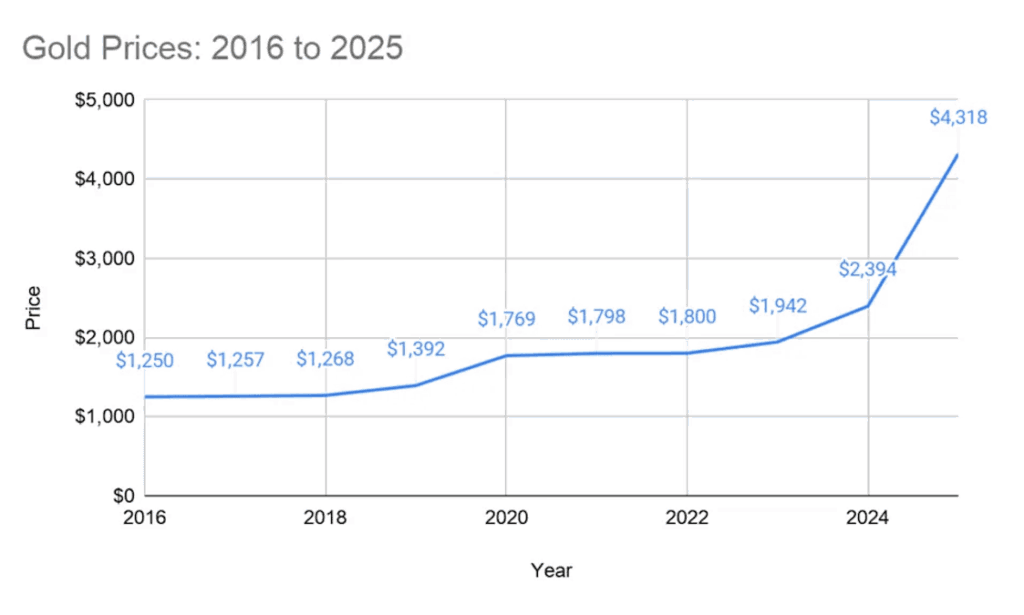
Gold has been used as money and a store of wealth for thousands of years. Unlike stocks or bonds, its value does not depend on a company turning a profit or a government making interest payments.
Investors can buy physical gold, gold-backed ETFs, mining stocks, and other financial products linked to the precious metal.
The appeal is fairly straightforward: gold is scarce, widely recognized, and has a long history of holding value through periods of economic and political uncertainty.
Why Investors Buy Gold
Gold is commonly used for several reasons:
- Wealth preservation: It has maintained value over long periods.
- Diversification: Its price does not always move in line with stocks and other financial assets.
- Inflation concerns: Investors often turn to gold when they worry about falling purchasing power.
- Crisis protection: Demand for gold can rise during periods of economic or geopolitical uncertainty.
Gold is generally valued more for its ability to preserve wealth over time than for generating rapid capital growth. That makes it particularly appealing to investors who want an asset with a long history of recognition and use during periods of economic uncertainty.
The Main Risks of Investing in Gold
Gold is not guaranteed to rise. Its price can fall, and investors who hold physical gold may also have to deal with storage, insurance, and transaction costs.
Another drawback is that gold does not generate income on its own. Unlike dividend-paying stocks or interest-bearing investments, simply holding gold does not produce regular cash flow.
What Is Bitcoin as an Investment?

Bitcoin is a decentralized digital asset that launched in 2009. One of its defining features is its fixed maximum supply of 21 million coins, which is one reason it is often compared with gold and nicknamed “digital gold.”
The comparison makes sense up to a point. Both assets are scarce, but Bitcoin offers something physical gold cannot: the ability to transfer value across borders without moving a physical object.
That advantage comes with a trade-off, however. Bitcoin is still a relatively young asset, and its price can move far more sharply than gold’s. Because of this volatility, many investors explore concepts like what is leverage trading, technical analysis, and portfolio diversification to better understand the crypto market.
Why investors buy Bitcoin
Investors are drawn to Bitcoin because of its:
- Fixed supply: The total supply cannot exceed 21 million BTC.
- Decentralized network: No single government or company controls the Bitcoin blockchain.
- Global accessibility: Bitcoin can be bought and transferred from almost anywhere.
- Growth potential: Its market is still much smaller than traditional asset classes.
- Connection to digital finance: Bitcoin offers exposure to the broader development of blockchain and crypto markets.
For many investors, the case for Bitcoin goes beyond its limited supply. They are also betting that digital assets and blockchain technology will play a much larger role in the global financial system over time.
The Main Risks of Investing in Bitcoin
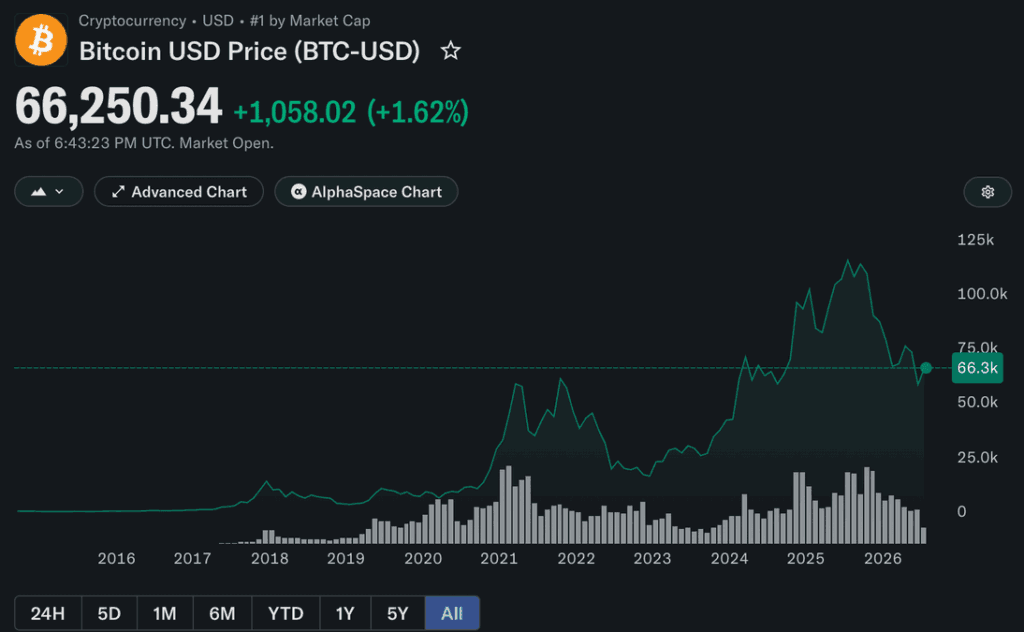
Bitcoin can deliver significant returns, but its relatively short history means investors should be prepared for periods of considerable uncertainty and unpredictable price movements.
Its price can rise or fall dramatically in a short period. Changes in regulation, market sentiment, liquidity, technology, and the broader economy can all affect how Bitcoin performs. Many traders also monitor technical patterns, such as bull flag vs bear flag, to better understand market momentum, although no chart pattern can reliably predict future price movements.
Bitcoin also has a much shorter track record than gold. That makes it harder to know exactly how it will behave in every type of economic crisis.
If you prefer to keep your personal information private while purchasing crypto, check out our guide on How to buy Bitcoin anonymously.
Gold vs Bitcoin: Key Differences
The easiest way to understand the gold vs Bitcoin debate is to compare the two assets based on what investors actually care about.
Bitcoin vs Gold Performance in 2025 and 2026
Past performance cannot tell us what will happen next, but it does highlight how differently Bitcoin and gold can behave.
Bitcoin has delivered much higher long-term returns than gold historically, but those gains have come with far greater volatility. Gold, by comparison, has generally offered a steadier and more defensive return profile.
Recent performance highlights the difference. As of March 10, 2026, Bitcoin was down 21.2% year to date, while gold was up 20.8%, according to CoinGecko’s comparison of major asset classes.
This is why Bitcoin vs gold performance in 2025 and 2026 needs to be viewed in context. The winner can change depending on the time period and the broader market environment.
| Investment characteristic | Bitcoin | Gold |
| Long-term upside | Higher | More moderate |
| Short-term volatility | Extremely high | Generally lower |
| Potential drawdowns | Very large | Usually smaller |
| Typical role | Growth-oriented | Defensive |
The stronger performer can therefore depend heavily on the market environment and the investor’s objective. A period that favors speculative growth may produce a very different result from one in which preserving capital becomes more important.
Bitcoin vs Gold Market Cap in 2026
Gold is still a much larger asset class than Bitcoin.
Bitcoin’s market cap is relatively easy to calculate: its price multiplied by the number of coins in circulation. Gold is more difficult because its total market value depends on estimates of how much gold has been mined and remains above ground.
The difference in market size matters. Bitcoin’s smaller market means new investment flows can potentially have a greater effect on its price. Gold, meanwhile, benefits from a much deeper and more established global market.
When comparing Bitcoin market cap vs gold market cap in 2026, the most important point is the size difference between the two markets. Bitcoin is still much smaller than gold, which means the two assets are at very different stages of adoption and maturity.
That size gap does not mean Bitcoin will eventually catch up with gold. It simply means that changes in investor demand can have a very different impact on the two markets.
Bitcoin vs Gold Volatility
Volatility is one of the clearest differences between Bitcoin and gold.
Bitcoin can experience double-digit price moves within days. Gold can also rise or fall sharply, especially during periods of major economic uncertainty, but its price history is generally far less volatile.
For investors, the trade-off is clear:
- Bitcoin offers greater upside potential.
- Gold is generally easier to hold through market turbulence.
- Bitcoin can produce much larger drawdowns.
- Gold typically offers a more defensive investment profile.
For that reason, comparing the two assets is not only about potential returns. It is also about whether you can stay invested when the market moves sharply against you.
Bitcoin Correlation With Gold
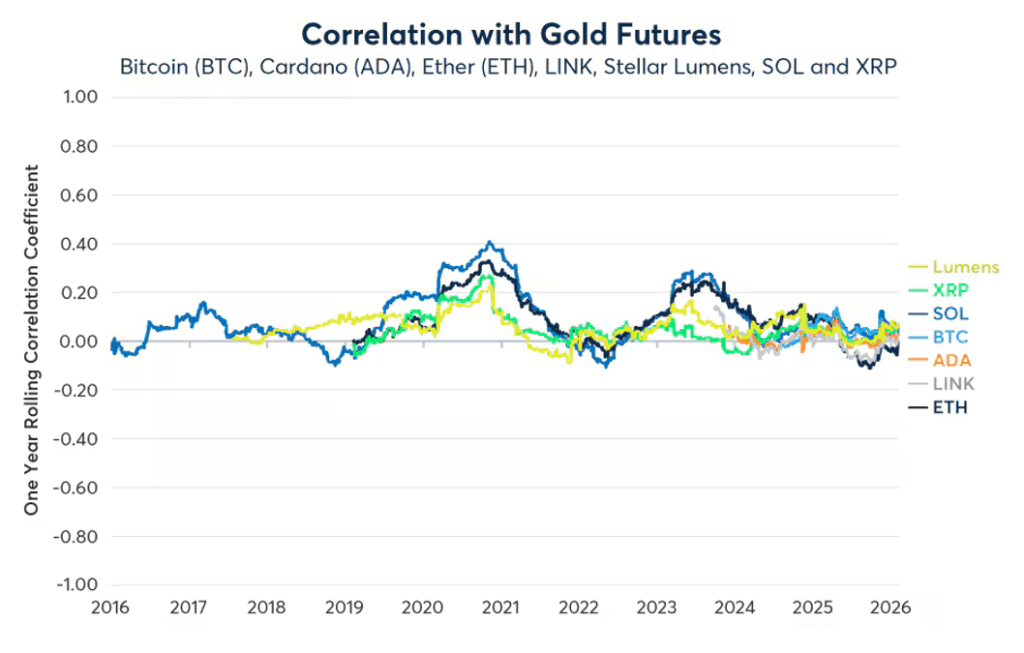
Because both Bitcoin and gold are sometimes viewed as alternatives to fiat currency, investors often expect them to move together.
However, the Bitcoin correlation with gold has not been consistent. Research from CME Group found a weak positive correlation between Bitcoin and gold during 2020 and 2021, while the relationship moved closer to zero from 2024 onward.
In other words, the two assets do not reliably rise or fall together.
Bitcoin can sometimes behave more like a risk asset, particularly when investors are reducing exposure to volatile investments. Gold, on the other hand, can attract demand during periods when investors are looking for safety.
Their changing relationship also shows why Bitcoin and gold should not necessarily be viewed as two versions of the same investment. Their prices can respond to different market forces, even when investors use both as alternatives to traditional currencies.
Bitcoin vs Gold Chart: What Should You Look At?
A gold vs Bitcoin chart can be useful, but the way you compare the two assets matters.
Simply placing the price of Bitcoin next to the price of one ounce of gold can be misleading. The two assets have completely different price scales, so a percentage-based comparison often gives a clearer picture of how each investment has performed.
A useful comparison might look at:
- Percentage returns from the same starting date.
- The Bitcoin-to-gold ratio.
- Market capitalization.
- Volatility.
- Maximum drawdowns.
The Bitcoin-to-gold ratio is particularly interesting. It shows how many ounces of gold are equivalent to the price of one Bitcoin.
When the ratio rises, Bitcoin is outperforming gold. When it falls, gold is outperforming Bitcoin.
Of course, a chart only tells you what happened in the past. It cannot tell you which asset will perform better next.
Is Cryptocurrency a Good Investment Compared With Gold?

So, is cryptocurrency a good investment compared with gold?
There is no single answer because “cryptocurrency” covers a wide range of assets. Bitcoin is very different from a small altcoin, and the right choice also depends on your investment timeline and how much risk you are willing to accept.
Bitcoin is one of the more established crypto assets, but it still carries substantially more uncertainty than a traditional asset with gold’s long history. Investors should therefore consider whether its potential role in a portfolio matches their time horizon and financial objectives.
Bitcoin may be more suitable for investors who:
- Have a long-term investment horizon.
- Can tolerate significant price swings.
- Want exposure to digital assets.
- Believe blockchain technology will continue to grow.
Gold may be more suitable for investors who:
- Prioritize stability.
- Want to preserve wealth.
- Prefer a longer investment track record.
- Want a defensive asset for their portfolio.
There is also no rule saying you have to choose only one.
Bitcoin vs Gold: Which One Should You Buy?

There is no universal winner in the Bitcoin vs gold debate. The better choice depends on what you value most, whether that is a long-established store of value, exposure to digital assets, or a combination of the two.
Gold May Be the Better Choice If…
You want an asset with a long history, generally lower volatility, and a strong reputation for preserving wealth.
Gold may also be a better fit if you would find it difficult to hold an investment through a major downturn. Its long track record and established role in traditional finance may make it easier for some investors to understand and hold over the long term.
Bitcoin May Be the Better Choice If…
You are comfortable accepting greater risk in a Bitcoin exchange for potentially higher returns.
Bitcoin may appeal to investors who believe digital assets will become more important over time and want exposure to a scarce asset that can be transferred globally without relying entirely on traditional financial infrastructure. For new investors, the first step is often choosing the best Bitcoin exchange to buy BTC before transferring it to a secure Bitcoin wallet for long-term storage.
Why Some Investors Choose Both
For some investors, the choice does not have to be Bitcoin or gold. Holding both can provide exposure to assets with different histories, structures, and connections to the broader financial system.
Gold can serve a more defensive role, while Bitcoin offers exposure to the growth of digital assets. Since the two do not consistently move in the same direction, some investors may also see them as complementary holdings rather than direct substitutes.
The two assets also represent different approaches to scarcity and ownership. Gold is physical and has been trusted as a store of value for thousands of years, while Bitcoin offers a digital alternative built around a fixed supply and decentralized network.
Of course, combining the two does not remove investment risk. The right balance depends on your goals, time horizon, risk tolerance, and broader portfolio.
Final Thoughts on Bitcoin vs Gold
The Bitcoin vs gold debate is ultimately a comparison between two very different approaches to storing and transferring value.
Gold is physical and deeply established, while Bitcoin is digital, decentralized, and built around a fixed supply. Their different structures give investors very different ways to gain exposure to scarce assets.
Gold may appeal more to investors who value familiarity and a long-established role in the financial system, while Bitcoin may suit those who want exposure to the continued development of digital assets and blockchain technology.
For investors who do not want to choose just one, owning both can offer exposure to two assets that reflect very different ideas about how value can be stored in a changing financial system.
Frequently Asked Questions
Bitcoin could become a more important reserve asset in the future, but replacing gold entirely would require major changes in how governments, central banks, and institutions view digital assets. Gold’s long history gives it a significant advantage in this area.
Bitcoin can be transferred digitally across borders without physically moving the asset. Gold can also be traded internationally, but physically moving and securely storing it is generally more complicated.
Yes. Gold has long been used as collateral in traditional finance, while Bitcoin can also be used as collateral through certain lending platforms and financial products. The terms and risks can vary considerably.
The nickname mainly refers to Bitcoin’s limited supply and its potential role as a scarce asset outside the traditional financial system. However, Bitcoin is much younger and more volatile than physical gold.
The Bitcoin-to-gold ratio compares the value of one Bitcoin with the price of a specific amount of gold, usually one troy ounce. It can be used to compare the relative performance of the two assets over time.
This article is for informational purposes only and does not constitute financial advice. Cryptocurrency and other investments carry risk, and you should conduct your own research before making investment decisions.