

If you already own Bitcoin, or other cryptocurrencies, you’re excited to see your balance go up, and you assume their funds sit safely in a secure vault. However, when centralized platforms face catastrophic hacks, or pause withdrawals during volatile market crashes, you suddenly realize the danger of centralized storage. This realization brings you to the most important question in digital finance. What is a decentralized wallet, and why does every serious crypto investor need one?
In this comprehensive guide, we will break down the meaning of decentralized wallet, explore how this technology gives you absolute control, and provide a detailed list of decentralized wallet options.
Decentralized Wallet Meaning: The Basics Explained
To put an answer simply to the question “what is a decentralized wallet”, it is a software program or physical device that allows you to store, send, and receive cryptocurrencies without relying on a third party.
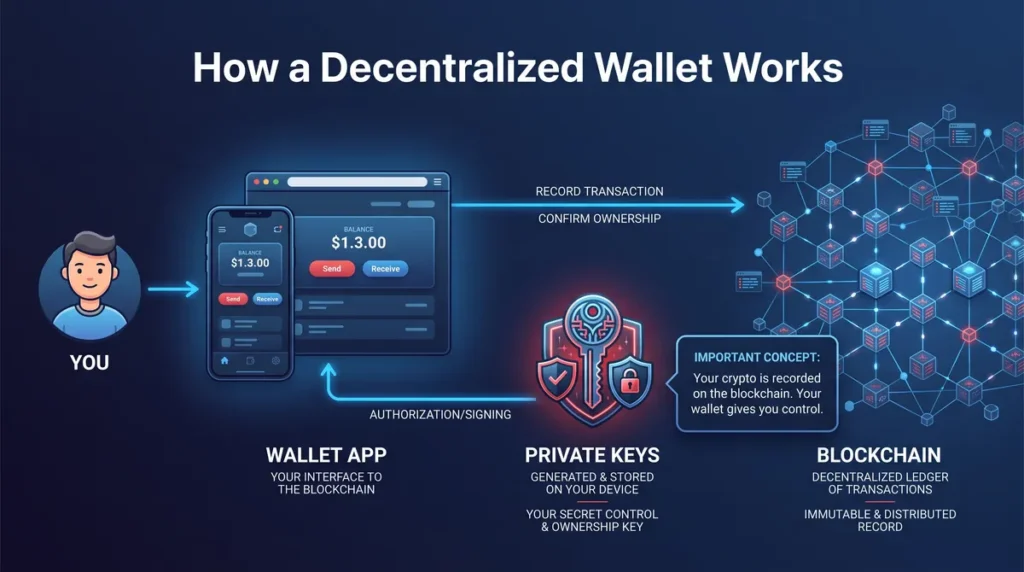
In the crypto community, people often call these “non-custodial wallets.” The term non-custodial means you act as your own bank. You hold the cryptographic keys that prove ownership of your assets on the blockchain.
When you create a decentralized wallet, you typically receive a seed phrase, or recovery phrase. This phrase can be used to restore access to your wallet if you lose your device or need to set up the wallet again.
Your wallet also has one or more public addresses. These addresses allow other people or platforms to send crypto to you.
The basic relationship looks like this:
Component
What it does
Wallet address
Allows you to receive crypto
Private key
Proves control over the assets associated with the address
Seed phrase
Helps recover your wallet
Blockchain
Records ownership and transactions
Wallet app
Provides an interface to interact with the blockchain
The key point is that the wallet is an interface, while the blockchain is where the transaction history exists.
🏦 Traditional banks or centralized crypto exchanges act as custodians. They hold your money, they verify your identity, and they can freeze your account at any moment. A decentralized wallet removes the middleman.
The Problem with Centralized Exchanges
Centralized exchanges provide a convenient way to buy digital assets using fiat currency like dollars or euros. However, convenience comes with massive security trade-offs. History shows us that massive platforms can collapse overnight. When an exchange goes bankrupt, the users usually lose everything.
Furthermore, centralized platforms remain big targets for hackers. A single successful breach can drain billions of dollars from user accounts. By keeping your long term holdings on an exchange, you trust a corporation to protect your wealth.
The Power of Self-Custody
When you grasp what the decentralized wallet is, you realize it represents true financial sovereignty. Self-custody means nobody can seize your assets. Nobody can tell you that you have exceeded your daily transfer limit. You interact directly with the blockchain.
Of course, this immense power requires immense responsibility. Since there is no customer service hotline to call if you forget your password, you must take security seriously. If you lose your access keys, your funds disappear forever.
What is a Decentralized Wallet for Crypto Actually Used For?
You might wonder why someone would go through the trouble of managing their own security. What is a decentralized wallet for crypto actually used for beyond basic storage? The answer goes far beyond simply holding coins.
True Ownership of Digital Assets
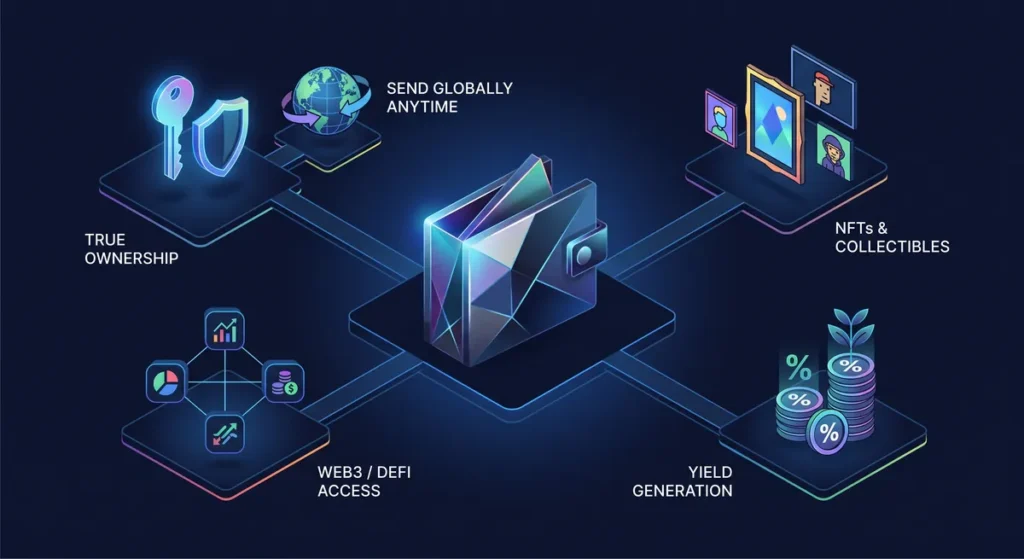
First and foremost, these tools provide true ownership. When you withdraw Bitcoin or Ethereum to your personal wallet, the blockchain records your unique address as the sole owner of those coins. You can send funds to anyone, anywhere in the world, at any time of day. You do not need to wait for bank business hours, and you do not need permission from a compliance officer.
Seamless Web3 and DeFi Integration
A decentralized wallet acts as your digital passport to the Web3 ecosystem. The modern cryptocurrency landscape features an incredible array of decentralized applications, also known as DApps. These applications allow you to trade, borrow, lend, and earn interest without using a traditional financial institution.
For example, you can connect your wallet to decentralized exchanges to swap tokens anonymously. You can also explore lending platforms. If you want to earn passive income on your digital assets while maintaining control, consider exploring IZAKA-YA Web3 wallet for secure yield generation. Additionally, these wallets allow you to securely store and display digital collectibles and NFTs.
Decentralized Wallet VS. Centralized Wallet
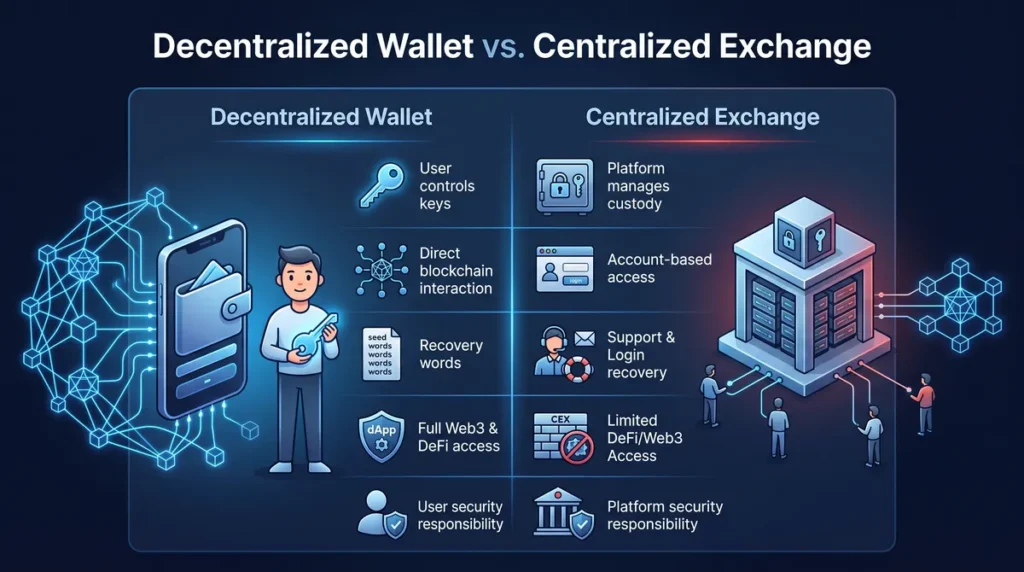
A decentralized wallet is a crypto wallet that allows users to control their own private keys and interact directly with blockchain networks. The wallet provider generally does not hold your funds on your behalf in the same way a centralized exchange does.
Instead, you are responsible for managing access to your wallet.
On the other hand, a custodial service, such as a centralized crypto exchange or Uphold Wallet, typically manages the private keys associated with your account. You log in with an email address, password, or other authentication method, while the platform manages the underlying wallet infrastructure.
This difference can be summarized as follows:
Feature
Decentralized / Non-Custodial Wallet
Centralized Exchange
Private key control
User
Platform
Asset custody
User
Platform
Recovery method
Usually seed phrase
Account recovery
Blockchain interaction
Direct
Often through platform
DeFi access
Usually available
May be limited
Web3 access
Usually available
Limited or unavailable
Responsibility for security
User
Shared with platform
The terms “decentralized wallet” and “non-custodial wallet” are often used interchangeably in everyday crypto discussions. Technically, however, they are not always identical.
A wallet application can be non-custodial because you control the keys, while the company behind the application may still operate centralized infrastructure or provide centralized services.
How Does This Technology Work?
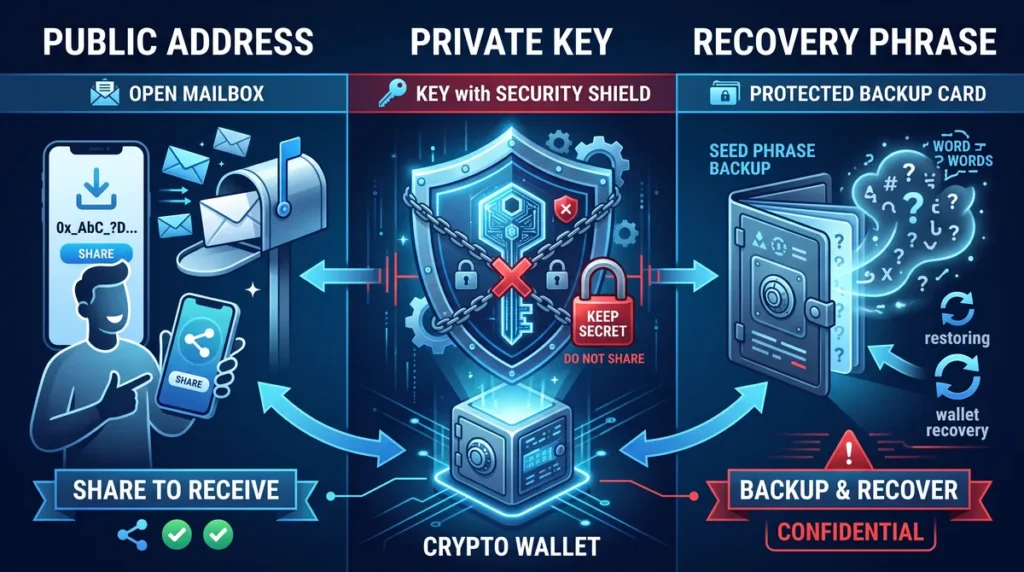
The technology behind these tools sounds intimidating, but the core concepts are surprisingly straightforward. Your wallet does not actually store physical digital coins. Instead, your coins live permanently on the public blockchain. Your wallet simply stores the cryptographic keys that allow you to interact with those coins.
Public Addresses and Private Keys
Every wallet uses a pair of mathematical keys.
- Public Key: This acts as your bank account number. You can safely share your public address with anyone who wants to send you funds. It usually looks like a long string of random numbers and letters.
- Private Key: This is your ATM PIN or your online banking password. The private key gives you the mathematical authority to spend the funds associated with your public address. You must never share this key with anyone.
The Importance of Your Recovery Phrase
Managing raw private keys can get complicated, so modern wallets use a system called a seed phrase or recovery phrase. When you create a new wallet, the software generates a list of 12 to 24 random English words. This phrase acts as the master key to your entire account.
If your phone breaks, or you lose your physical hardware device, you simply download a new wallet application and type in your recovery phrase. The software will instantly restore your access.
A Comprehensive List of Decentralized Wallet Types
Investors can choose from several different formats depending on their security needs and daily habits. We can divide our list of decentralized wallet options into two main categories: hot wallets and cold wallets.
Software Wallets (Hot Wallets)
Hot wallets connect directly to the internet. They usually come as mobile apps or desktop browser extensions. Because they remain online, they offer incredible convenience for daily trading and interacting with decentralized applications. However, their constant internet connection makes them slightly more vulnerable to malware and phishing attacks.
MetaMask Wallet
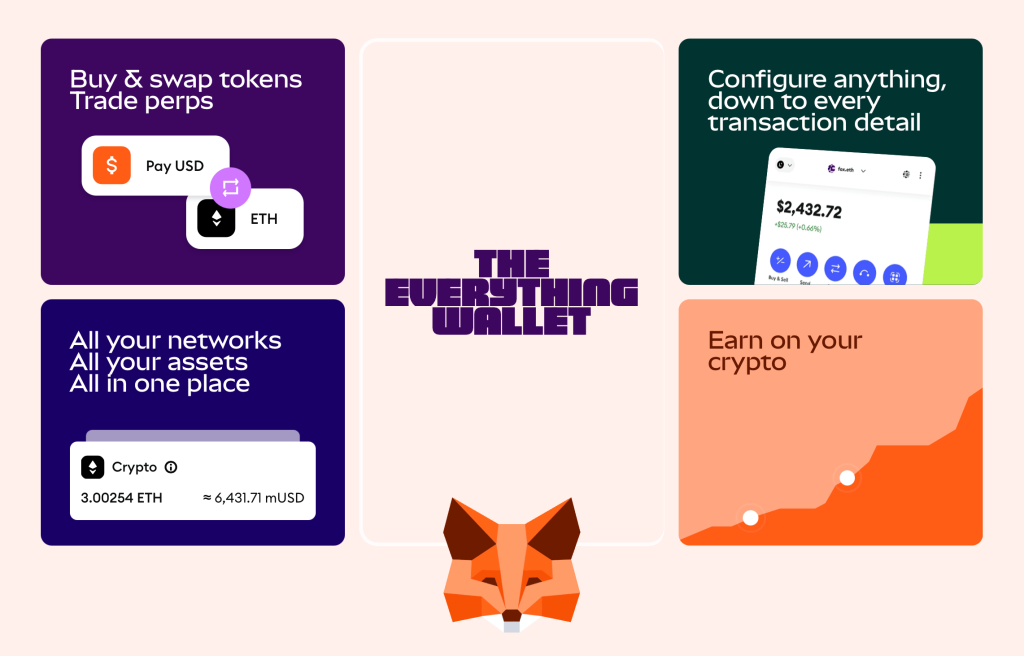
MetaMask wallet is a non-custodial, self-custody wallet managed by ConsenSys that serves as a leading browser extension for desktop and a standalone mobile application. While it began exclusively on Ethereum, it now allows users to easily add and switch between other EVM (Ethereum Virtual Machine)-compatible blockchains, such as Arbitrum, Base, Optimism,Polygon, BNB Chain, and Avalanche.
We have written an article explaining how to set up a MetaMask wallet, which you can read here: MetaMask: A Step-by-Step Guide on How to Set Up for Crypto Beginners
Trust Wallet
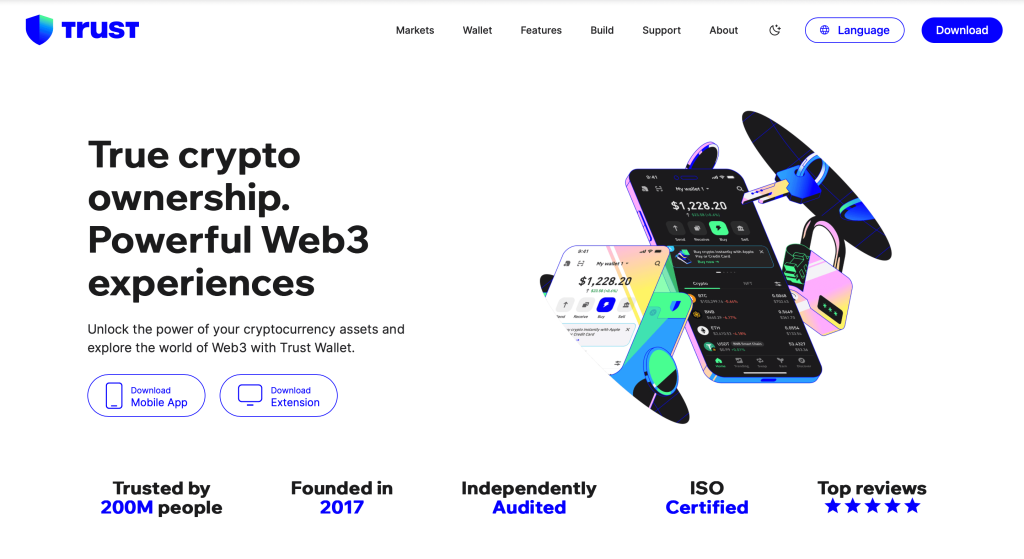
Trust Wallet is a multi-chain, non-custodial wallet that is now the official decentralized wallet of Binance. It supports a remarkable range of assets, with support for 10 million+ digital assets and 100+ blockchains, including Bitcoin, Ethereum, BNB Chain, XRP, Solana, and many others.
Coinbase Wallet
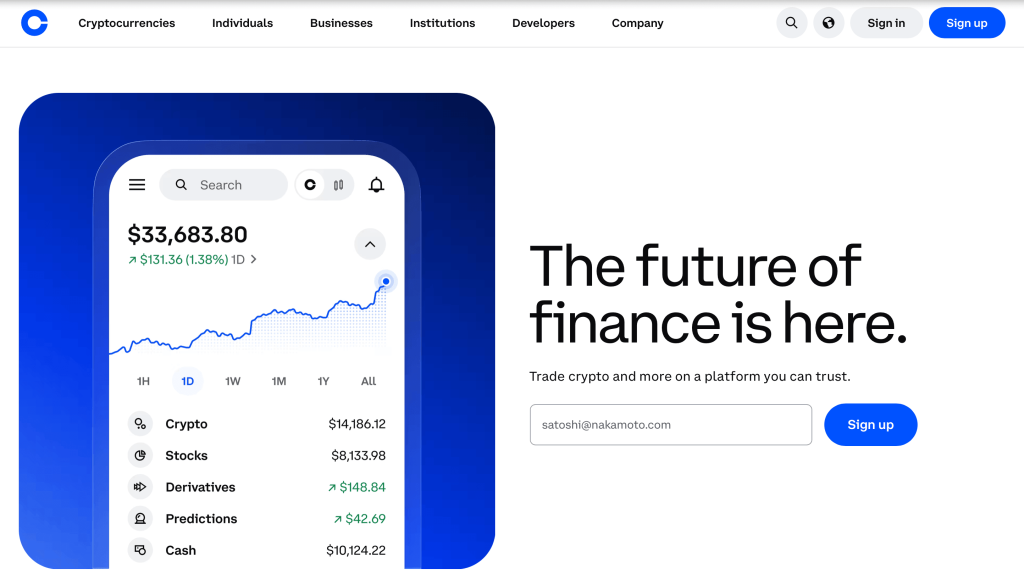
Coinbase wallet is a self-custody (non-custodial) option offered by Coinbase. While developed by a centralized exchange, it is a completely separate application. Users have full control over their private keys, which are stored locally on their device, rather than with Coinbase itself.
Electrum Wallet
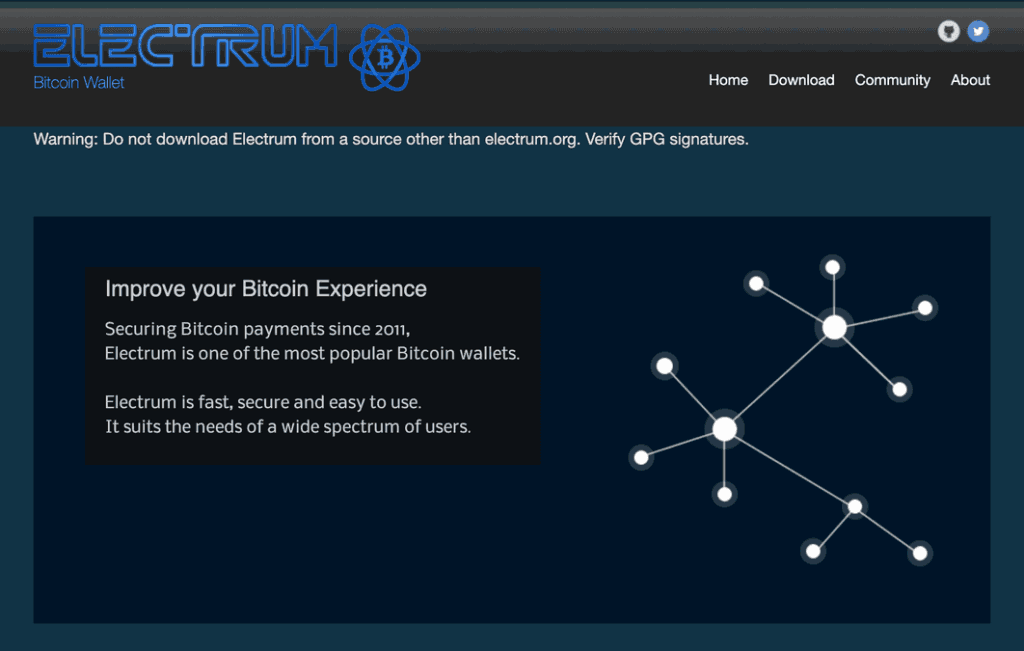
Electrum wallet is one of the oldest and most trusted non-custodial wallets in the cryptocurrency industry. Designed specifically for Bitcoin, it focuses on security, speed, and advanced features rather than supporting multiple blockchains. Users retain full control of their private keys, and the wallet offers features such as customizable transaction fees, multi-signature support, and compatibility with popular hardware wallets like Ledger and Trezor.
Hardware Wallets (Cold Wallets)
Hardware wallets are physical devices that look similar to USB flash drives. They store your private keys completely offline. When you want to send a transaction, you plug the device into your computer or connect it via Bluetooth. You must physically press buttons on the device to approve the transfer. Because the keys never touch your internet connected computer, hackers cannot steal them remotely.
Ledger wallet
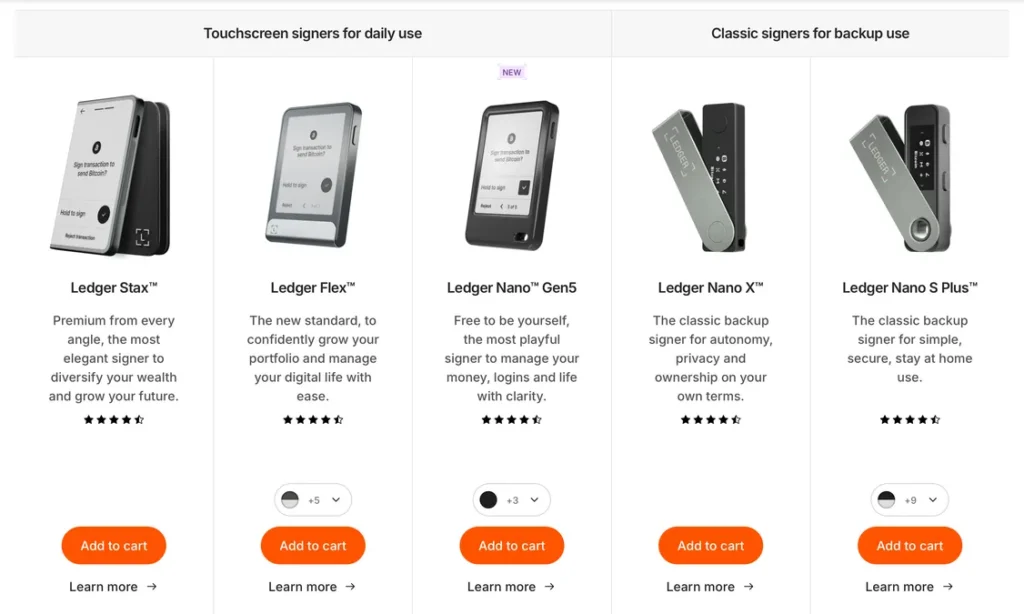
Ledger wallet, a giant in the hardware wallet industry, uses a specialized piece of hardware called a Secure Element (SE) chip (the same type used in passports and credit cards) to manage your private keys. The entire security system, called BOLOS (Blockchain Open Ledger Operating System), isolates the applications managing your various cryptos and adds layers of cryptographic security.
Trezor wallet
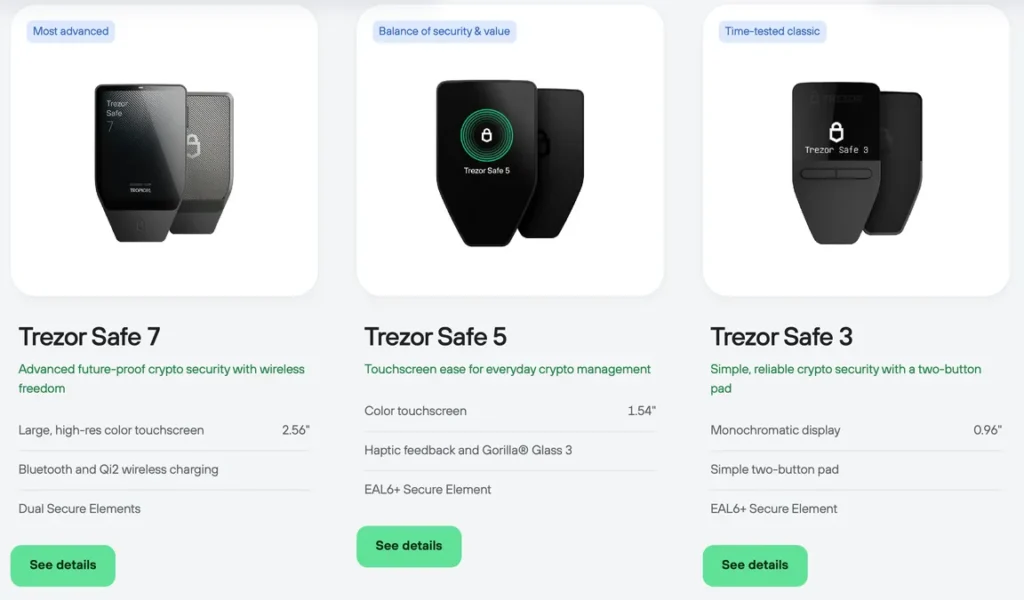
Developed by SatoshiLabs, Trezor wallet is the world’s first hardware wallet and is famous for its strict adherence to “open-source” principles. The entire design, both the firmware and the hardware schematics, is open for public review by any security researcher. This makes it impossible for the company to hide any vulnerabilities.
For an in-depth analysis of the top two brands, we have also written an article about Ledger vs. Trezor, available here: Trezor vs Ledger: Which Crypto Hardware Wallet is Best?
SafePal
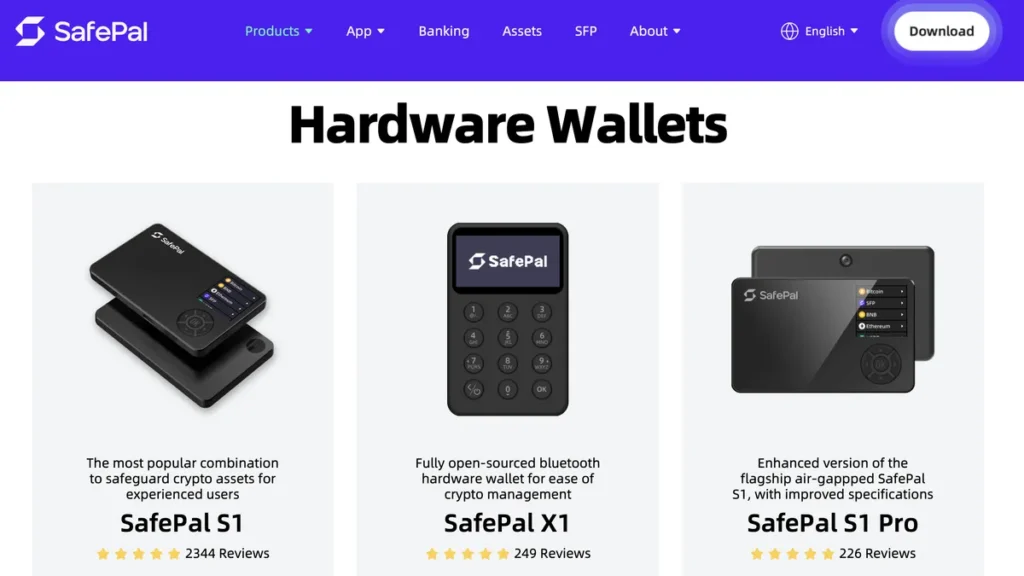
SafePal‘s unique selling point is its “air-gapped” security. The device itself (the S1 and S1 Pro) has no Bluetooth, no Wi-Fi, no NFC, no cellular data, and, once it’s charged and initialized, it is designed to not even need a direct USB data connection to a computer.
Exploring Alternative Crypto Solutions
While many users stick to the major names mentioned above, there are alternative wallets that offer unique features. For example, Zengo wallet provides a completely seedless security model using multi-party computation. This makes the setup process incredibly beginner friendly since you do not have to worry about writing down 24 random words.
Another great option is Phantom wallet. Phantom originally started as a specialized wallet for the Solana network. Over time, it expanded into a powerful multichain tool that now supports Ethereum and Bitcoin. It provides a gorgeous interface and excellent tools for people who frequently trade digital collectibles.
Crucial Security Rules for Beginners
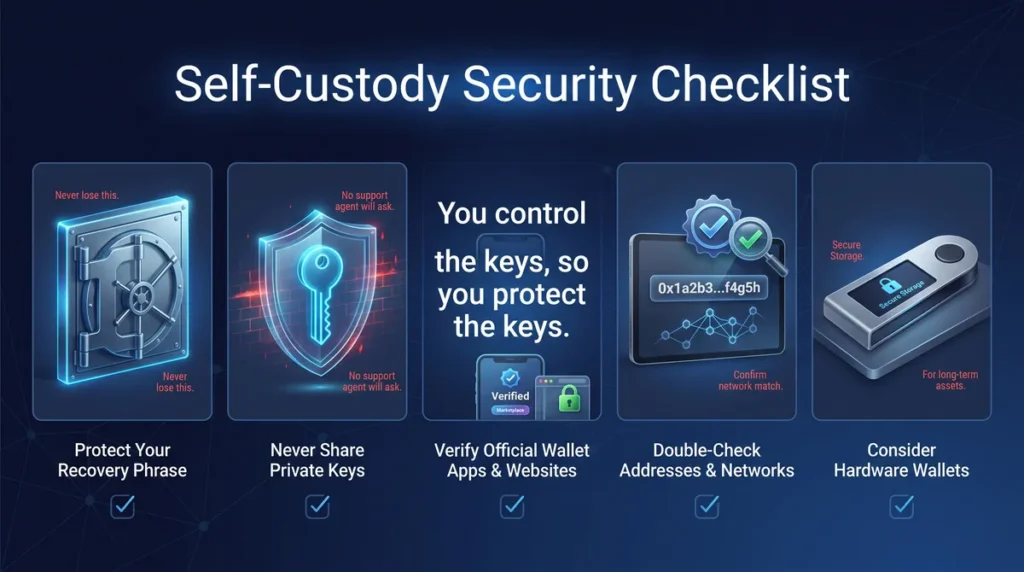
Taking self-custody requires strict security hygiene. Follow these rules to keep your wealth safe from malicious actors.
- First, protect your seed phrase like physical gold. Keep the paper backup in a fireproof safe or a bank safety deposit box. Many serious investors use steel plates to engrave their backup words so they can survive house fires or floods.
- Second, beware of phishing scams. No legitimate crypto support agent will ever ask for your recovery phrase. If a website asks you to type your 12 words to “verify your account” or “claim an airdrop”, you are looking at a scam. Close the page immediately.
- Third, use a hardware device for your life savings. Hot wallets work perfectly for walking around money and daily trading. However, if you hold a significant amount of wealth, the cost of a hardware wallet is a tiny price to pay for absolute peace of mind.
Step-by-Step Guide to Setting Up Your First Wallet: IZAKA-YA
Getting started takes less than ten minutes. Follow these simple steps to claim your financial independence.
Step 1: Signing Up and Verifying Your Account
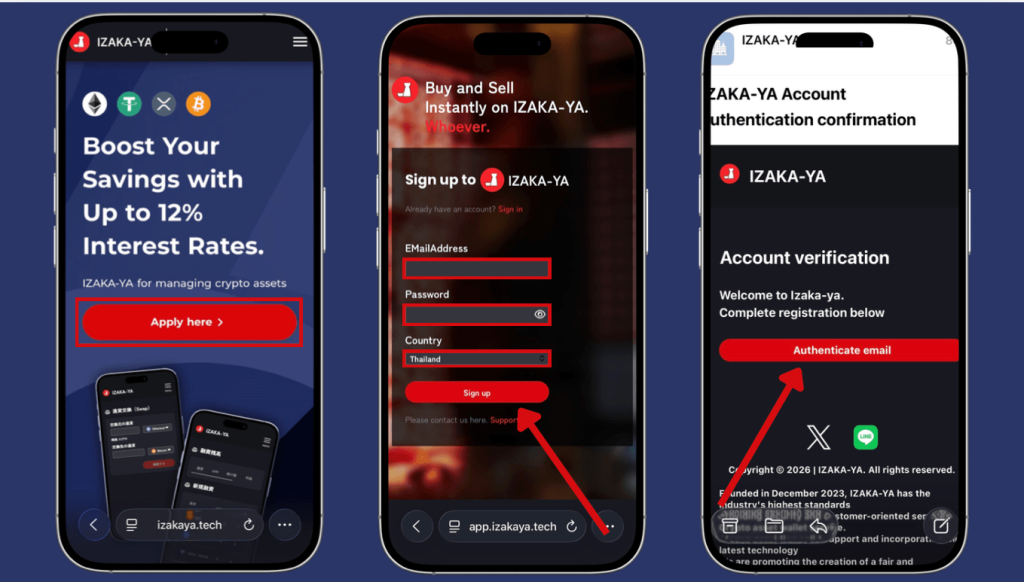
Before you can use the platform, you must set up a new profile.
-
Go to the main landing page and select the red button labeled “Apply here”.
-
On the registration page, provide your email, establish a strong password, and pick your country of residence from the provided list.
-
Press the red “Sign up” button located at the lower part of the screen.
-
The platform will take you to a confirmation page; select “Authenticate email” to finalize your account creation.
Step 2: Navigating to Your Wallet
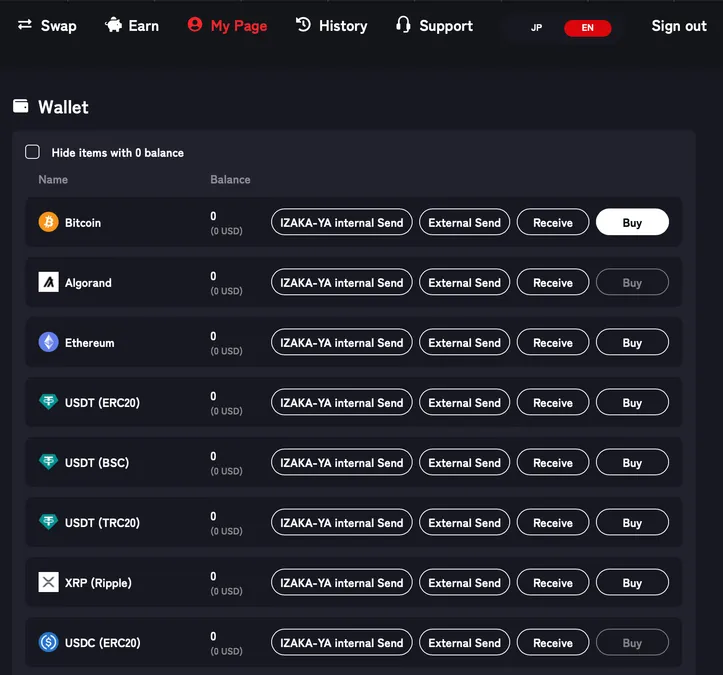
After logging in, the system will redirect you to your main account dashboard.
-
Look for the Wallet panel on the top left, where you will see a list of available digital currencies such as Ethereum, Bitcoin, and several USDT variants.
-
Find the exact digital asset you want to acquire.
-
Select the “Buy” option positioned to the right of that asset to start the purchasing process.
Step 3: Setting Up Your Transaction
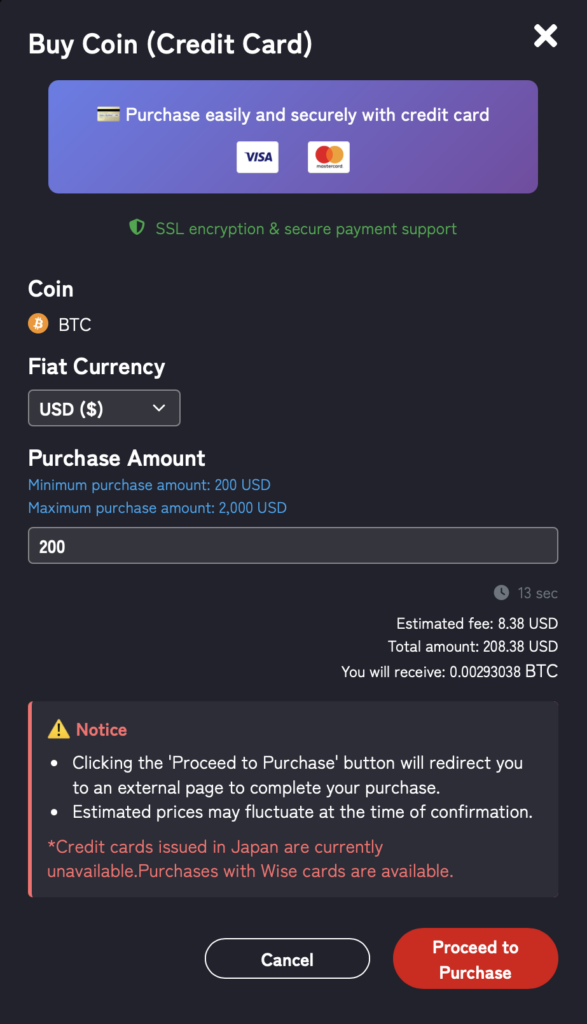
Selecting the buy option brings up a new “Buy Coin (Credit Card)” window.
-
In the Fiat Currency area, pick your preferred payment currency (like USD) from the dropdown options.
-
Type the total amount of standard currency you are willing to spend into the Purchase Amount box.
-
The interface will instantly compute and show the projected transaction fee, the final cost, and the approximate crypto equivalent you will get in return.
-
Once you have double-checked these figures, press “Proceed to Purchase” at the bottom to move forward.
Register IZAKA-YAkeyboard_arrow_right
Frequently Asked Questions (FAQs)
Yes. You can receive crypto directly from another person or wallet, and you can interact with many blockchain applications without using a centralized exchange.
Not in the way a physical wallet stores cash. Your crypto assets are recorded on blockchain networks. The wallet stores or manages the cryptographic information that allows you to control those assets.
The blockchain cryptography itself remains incredibly secure. If you protect your private keys and stay offline with a hardware device, hacking your account becomes virtually impossible.
Downloading and setting up the software is completely free. However, whenever you send funds or interact with a decentralized application, you must pay a “gas fee” or network fee.
Decentralized wallets do not connect directly to traditional fiat bank accounts. To cash out into dollars or euros, you will need to send your cryptocurrency from your decentralized storage back to a centralized exchange.
Yes, although the options are more limited than on Ethereum-based networks. A Monero wallet can be used with decentralized peer-to-peer platforms such as Haveno or Bisq, but it is not compatible with most automated market maker (AMM) decentralized exchanges like Uniswap.
A Kaspa wallet allows you to securely store and manage KAS, but the Kaspa ecosystem currently has fewer decentralized finance (DeFi) applications and decentralized exchanges than more established blockchain networks. However, the ecosystem continues to grow as new projects are developed.